Get in touch with UD Packaging Company

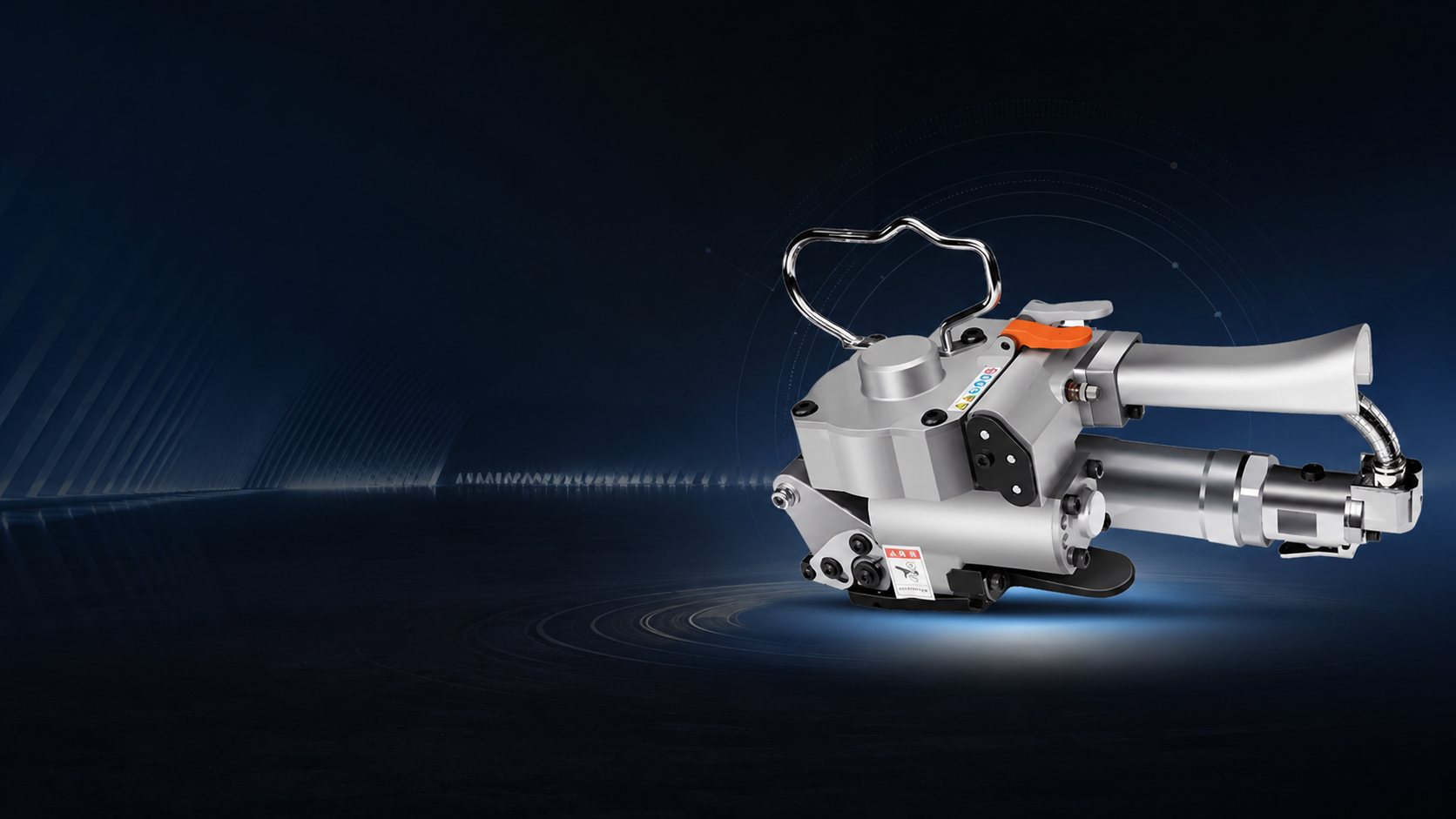
Strapping Machine Selection for Industrial Packaging
Choose a strapping machine path by package, workflow, strap, operator task and site interface—not by an isolated catalog label. UD Packaging uses your application inputs to prepare a category-level fit review before any model-specific quotation.
Included Categories
- Manual equipment
- Semi-automatic machines
- Fully automatic machines
- PET strapping inputs
The output is an application-fit review, not an instant model recommendation. Model, configuration, price, certification and delivery details require candidate documents and written commercial scope.
Application Parameters
- Equipment paths
- Manual, semi-automatic and fully automatic
- Package routes
- Cartons, bundles, pallets and special industrial loads
- Consumable inputs
- PET or PP strap, joint method and pattern
- Review output
- Category fit, missing inputs and document requests
- CTA
- Human application review through your RFQ
- Evidence limit
- No unnamed-model performance or compliance conclusion
Strapping Machine Options at a Glance
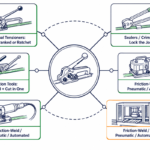
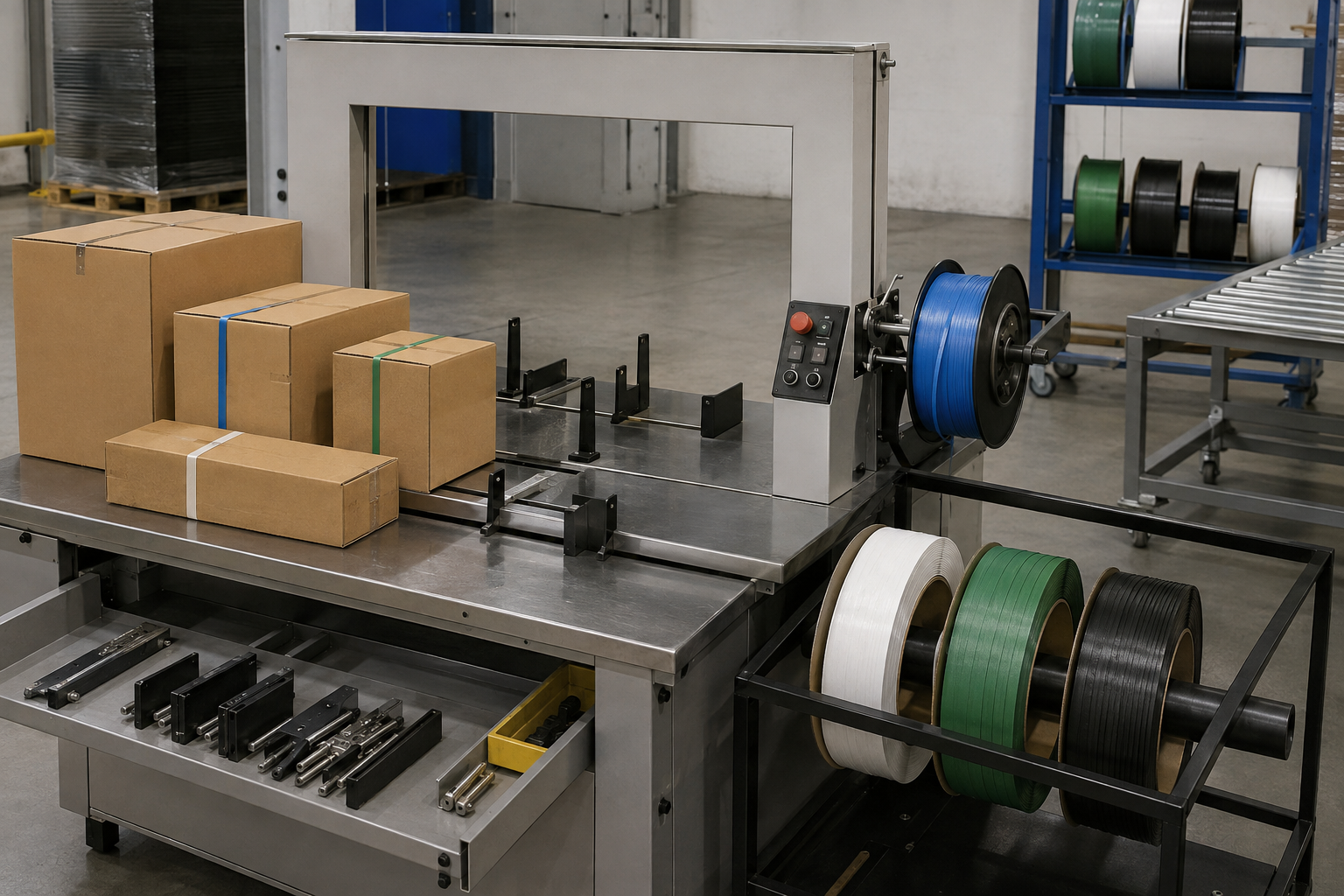
Start by identifying how the package reaches the strapping point and what the operator must do there. Those labels describe workflow paths; candidate equipment still needs its own operating envelope and documentation.[3] Category screening does not replace the task-based risk assessment described by ISO 12100.[7]
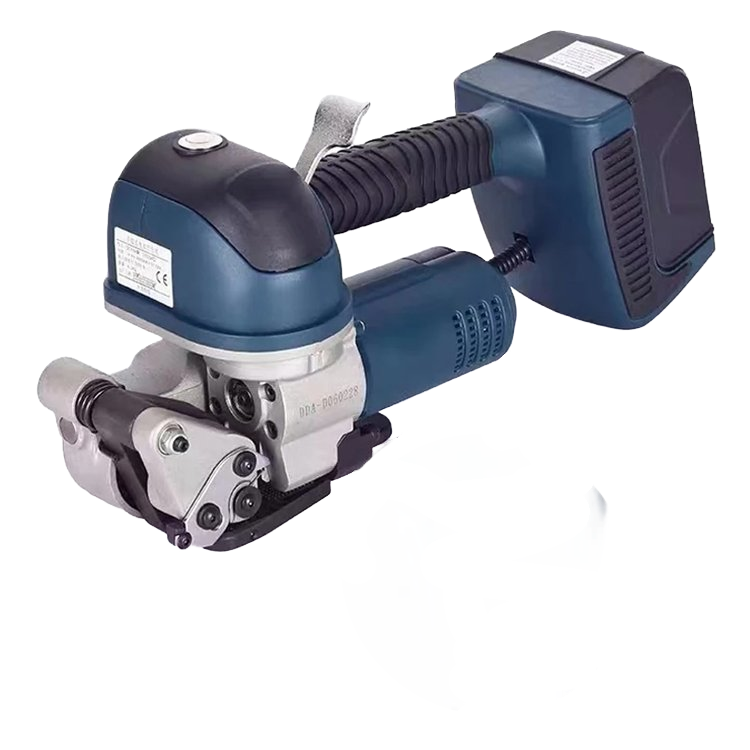
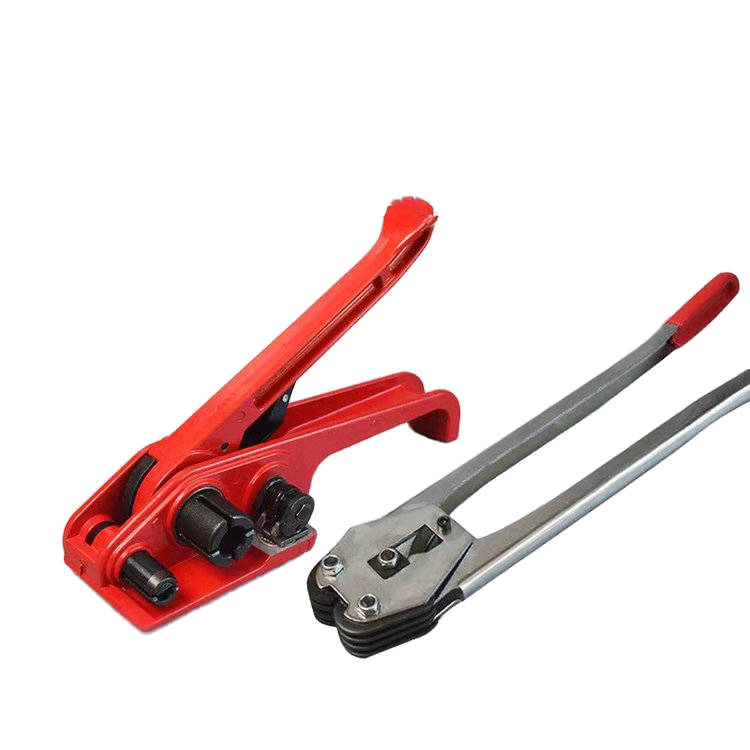
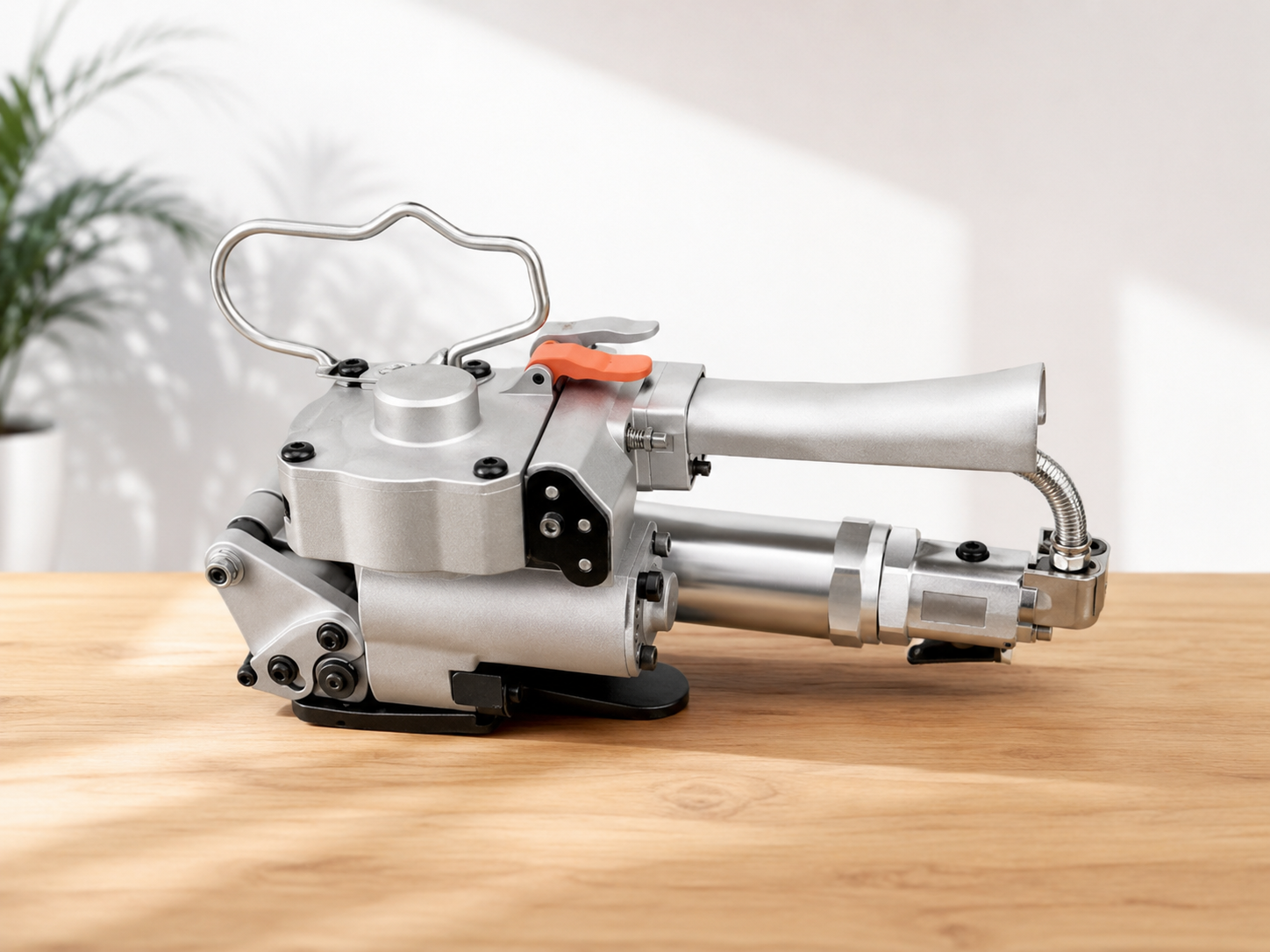
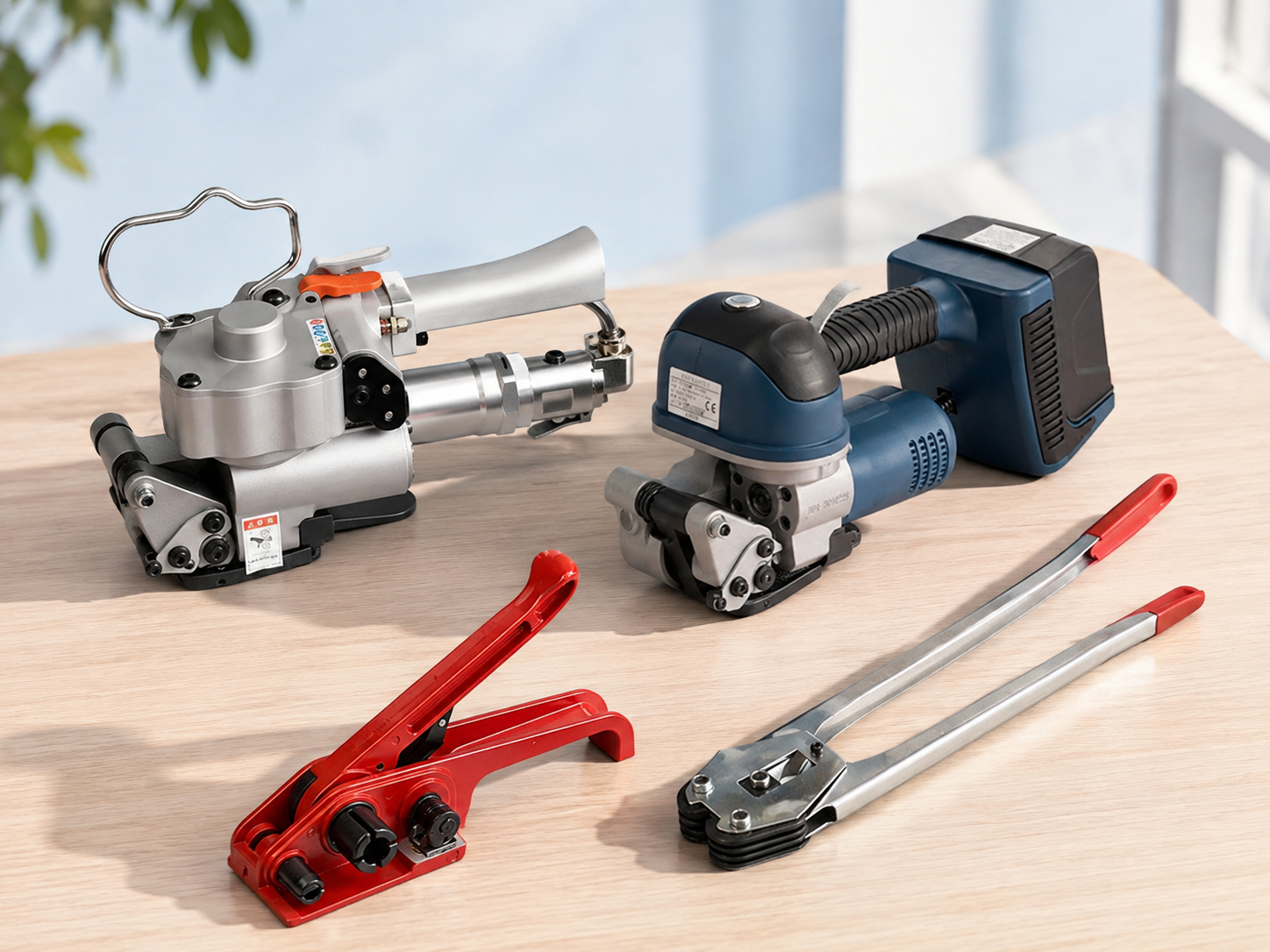
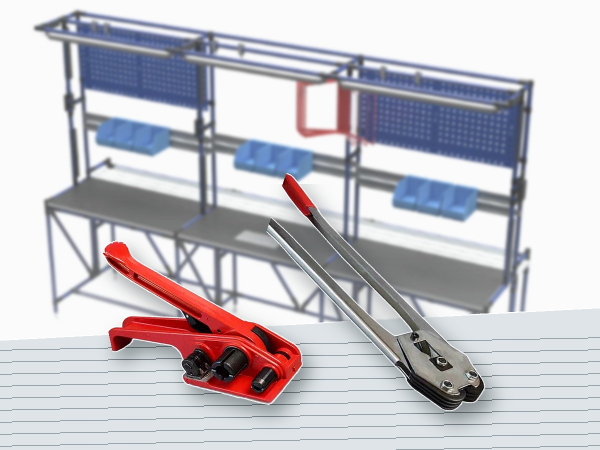
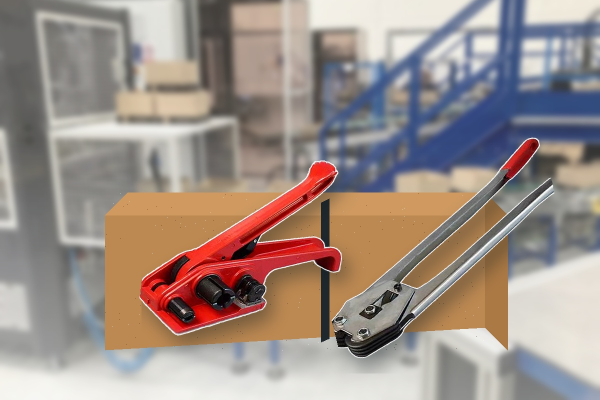
Manual equipment path
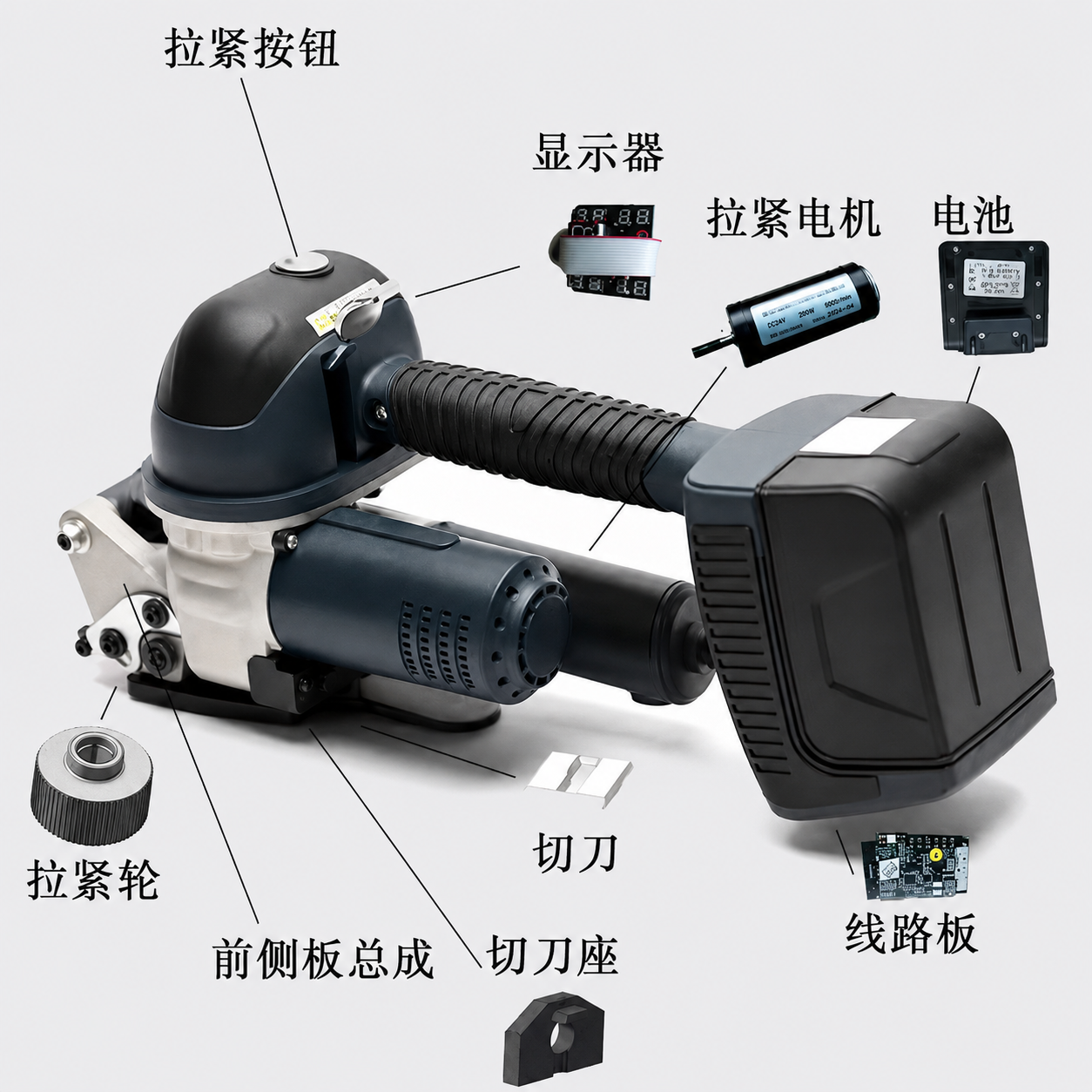
Semi-automatic path
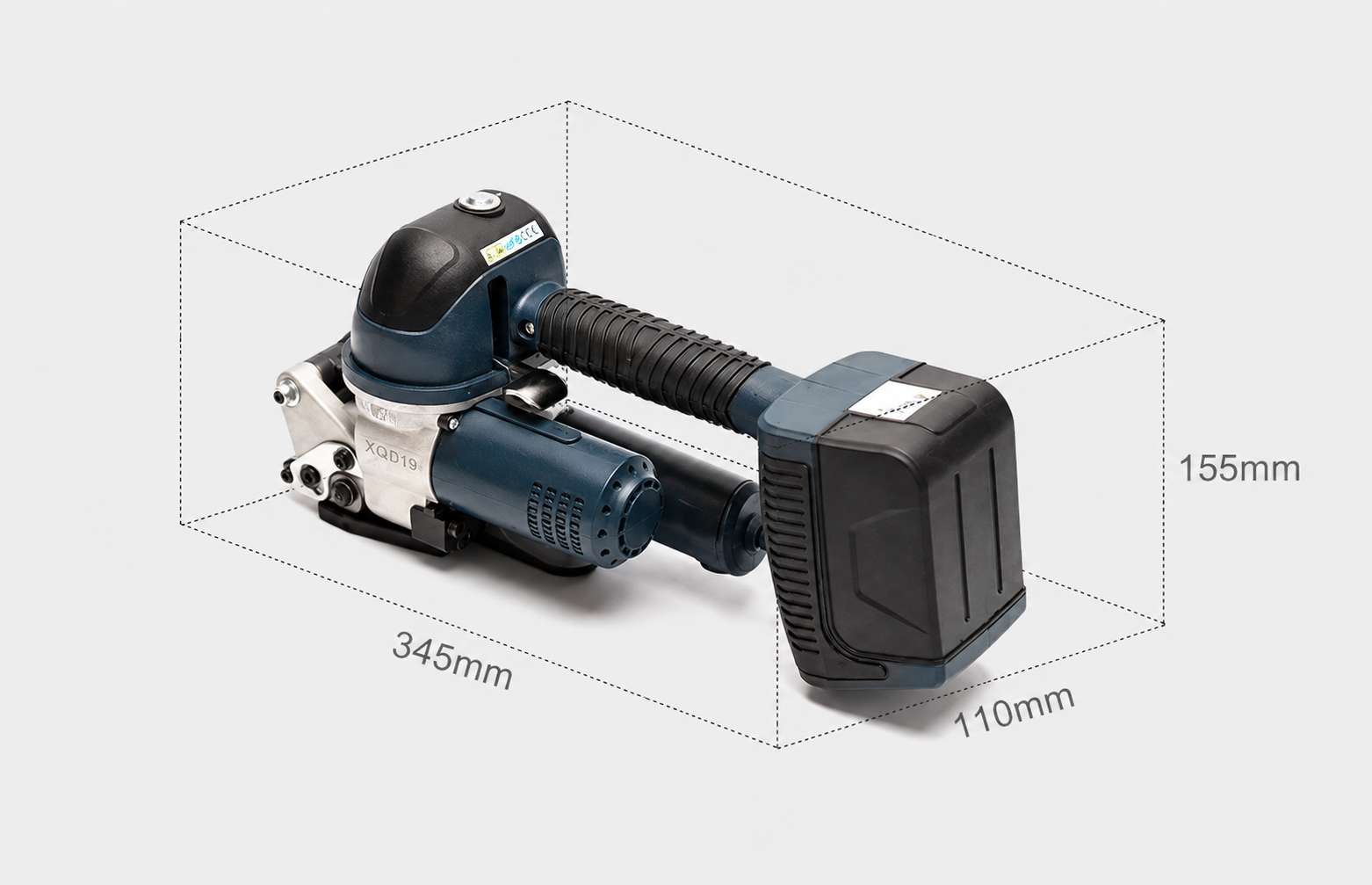
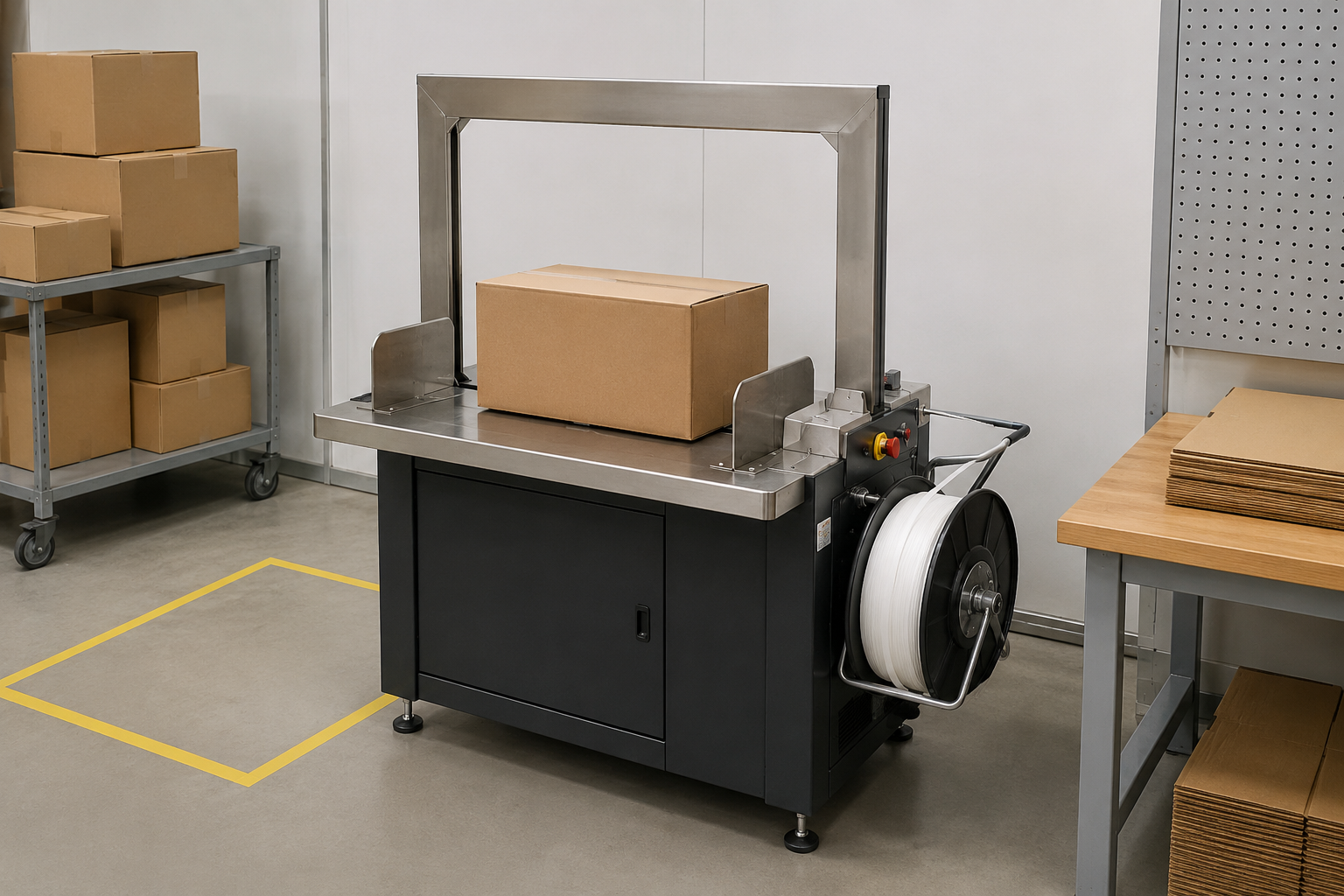
Fully automatic path
SUMMARY
Selection rule: automation level is an outcome of the work pattern. It is not a stand-alone proof of throughput, labor reduction, package quality or safe use.
Unlike a product grid, the review keeps package, workflow and responsibility evidence together. Automation is not a substitute for stable package presentation; material family and machine compatibility are not interchangeable; catalog speed is not always plant throughput.
A more automatic path is not always the more productive path when presentation, handling or recovery controls the cycle. The category name is not a substitute for candidate documents.
Packaging Requirements That Shape the Selection
Useful inquiries give the supplier a range, not one ideal sample. Include the smallest and largest package, lightest and heaviest load, normal and peak flow, difficult surfaces, and the conditions that make the current process unstable.
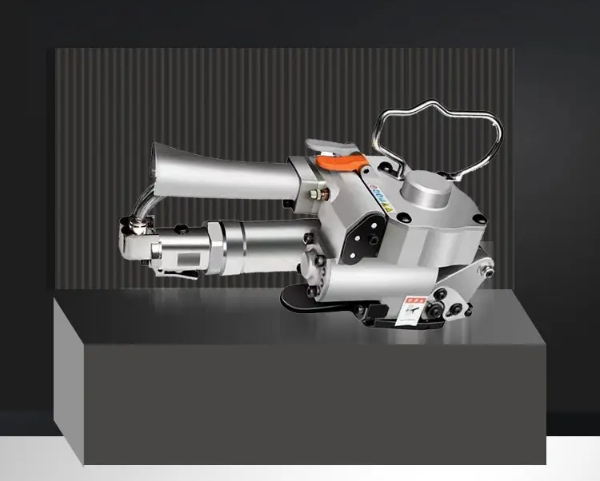
Package envelope
- Minimum and maximum length, width and height
- Weight range and center-of-gravity concerns
- Compression sensitivity, rebound and edge condition
- Surface marking or contamination constraints
Packaging flow
- How the package arrives and leaves
- Operator touches, turns, lifts and waits
- Normal demand, peaks and changeovers
- Upstream and downstream stop conditions
Strap pattern
- Horizontal or vertical application
- Number and position of straps
- Corner protection or compression needs
- Fixed load, moving load or rotating load
Site and interfaces
- Available footprint and maintenance clearance
- Utilities and permitted connection points
- Conveyor height, direction and control handoff
- Dust, moisture, temperature and cleaning practice
Carton, Bundle and Pallet Application Inputs
Package form changes the questions used to screen a strapping machine category. These cards organize the RFQ without claiming that one equipment family fits every item in the group.
ASTM D4675 Initial Guidance
ASTM D4675 offers initial guidance for flat strapping use, while package unitization and vehicle cargo securement remain separate scopes.6 A strapped pallet is not necessarily secured for vehicle transport; FMCSA rules address cargo secured on or within a vehicle and the carrier still needs the applicable assessment.4
Evidence Boundary
Evidence boundary: ASTM D4675 is initial guidance for selecting and using flat strapping systems; PET strapping test evidence still supports only the tested strap and reported method. It does not prove machine compatibility, machine safety or complete packaging-system performance.]

PET and PP Strap Compatibility Inputs
“PET strapping machine” is not a universal compatibility class. Polyester or polypropylene identifies a material family, while the candidate equipment documentation must address the actual strap, feed path, joint process and package.[6]
Organize RFQ| Compatibility line | Buyer input | Required confirmation |
|---|---|---|
| 01 — Material family | PET, PP or another specified material | Candidate machine and joint process identify the permitted material |
| 02 — Strap form | Width, thickness, surface and supply format | Candidate documentation covers the supplied range |
| 03 — Joint method | Friction weld, heat seal, buckle, seal or another method | Tool or machine route matches the intended joint |
| 04 — Tension objective | Package stability and product-damage limits | Trial plan defines adjustment and acceptance without a universal setting |
| 05 — Package contact | Edges, corners, surface marking and compression response | Representative package trial includes protective measures |
| 06 — Environment | Temperature, moisture, dust, storage and transport exposure | Material and equipment parties confirm applicable limits |
| 07 — Evidence | Requested strap report, machine manual and joint acceptance record | Each document stays inside its stated product and test scope |
Strapping Machine Selection and RFQ Fit Matrix
This seven-layer matrix turns a broad inquiry into reviewable evidence. Its output is a readiness label—never a model decision. ASTM D4675 remains an initial strapping-system guide, not a configuration prescription.[6]
| Layer | Inputs to provide | Review output | What remains deferred |
|---|---|---|---|
| 1 — Package or load | Type, range, mass, surface, stability and edges | Carton, bundle, pallet or special-load path | Specific machine envelope |
| 2 — Packaging flow | Arrival, operator steps, demand, peaks and release | Manual, semi-automatic or automatic path | Cycle-rate guarantee |
| 3 — Strap and joint | Material, dimensions, surface, supply and joint method | Compatibility questions for candidate documents | Universal PET or PP compatibility |
| 4 — Pattern | Direction, count, positions, corners and compression | Architecture and package-handling questions | Final configuration |
| 5 — Site and interfaces | Space, utilities, conveyors, controls and environment | Site-qualification checklist | Layout or integration approval |
| 6 — Safety responsibility | Hazards, operator tasks, servicing, modifications and documents | Responsibility and document request list | Compliance or certification conclusion |
| 7 — Commercial scope | Quantity, destination, document and support requirements | Scope-normalized RFQ | Price, lead time and service commitment |
Output Labels / Readiness
Ready for application review
Package, flow, strap, pattern, site and responsibility fields are sufficiently defined for a supplier discussion.
More inputs needed
One decision-driving range, task or interface is still missing and should be collected before comparing equipment categories.
Model documents required
Only an identified manufacturer and candidate model manual, drawing, declaration or quotation can answer the question.
Throughput, Labor and Controls Across the Whole Cycle
Catalog speed describes one configuration under stated conditions; plant output includes everything that happens before, during and after strapping. A useful trial records the whole sequence and the cause of every wait or restart.

Cycle Segment
Package arrival
Measure or observe
Spacing, orientation and accumulation
Hidden constraint
Irregular presentation can starve or block the strapping point

Cycle Segment
Operator preparation
Measure or observe
Lift, turn, align, thread and reach tasks
Hidden constraint
Handling time can dominate a semi-automatic cycle
Cycle Segment
Strapping action
Measure or observe
Pattern, strap count and joint completion
Hidden constraint
One catalog cycle may not equal one finished package

Cycle Segment
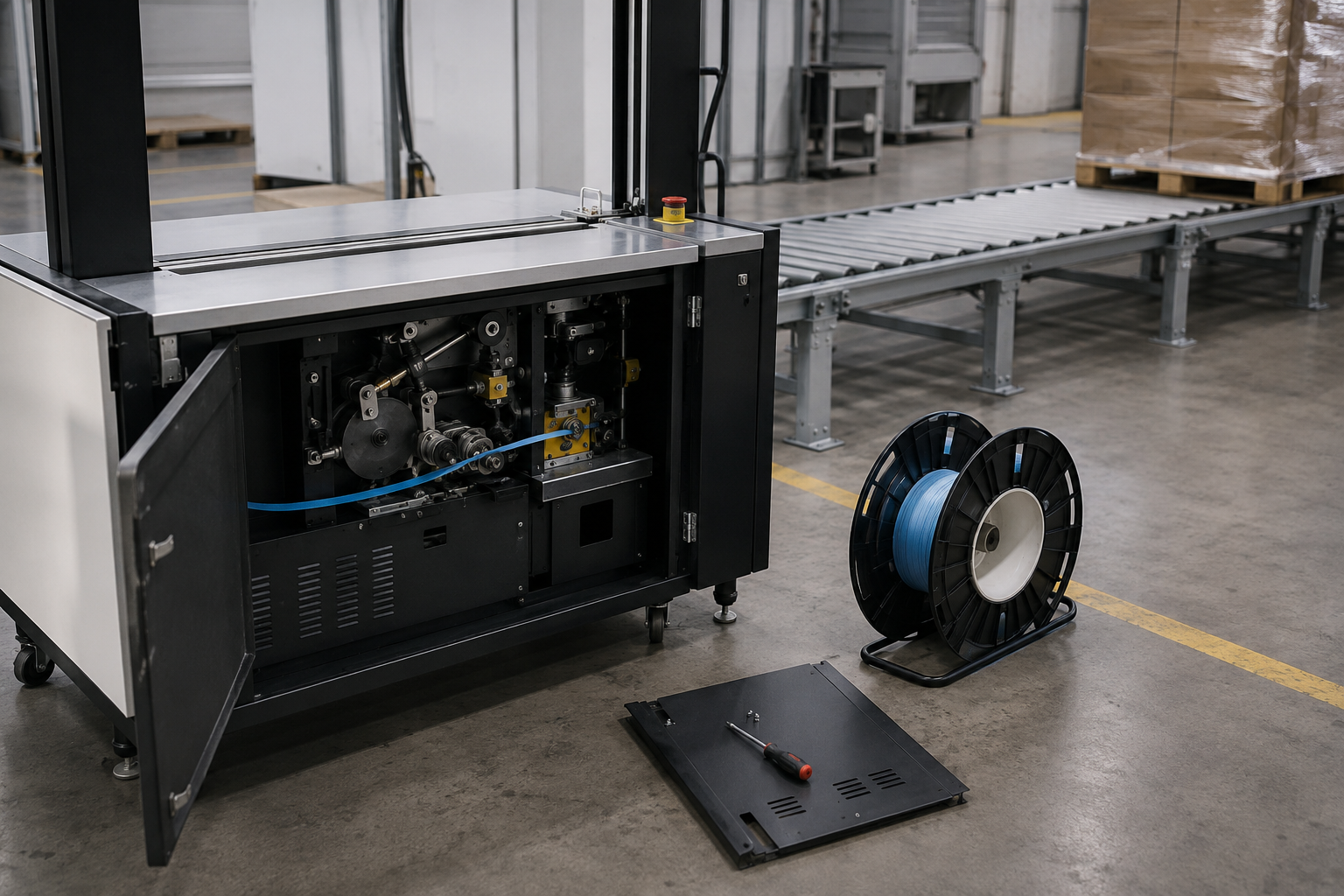
Fault recovery
Measure or observe
Misfeed, jam, empty coil and restart steps
Hidden constraint
Access and recovery method change downtime exposure
Cycle Segment
Downstream release
Measure or observe
Inspection, labeling, conveyor or forklift handoff
Hidden constraint
A blocked discharge can stop an otherwise available machine
Cycle Segment
Changeover
Measure or observe
Package, strap, pattern and mode changes
Hidden constraint
Frequent variation can outweigh nominal peak rate
Process & Guidelines
Machine Guarding, Energy Isolation and Operator Tasks
Safety review starts with hazards and tasks, not the word “automatic.” Ask who provides, validates and maintains guarding, control functions, energy isolation, instructions and any user-side modification.
Normal production
- Identify points of operation, nip points and rotating parts
- Record operator reach during loading and unloading
- Review ejected strap, offcuts and package movement
- Define guard, interlock and emergency-stop responsibility
Setup, cleaning and unjamming
- List electrical, pneumatic, mechanical and stored energy
- Identify tasks that enter a danger zone or bypass a guard
- Request isolation instructions for the candidate configuration
- Align employer procedures, training and periodic review
OSHA Guarding & Energy Guidelines
OSHA 29 CFR 1910.212 requires guarding against identified machine-area hazards, while 29 CFR 1910.147 addresses hazardous energy during covered servicing and maintenance. These rules guide the buyer’s questions; they do not certify an unnamed machine.12
ISO 12100 Task & Risk Boundaries
Because setup and servicing can change exposure, the risk review should connect ISO 12100 task analysis, OSHA duties and the candidate machine instructions without treating any one reference as product certification. UD Packaging uses this boundary to keep category fit separate from model-level safety evidence.7
Stakeholder Responsibility Framework
Use the quotation to name responsibility across the equipment supplier, user, line interface and any modifier. A standard reference is not a substitute for the actual machine documents and site risk assessment.3
Parts We Supply: Strapping Equipment and Consumables
UD Packaging supplies industrial packaging materials and supporting equipment. The confirmed category scope includes manual strapping equipment, semi-automatic strapping machines, fully automatic strapping machines, PET strapping, strapping seals and buckles, and industrial stretch film.

1
SCOPE / 01
Confirmed Company and Materials Scope
UD Packaging is an integrated industry and trade enterprise focused on plastic packaging materials. Its plastic packaging materials base is in Jiangyin, Wuxi, Jiangsu Province, and its PET strapping scope covers granulation through finished strapping. Industrial stretch film is available as a separate packaging-material category.
2
EQUIPMENT / 02
UD Packaging equipment categories
Discuss manual, semi-automatic and fully automatic strapping routes in one application review. The final manufacturer, model and configuration are identified only in candidate documents and the written quotation.
3
CONSUMABLES / 03
UD Packaging strap and joints
Include PET strapping and the intended seal, buckle or machine-joint route in the same inquiry. Compatibility remains subject to the actual strap fields, machine documents and representative package trial.
4
PROTECTION / 04
UD Packaging adjacent protection
Industrial stretch film can be discussed as a separate pallet-protection input. Its presence does not replace the load-stability, strapping or cargo-securement review.
Quality Assurance: Representative Package Trial and RFQ Acceptance Protocol
A trial should challenge the proposed category with normal variation, not only the easiest sample. Agree the observed conditions and acceptance method before treating a demonstration as purchase evidence.
-
Freeze the test envelope
List the smallest, largest, lightest, heaviest and most difficult representative packages.
-
Freeze the strap input
Record the material, dimensions, surface, supply form and joint route used for the trial.
-
Map the work sequence
Include package arrival, operator handling, strapping, inspection, recovery and downstream handoff.
-
Record safety responsibility
Identify guards, access, isolation, instructions and site modifications that remain open.
-
Observe repeatability
Record joint completion, package condition, handling interruptions and the reason for any stop.
-
Close document gaps
Request the manual, drawing, declared operating envelope and commercial exclusions for the candidate model.
-
Write the acceptance basis
Separate demonstrated observations from later installation, integration or production commitments.
-
Describe the package or load
Submit the range, mass, stability, edges and surface risks.
-
Map the packaging flow
Submit operator steps, normal demand, peaks, changeovers and interfaces.
-
Define strap and pattern inputs
Submit material, dimensions, joint method, direction and strap count.
-
Add site and safety inputs
Submit space, utilities, environment, guarding responsibility and servicing tasks.
-
Confirm category fit
UD Packaging reviews whether the inquiry should continue through a manual, semi-automatic or fully automatic route.
-
Request candidate documents
Model, configuration and commercial facts are checked only when an identifiable offer is available.

Evidence ladder: category description → candidate model identity → manufacturer document → representative package trial → site-interface review → responsibility record → written quotation and acceptance scope. Skipping a layer creates an assumption that should stay visible.
From RFQ to Fit Confirmation
The inquiry process is designed to reduce category and scope mismatch before a commercial comparison. It does not promise an instant configuration.
| RFQ field | Why it matters | Do not substitute |
|---|---|---|
| Package range | Tests the physical and handling envelope | One ideal sample |
| Whole-cycle demand | Connects machine action to plant output | Unqualified catalog speed |
| Strap and joint | Defines the compatibility questions | “PET compatible” alone |
| Site interfaces | Exposes layout, utility and control dependencies | Equipment footprint alone |
| Safety responsibility | Names open guarding, servicing and modification duties | A logo or generic standard reference |
| Commercial scope | Normalizes what is and is not included | A headline price without exclusions |
Pricing, Lead Time and Commercial Scope Confirmed During Review
Price follows the identifiable equipment, configuration, quantity, documents, destination and support scope. This page does not publish a placeholder price, delivery promise or service package that could be mistaken for an offer.
Ask the quotation to identify
Ask the commercial scope to identify
- Actual manufacturer and candidate model
- Included equipment and excluded interfaces
- Applicable strap and joint range
- Required utilities and buyer-supplied items
- Documents and trial or acceptance scope
- Quantity and destination basis
- Price and validity period
- Production and delivery basis
- Warranty and support boundaries
- Installation, training, spares and service exclusions
Compare quotations only after the same application inputs and responsibility boundaries are visible. Lower headline figures can represent a different supply scope rather than a lower cost for the same result.
Strapping Machine Engineering Tools
Strapping Application Fit Worksheet
Evaluate your production line requirements and material conditions to identify the optimal strapping equipment configuration.
Strapping Machine RFQ Builder
Compile your technical specifications into a structured request for quotation to streamline your machinery procurement process.
Strapping Quote Scope Checker
Verify your received machinery quotations against essential technical parameters and strict industry compliance standards.
Frequently Asked Questions from Industrial Buyers
It applies and joins strap around a carton, bundle, pallet or other load to support unitization and handling. The suitable equipment route depends on the package, strap, pattern, work sequence, site and required evidence.
They differ mainly in package presentation, operator involvement and line interfaces. The category label alone does not establish speed, package range, safety or integration.
The terms can overlap in commercial use, but some suppliers use banding for lighter or different materials and applications. Define the actual material, package, joint and handling duty instead of relying on the name.
Do not assume so from the product-family label. Confirm the actual material, dimensions, surface, joint process and permitted range in the candidate model documentation.
Provide the full load envelope, mass, stability, overhang, direction, strap pattern, top-pressure needs, conveyor or forklift handling, environment and downstream transport context. Include difficult and representative loads, not only a nominal pallet.
Describe load variation, presentation, strap direction, control handoff, guarding, fault recovery and downstream release. Use the actual pallet range instead of assuming the search phrase defines one machine class.
It may refer to separate hand tools, a powered handheld tool or a small machine with operator participation. Name the tool form, strap, joint and operator sequence so suppliers compare the same duty.
Describe how the operator presents and removes the package, routes the strap, changes products and responds to interruptions. The unhyphenated search wording should not replace the actual work sequence.
This landing page confirms category and RFQ fit without inventing an equipment offer. Manufacturer, model, configuration and operating limits belong to identifiable candidate documents and a written quotation.
Pricing depends on the identified equipment, configuration, quantity, controls, interfaces, documents, destination and support scope. Submit the application inputs first so the commercial comparison covers the same requirement.
No. A strap test applies to the reported strap and method, while machine performance, compatibility and site integration require their own evidence.
Request the candidate manual, guarding and control description, energy-isolation information, applicable declarations, risk information and instructions for setup, cleaning, adjustment and unjamming. The employer still reviews site tasks, training and procedures.
Strapping may be one part of load preparation, but vehicle cargo securement is a separate assessment under the applicable carrier and regulatory requirements. Do not treat package strapping as the complete securement plan.
UD Packaging confirms its category-level supply scope and reviews the application inputs you submit. Model-specific and commercial commitments are confirmed only in later candidate documents and the quotation.
Yes, the inquiry can include strapping equipment, PET strapping, seals or buckles and related packaging needs. Each item’s compatibility and supply responsibility remain separately confirmed.