Get in touch with UD Packaging Company

Construction & Building Packaging
PET Strapping for Construction & Building Materials
UD Packaging supplies PET strapping for building materials that need a defined bundle, joint, tool and distribution route, not a guess based on load weight alone. Compare six published coil formats for brick, concrete blocks, pavers, panels, timber and other construction products, then send the actual unit-load facts for review.
6 published coil formats
12, 16 and 19 mm widths
Manual through automatic equipment
Load-specific review
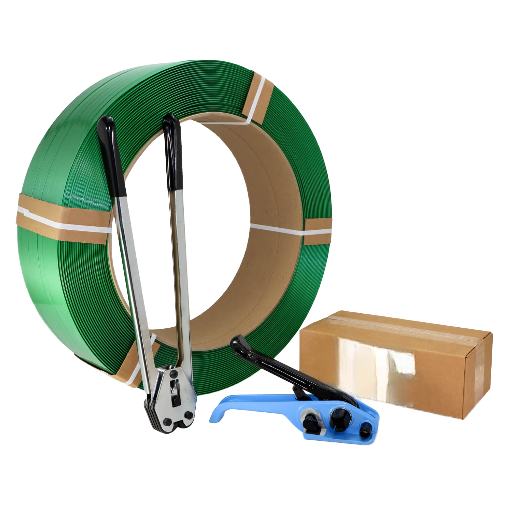
Pallet Packaging Scope at a Glance
Start with the complete unit load. Strap evidence, applied strap-and-joint evidence and transport-ready pallet evidence belong to three different levels.
6
product-data rows supplied for comparison
12–19 mm
nominal strap width range
0.6–1.0 mm
nominal thickness range
800–2,140 m
listed roll-length range
20 kg
listed net weight for every row
1 sample
scoped SGS tensile record described below
PET Strapping Systems and Supply Scope
We operate a production base in Jiangyin and supply PET strapping, industrial stretch film, strapping seals, manual hand tools, battery powered equipment, semi-automatic machines and fully automatic strapping equipment. ASTM D3950 addresses nonmetallic strapping together with joining methods, which is why procurement should review the strap, closure, packaging equipment and supporting consumables as one applied system.[1]
Strap and coil
Range choices include 12, 16 and 19 mm polyester strap in the listed widths, thicknesses, linear mass and roll length. Exact core size, coil direction, surface emboss and dispenser fit belong in the written confirmation.
Joint and sealing
Metal seals, friction-weld joints and other closures form part of the applied system. Sealer geometry, joint method and joint efficiency can’t be replaced by a bare tensile strength value.
Application equipment
Manual strapping, a polyester strapping tool, a pneumatic tensioner or a pallet strapping machine each creates a different operating envelope. Compatibility requires agreement on the exact model, strap width and thickness, tension setting and joint program.
Manufacturing scope
UD Packaging states that its Jiangyin factory covers PET granulation through finished strapping. UD Packaging has developed and introduced automated PET strapping production lines, while its technical team supports application review.
Compatibility Inputs That Prevent a Line-Side Mismatch
-
1
Tool compatibility begins with the precise model, strap dimensions, surface and joint method.
-
2
Record whether the line uses a manual tensioner, sealer, combination strapping tool, strap pneumatic tool or automated head.
-
3
Verify roll core, dispenser orientation, feed path, guide clearance, heater or friction-weld settings and strapping machine control limits.
-
4
Run the proposed strapping roll through a controlled trial before implementing packaging operations or inventory management changes.
Building-Material Load Profiles
We supply industrial packaging for building materials, including brick-kiln and brick packaging applications identified in the company’s service scope. These construction packaging solutions serve the construction industry only after the real material, pack pattern, base, route and handling method are defined.
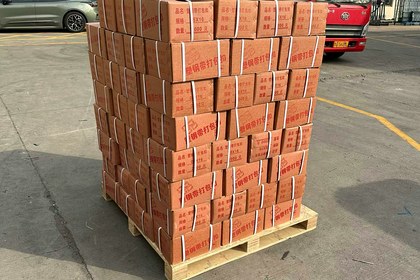
Brick, block and paver loads
Brick pallets and concrete-block stacks can combine abrasive contact, hard corners, gaps and settlement. Brick packing therefore needs an edge-protection plan, a defined strap path and a retained-tension check after the stack stabilizes.

Boards, panels and long components
Panels, profiles and construction components can be long, flexible or irregularly shaped. Review support points, vulnerable edges and every place where banding pressure could mark or deform the product.
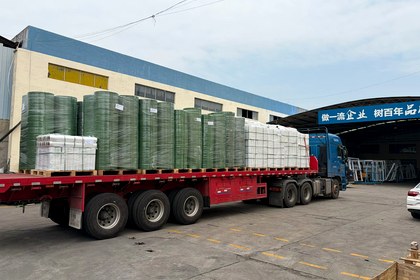
Lumber and timber bundles
Lumber can change dimension with moisture, and a timber bundle can settle during storage and transportation. A trial should measure retained tension after conditioning instead of treating the first tension reading as the final state.[5]
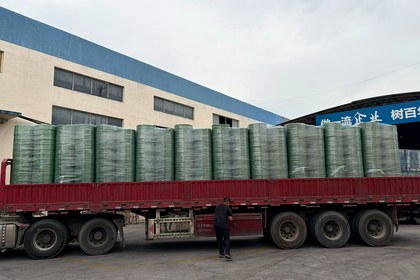
Bagged and mixed construction products
Products like cement, bulk bags, cartons and mixed kits create different friction, void and compression behavior. Flexible intermediate bulk container loads also need the bag, pallet, stretch film and strap interactions reviewed together.
Pre-Trial Packaging Information Requirements
| Load cue | Packaging challenge | Information needed before a trial |
|---|---|---|
| Sharp edges | Cutting or concentrated contact risk | Edge radius, protector material, strap path and movement |
| Heavy pallet loads | High consequence if the bundle shifts | Gross weight, center of gravity, support and route hazards |
| Settling stack | Loss of retained tension | Compression profile and timed recheck points |
| Outdoor staging | Environmental exposure, moisture and UV | Duration, temperature band, cover and conditioning plan |
| Mixed geometry | Uneven contact and local deformation | Layer pattern, voids, corner boards and pallet condition |
The 6-Stage Bundle Lifecycle Boundary Map
Load weight alone can’t determine the strap, joint, path or count. Six linked stages matter because load stability can change after packing, through the warehouse, on the vehicle and again when the receiver cuts the band.
1
Apply
Strap path, edge protection, tension and joint formation.
2
Settle
Compression, temperature and retained tension after dwell.
3
Store
Stacking, forklift contact, abrasion and warehouse moves.
4
Secure vehicle
Cargo securement is designed separately for the route.
5
Receive
Stability is checked before tensioned banding is cut.
6
Lift separately
Hoisting uses a separately engineered and documented system.
| Decision type | Required evidence | Failure if skipped |
|---|---|---|
| Material choice | PET, PP strap or steel strap trade-off for the actual environment | Choosing the wrong material disrupts the line |
| Nominal size | Strap width, thickness and consistent dimensions | Tool feed or guide mismatch |
| Joint | Seal or weld method and measured joint result | Bare strap data overstates the applied system |
| Application tension | Tool setting and measured tension on the load | Loose strap or product damage |
| Edge protection | Contact geometry and protector retention | Abrasion, cut or local crushing |
| Load behavior | Settlement, deformation and center-of-gravity review | Loss of containment during handling |
| Environment | Temperature, moisture, UV and exposure duration | Trial does not represent real-world conditions |
| Distribution | Shock, vibration, compression and handling sequence | Warehouse-only test misses freight hazards |
| Release | Written acceptance criteria and receiver instructions | No controlled decision or safe removal method |
Available PET Strap Dimensions and Coil Formats
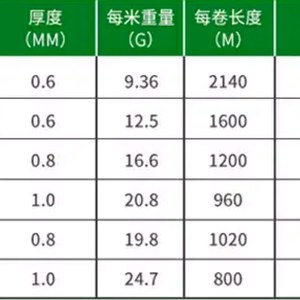
This table is a factual comparison of client-provided product data. ASTM D3950 provides the nonmetallic-strapping classification context used alongside these buyer-supplied dimensions, but it does not turn the rows into load ratings.[1] The table is not a break-strength ranking, a working-load table or a recommendation for any pallet, bundle or cargo.
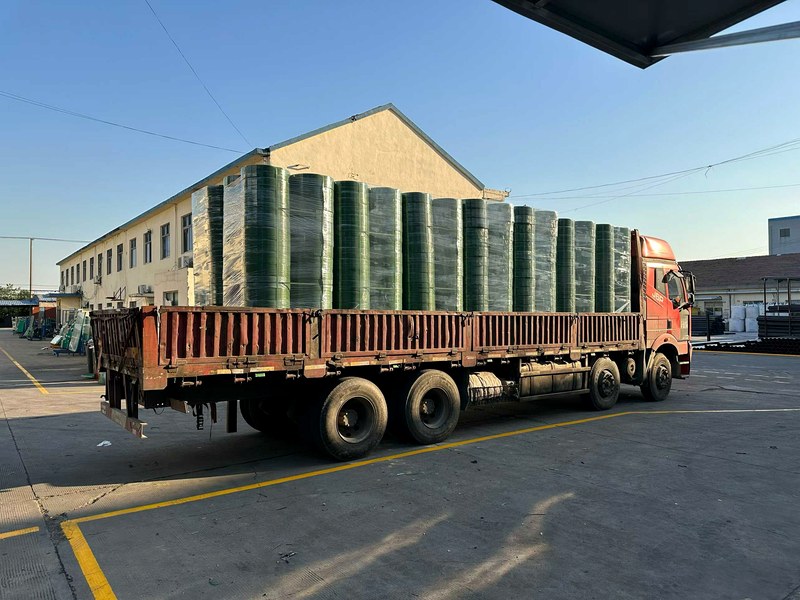
| Model | UD Packaging supply statement | Nominal size | Linear mass | Roll length | Net weight |
|---|---|---|---|---|---|
| 1206 | We supply model 1206 | 12 × 0.6 mm | 9.36 g/m | 2,140 m | 20 kg |
| 1606 | We supply model 1606 | 16 × 0.6 mm | 12.5 g/m | 1,600 m | 20 kg |
| 1608 | We supply model 1608 | 16 × 0.8 mm | 16.6 g/m | 1,200 m | 20 kg |
| 1610 | We supply model 1610 | 16 × 1.0 mm | 20.8 g/m | 960 m | 20 kg |
| 1908 | We supply model 1908 | 19 × 0.8 mm | 19.8 g/m | 1,020 m | 20 kg |
| 1910 | We supply model 1910 | 19 × 1.0 mm | 24.7 g/m | 800 m | 20 kg |
What the table can answer
It can compare a PET strapping roll by model, nominal width, nominal thickness, grams per metre, listed roll length and net coil weight. It can also narrow physical compatibility questions for a dispenser or packaging machine.

What the table cannot answer
It can’t calculate break strength, strap count, applied tension, joint efficiency, pallet rating or cargo securement. Higher linear mass or thicker plastic strap isn’t automatically the right strapping solution.
Procurement-Language Crosswalk
| Words found in an RFQ or search | What procurement should confirm |
|---|---|
| Strapping band, strapping tape, strapping banding | Confirm the actual polymer, dimensions, surface and joining method instead of relying on the label. |
| Polyester PET, PET polyester, polyester PET strapping, polyester banding | Treat these as naming variants; require one controlled PET strap specification. |
| High tensile strength, higher tensile, higher tensile strength | Ask for the test method, specimen, conditioning and baseline behind any comparison. |
| Strength and durability, tensile strength and elasticity | Separate measured material properties from joint performance and complete-load durability. |
| Poly strapping tensioner, handheld tool, steel strapping tools | Do not assume compatibility; verify material, width, thickness, joint and settings. |
| Heavy loads, heavy-duty packaging, heavy-duty strapping | These are use descriptions, not working-load ratings or approval criteria. |
| Steel coils, metal products, industrial products | Describe geometry, edges, mass distribution and handling rather than product category alone. |
| Packaging needs, pallet packaging, packaging strapping | Translate the request into a unit-load brief and a measurable trial. |
| PET strapping for brick, packaging for construction, material packaging | Record the brick, block, paver or component configuration that is used in construction. |
| Plastic shipping straps, polypropylene straps | Confirm whether the request means PP strap, poly strapping or PET banding. |
| Industrial construction packaging, industrial construction packaging solutions, heavy-duty construction | Scope the exact construction and building application before selecting a product row. |
| Construction projects, construction companies, packaging used on construction sites | Identify storage, freight and jobsite handling; the sector name is not test evidence. |
| Types of packaging, FIBC, bulky loads | State whether the pack is a carton, bundle, pallet, bulk bag or mixed unit. |
| Green packaging, sustainable packaging, recyclable materials, packaging can be reused | Document recovery route, reuse protocol and sustainability goals before making the claim. |
| Reliable packaging, dependable performance, secure packaging | Convert reliability into acceptance criteria that safeguard products and maintain product integrity. |
| Cost-effective, transportation costs, unnecessary waste | Measure material, labor, damage and disposal inputs rather than assuming a cost outcome. |
| Easier handling, handling efficiency, improve productivity, improve efficiency | Time the controlled trial and record staffing, stops, roll changes and usable condition. |
| Packaging solutions that improve transport and storage | Tie the statement to the defined route, load stability result and receiver acceptance. |
| Custom solutions, packaging expertise, industry expertise | Request a written design basis covering products and materials under demanding construction conditions. |
Compare two rows without a performance claim
See the dimensional and roll-configuration differences side by side, then carry the candidate rows into an application review.
Resource Brief
The Building-Material Unitization Brief
ASTM D4675 treats flat-strapping selection and use as an application decision.[2] Price per roll conceals the cost of tools, seals, interruptions, damage and validation. Useful total cost of ownership comparisons separate material usage, packaging labor, roll changes, strapping machinery, maintenance, rework, stoppages and damaged construction materials.
| RFQ Input | Why it changes the packaging design |
|---|---|
| Product and pack form | Brick, paver, panel, lumber, carton and bulk bag loads contact the strap differently. |
| Unit-load dimensions | Length, width and height define strap path and material usage. |
| Gross load weight | Weight sets consequence and handling context, but it does not size the system alone. |
| Pallet or base | Base condition and entry points affect stability and strap routing. |
| Edge and surface condition | Sharp, abrasive or fragile contact changes protection and tension limits. |
| Stack pattern and voids | Settlement and movement can reduce retained tension. |
| Current strap and count | Existing packaging banding provides a controlled comparison point. |
| Joint and tool model | Compatibility and measured joint performance depend on the exact hardware. |
| Line speed and operating mode | Manual packaging and automatic packaging have different handling needs. |
| Storage environment | Moisture, heat, cold and UV define conditioning requirements. |
| Transport route | Forklift, truck, terminal and construction-site handling define hazards. |
| Failure history | Slip, snap, rust, edge damage, deformation and loose bundles point to different causes. |
| Acceptance criteria | A measurable pass condition turns a sample into a procurement decision. |
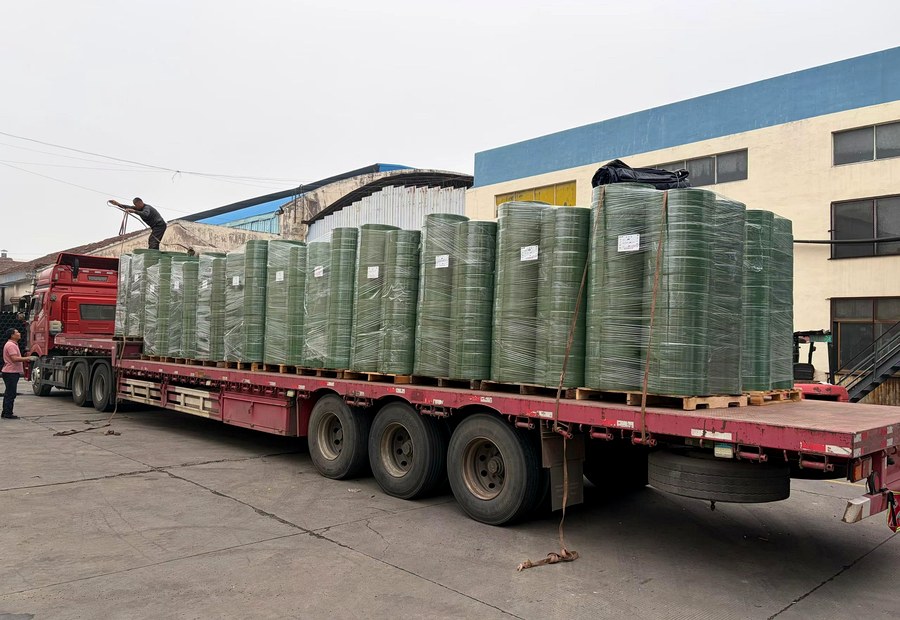
UD Packaging states that its products undergo quality control and that purchase-specific tensile and joint checks are documented. The public decision record below therefore uses the supplied SGS sample details, while the method, current edition and acceptance criteria remain order-specific.
01
Phase 01
Incoming specification review
Match the product model, nominal width and thickness, linear mass, roll length, net weight, surface, color, core and winding direction to the purchase record.
02
Phase 02
Applied-system review
Test the PET strap, joint, tensioner or strapping tool, seal or weld program, edge protection and load as one system.
03
Phase 03
Release criteria
Record the test method, conditioned sample, equipment, speed, gauge length, result, tolerance and acceptance decision. Numbers without this context can’t support consistent performance across deliveries.
04
Phase 04
Traceable change control
Keep the approved product row, tool setting, joint method and trial record together. Recheck after a strap, tool, pallet, protector, stretch film, pack pattern or supply chain change.
01
SEQ // 01
Define the load.
Send the construction product, dimensions, weight, stack, base, edge and route details.
02
SEQ // 02
Map the current system.
Record strap material, count, width, thickness, joint, tool, film and observed failure.
03
SEQ // 03
Screen physical compatibility.
Compare the six published rows with the exact tool, core, guide and joint limits.
04
SEQ // 04
Agree the trial.
Set conditioning, sample count, measurement points and written acceptance criteria.
05
SEQ // 05
Test the complete load.
Include settlement, storage, handling and representative transport hazards rather than a bench pull alone.
06
SEQ // 06
Release the documented system.
Lock the strap row, tooling, settings, protectors, pack pattern and receiver procedure.
Cases That Need Another System or More Evidence
PET isn't always the right replacement for steel, and PP strap, poly strapping and PET banding aren't interchangeable labels for one performance class. Keep the trade-off in the load review, not in a generic material ranking.
01
Packaging strap is intended for hoisting
Decision boundary
Hoisting suitability requires separate evidence for the banding and the complete load; UD’s listed packaging strap is not offered as lifting equipment.
Where to look instead
Use a separately engineered, rated and documented lifting system.[4]
02
Vehicle restraint is assumed from bundle unitization
Decision boundary
Stable bundles are not a substitute for destination-specific cargo securement.
Where to look instead
Design the vehicle restraint under the applicable carrier and regulatory rules.
03
Edges can cut or crush the strap
Decision boundary
High-strength material does nothing for an uncontrolled contact point.
Where to look instead
Change the path, add verified edge protection or choose another restraint method.
04
Receiving stability is unknown
Decision boundary
Cutting a tensioned band can release the load or expose the receiver to a collapse hazard.
Where to look instead
Stabilize the load, set an exclusion zone and document a safe release method.[5]
05
Only the cheapest roll is compared
Decision boundary
Cheapest roll price is not necessarily the lowest total packaging cost.
Where to look instead
Measure consumption, labor, tools, seals, downtime, rework and damage in a controlled trial.
06
A higher bare number is treated as safer
Decision boundary
More bare-strap force is not always more load stability.
Where to look instead
Verify joint, tension, geometry, settlement and complete-load performance.
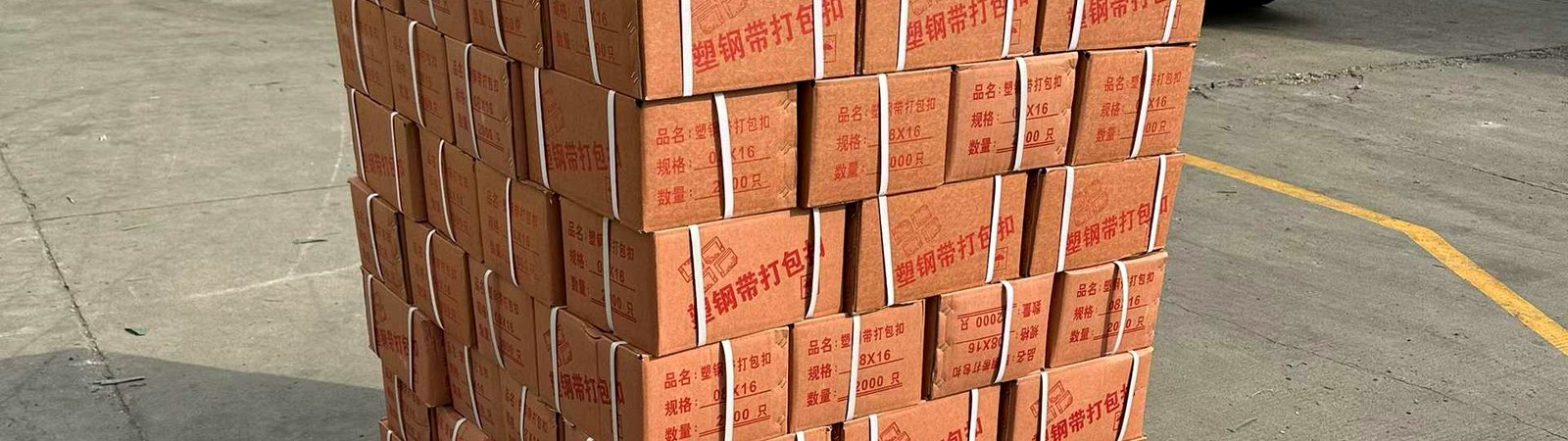
Construction & Building Packaging Management Tools
Building-Material Unitization Brief Builder
Turn the facts you already know into a structured packaging review brief. This tool checks input completeness; it does not calculate strap count, working load, joint efficiency, or approval for transport or lifting.
Six Published PET Strap Options Comparator
Compare two UD Packaging product-data rows by nominal dimensions, linear mass and roll configuration. The result does not rank strength or select a strap for a load; those decisions require joint, tool, path and complete-unit-load evidence.
Bundle Lifecycle Boundary Checklist
Trace the bundle from the packaging line to safe strap removal. The checklist separates unitization, warehouse handling, vehicle cargo securement and lifting so one approval is not mistaken for another.
Building-Packaging Total-Cost Input Worksheet
Compare a current packaging system with a candidate system using only your own costs and measured consumption. Every field starts blank, the currency is neutral, and the result is arithmetic rather than a UD Packaging savings promise.
Frequently Asked Questions
Expert insights and detailed specifications regarding our PET strapping solutions, material replacements, and heavy-duty unitization.
What is the difference between PET strap and PP strap?
PET strap is polyester made from polyethylene terephthalate, while PP strap is polypropylene. They differ in tension retention, elongation, stiffness, tool compatibility and application fit, so a PP-to-PET change needs a complete packaging trial rather than a name substitution.
Can PET strapping replace traditional steel strapping?
Replacing steel must be tested against the actual load, sharp edges, temperature, handling, joint and customer requirements. Steel and PET can serve overlapping strapping applications, but they aren't interchangeable for every heavy-duty or high-strength construction load.
Which model should be used for a brick pallet?
Six-row data can narrow width, thickness and coil configuration, but it can't size brick packaging from pallet weight alone. Send the brick or paver geometry, stack pattern, gross weight, edges, strap path, joint, PET strapping tool and distribution test criteria.
Does the SGS result apply to all six sizes?
No. Report SUZIN2605001676PL07_CN records 4,860 N and 21% for the identified submitted specimen under its stated method and conditions; it doesn't release every batch, model, joint or pallet load.
What should be checked before using a PET strapping machine?
Confirm the machine model, strap width and thickness, core size, winding direction, surface, guide path, tension range and weld or seal program. A pallet strapping machine, manual strapping tools and a battery powered polyester strapping tool don't share one universal setting.
What belongs in a PET strapping kit?
PET strapping kits can include a strapping roll, tensioner, sealer or combination tool, compatible strapping seals, dispenser, cutter and edge protectors. Correct contents follow the exact joint method, tool model and building-material load rather than a generic kit label.
How should a PET strapping roll be stored?
Keep the roll identified, protected from contamination and physical damage, and controlled against the temperature, moisture and UV conditions in the purchase specification. Preserve the model, batch and inspection records so an opened coil remains traceable to the approved trial.
Does banding make cargo safe for road transport?
Banding can unitize construction products, but the vehicle securement system is a separate transport decision. Define the cargo, route, restraint hardware and applicable rules before release; FMCSA’s cargo-securement guidance is one reference for United States interstate transport.
Can the packaging strap be used to lift the bundle?
UD Packaging doesn't present these listed PET packaging products as lifting devices. OSHA’s rule is conditional on banding being suitable for hoisting and strong enough for the load, so lifting belongs to a separately engineered and documented system.