Get in touch with UD Packaging Company

ISO Certified
PET Strapping Kit
PET Strapping Kit for Industrial Packaging
Match the PET polyester strap, joining method, tool path, dispensing and validation work to the load you actually ship. UD Packaging reviews the application before defining what is supplied, optional or buyer-provided.
Material path: PET strap plus the required joint method
Operating path: Manual, battery, pneumatic or machine inquiry
Evidence path: Specification, joint and shipping-unit checks
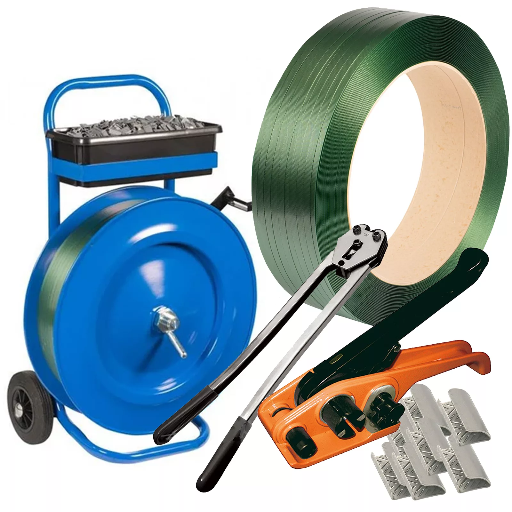
Parts We Supply and UD Packaging Capabilities
UD Packaging is an integrated industry and trade enterprise in plastic packaging materials. Our manufacturing base in Jiangyin, Wuxi, Jiangsu Province supports a portfolio that connects strapping material with related consumables and equipment.
PET production
UD Packaging manufactures PET strapping. We independently developed and introduced automated production lines for PET strapping, and our operations cover PET granulation through finished strapping.
Industrial experience
UD Packaging supports industrial packaging inquiries from its Jiangsu manufacturing base. We have more than a decade in industrial packaging, and we manufacture PET strapping.
Consumable supply
UD Packaging supplies related consumables alongside the strap inquiry. We supply industrial stretch film, and we also supply strapping seals and buckles for reviewed joining paths.
Equipment scope
We supply manual strapping machines and semi-automatic strapping machines. We also supply fully automatic strapping machines, subject to separate model and safety review.
Configurable PET Strapping Kit Components
A component list is not a compatibility decision. Unlike a prepacked retail box, an industrial quotation should identify every item, its responsibility and its compatibility status. ASTM D3950 treats nonmetallic strapping and joining methods as defined acceptance variables; it does not validate an off-the-shelf UD kit.
A component list can start a quote. Only matched evidence and application validation can close the compatibility question.
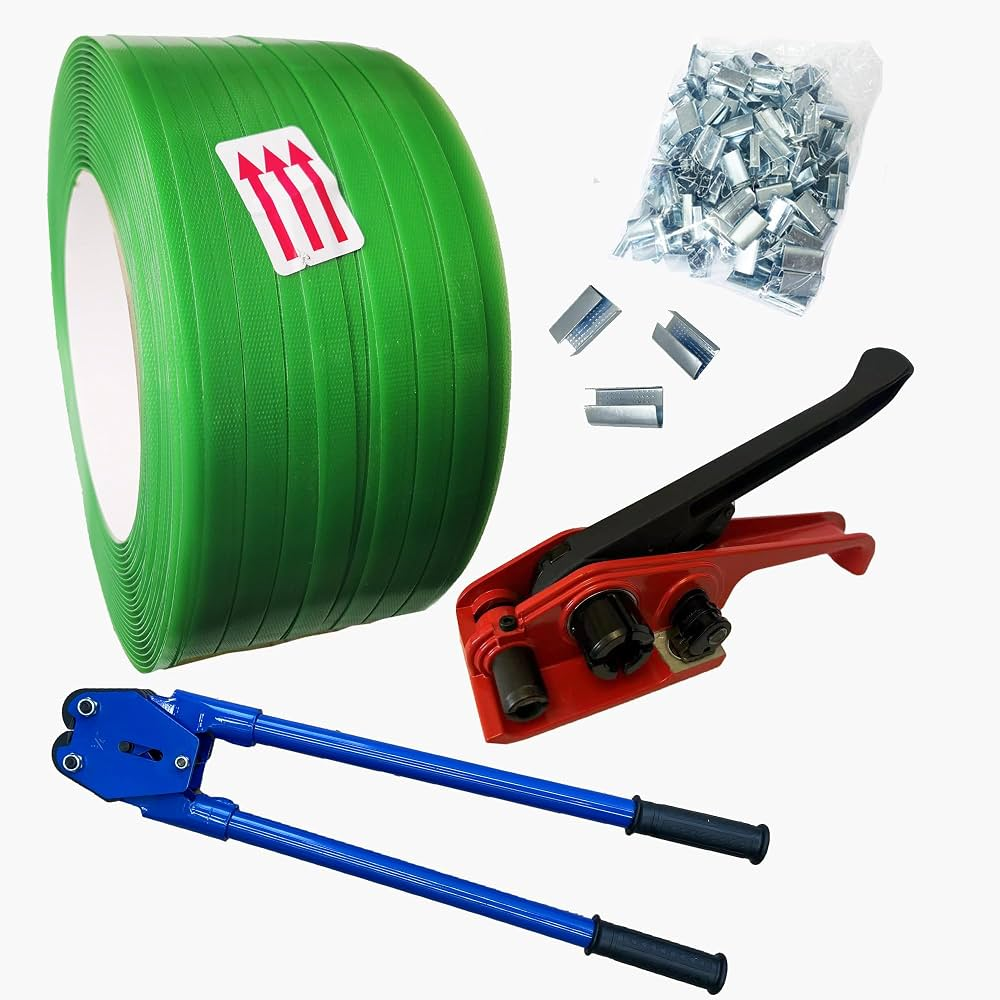
| Component | Decision input | Possible responsibility | Release status |
|---|---|---|---|
| PET strap | Width, thickness, strength, elongation, surface and coil | UD supplied after specification review | Quote review |
| Tensioning | Tool model, target tension, load sensitivity and cycle rate | Tool supplied or buyer-provided | Input required |
| Joining | Seal, buckle, crimp or friction-weld path | Consumable and tool responsibilities separated | Joint review |
| Cutting | Integrated cutter or separate hand tool | Included only when named | Confirm scope |
| Dispensing | Coil dimensions, core, movement and workstation | Optional or buyer-provided | Confirm scope |
| Powered equipment | Utilities, interfaces, guarding and maintenance | Separate equipment quotation | Engineering review |
The practical differentiator
The trade-off is deliberate: an open question stays visible until the strap, joint, tool or route evidence resolves it. That is more useful than a complete-looking list with hidden assumptions.
Purchasing boundary: a reviewed component scope is not the same as a validated shipping unit. If the package, pallet, load arrangement or containment method changes, the new condition must be reviewed and, where required, tested.
PET Strap, Seals and Buckles
Strap strength alone does not establish system strength. A strap value cannot compensate for an incompatible seal, buckle, weld setting or tool range.
Strap Identity
Material and surface finish
Width and thickness tolerance
Coil and core interface
Lot-level data requested for the quote
Joint Identity
Seal, buckle or sealless path
Tool and consumable match
Joint test configuration
Inspection and acceptance method
Load Interface
Edge condition and protection
Surface friction and settling
Strap count and applied pattern
Package and pallet contact points
Existing-Tool Scenario
For a buyer replacing strap on an existing tool, the nameplate range, current joint method and package contact condition belong in the same review.
ASTM D3950-23 provides a material-and-joint acceptance layer for nonmetallic strapping.1 It does not certify a specific UD product or replace the buyer’s application review.
Tool And Joining Compatibility Paths
A cycle that finishes is not proof that the joint or shipping unit is acceptable. The trade-off between manual and powered operation also changes utilities, consumables, operator tasks, maintenance ownership and required evidence.
Manual Path
Separate or combination tools
Operator-applied tension
Seal or buckle availability
Grip, posture and task frequency
Battery Path
Tool model and rated strap range
Joint program and inspection
Battery identity and charger scope
UN 38.3 summary for shipment
Pneumatic Or Machine Path
Air and electrical utilities
Line and control interfaces
Guarding and energy isolation
Destination-market conformity records
Inputs for a Compatible and Testable Kit
The first six fields define the minimum strap-and-joint acceptance layer. Choosing the wrong material or joint can fail because compatibility is built around ASTM D3950-23 variables, the exact tool and the applied package condition.
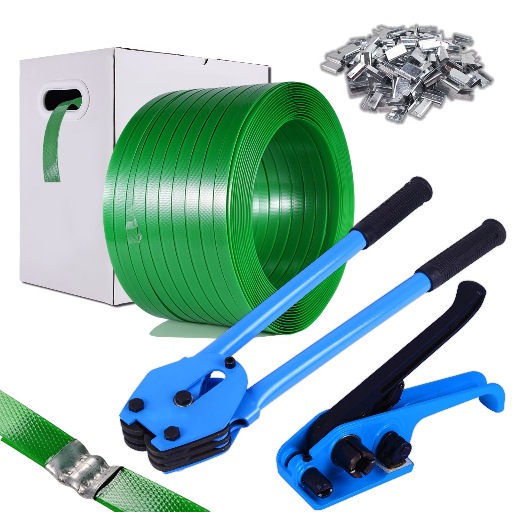
| Acceptance variable | Buyer input | UD quotation evidence | Application decision |
|---|---|---|---|
| Strap width | State the required range and tolerance | Match the quoted strap and tool range | Confirm feed, joint and load contact |
| Strap thickness | State the required range and tolerance | Match the quoted strap and tool clearance | Confirm feed and joint formation |
| Breaking strength | State the target and test basis | Provide attributable product data | Review with joint and applied pattern |
| Elongation | State the accepted range and method | Provide attributable product data | Review against load settling and recovery |
| Transverse strength | State the acceptance requirement | Provide the applicable test record | Review edge and handling exposure |
| Joint strength | Name the exact joint and acceptance basis | Map the result to strap, tool and consumable | Approve only the tested configuration |
Shipping-unit inputs
- Load type and package geometry
- Surface friction and shear planes
- Edge condition and pallet interface
- Applied strap count, location and pattern
Route and trial inputs
- Handling and transport modes
- Carrier and jurisdiction rules
- Hazard sequence and conditioning
- Sample count, acceptance and deviation owner
Quality Assurance Controls and Required Documentation
Our products have undergone SGS product quality testing. Before that statement is applied to a quoted item, request the report number, issuer, date, tested sample and product mapping.
01
Method Statement
Our client brief identifies GB/T 1040.1-2018 and GB/T 1040.3-2006 for tensile-property testing. Confirm current edition and contractual applicability; these method names do not establish joint strength or a product result.
02
Product Mapping
The report should identify the strap, lot or sample and the tested joint configuration. A material result does not prove a different finished system.
03
Quotation File
Request the applicable data sheet, compatibility record, test result and inspection basis with the quote. Unavailable records remain open items.
04
Third-Party Verification File
For a buyer audit, the test report should connect the sample, method, result and quoted product. Joint strength also needs its exact joint configuration and applicable test method.
System, Safety and Transport Boundaries
Some requests need a different owner before a kit can be selected. The following conditions trigger specialist review or removal from the quoted scope.
Lifting and hoisting
Package strapping is not presented as a lifting component. OSHA Part 1917 is limited to marine terminals, so its rules are not a global product approval.
Vehicle cargo securement
Unitization and vehicle securement can interact, but the latter needs carrier, route and jurisdiction review. ASTM D4675 recognizes both application layers.
Unstable or low-friction loads
Strap selection alone cannot correct an unstable base, unsuitable pallet, uncontrolled shear plane or missing edge protection.
Automated machinery
No machine is released from a general inquiry. Model, interface, guarding, stored energy, isolation and destination conformity must be reviewed separately.
Battery shipment
A battery tool stays outside the deliverable scope until the battery identity, rating, UN 38.3 summary, packaging, marking and shipping responsibility are confirmed.
Changed shipping unit
A test result should not be transferred after changes to the package, pallet, arrangement or containment method without review.
Industries We Review for Compatibility
UD Packaging serves packaging inquiries across metal manufacturing, new energy, building materials, wood, paper, chemical fiber, cotton textile, agriculture, food, electronics and tobacco. An industry name starts the discussion; the actual load and route define the review.
01 //
01
Rigid and dense loads
Document edge condition, surface contact, pallet support, applied pattern and handling shocks.
02 //
02
Compressible or settling loads
Document load change, retained containment need and the trial acceptance condition.
03 //
03
High-cycle operations
Document cycle count, task duration, utilities, maintenance and operator interface before selecting a powered path.
PET Strapping Kit Assessment Tools
PET Kit Compatibility Brief
Tick every input that is ready, then attach the supporting file or write the value beside the item when you send the inquiry. Unchecked items become review questions, not guessed specifications.
→Strap & Joint Evidence Checklist
Use one row for each quoted strap-and-joint configuration. A check means the evidence maps to the exact item, method and configuration under review.
→Application Input Gap Checker
Check every item that is known and supported. Any unchecked group should stay open in the quotation rather than being replaced with a typical value.
→Frequently Asked Questions About PET Strapping Kits
What can be included in a PET strapping kit?
The reviewed scope can cover PET strap, tensioning, joining, cutting, seals or buckles, dispensing and optional equipment. The quotation should identify every line as supplied, optional, buyer-provided or pending review, then map it to the relevant model, strap dimensions, joining method and evidence.
Is a plastic strapping kit the same as a PET strapping kit?
Plastic strapping kit, poly strapping kit and banding kit are broad search labels that may include PET or polypropylene. PET and polypropylene are not interchangeable by default.
Can an existing tool be used with a new PET strap?
Compatibility depends on the tool model, approved material, strap width and thickness, joining method and operating condition. Send the tool nameplate and current strap label for review.
Which dimensions should be included in an inquiry?
Provide the current or target width, thickness, coil, core and tolerance information. Add the current tool model and joint method so the interface can be checked.
How should joint strength be reviewed?
Map the result to the exact strap, tool, seal or weld configuration and test method. Do not use strap breaking strength as a substitute for joint evidence.
When does a manual path make sense?
Manual selection starts with task frequency, package access, required joint, operator posture and the ability to apply and inspect the joint consistently. Before a recommendation, record the joint type, tool format, package access, task frequency, operator interface and inspection method. Purchase price alone is not enough.
What changes with a battery or pneumatic path?
Powered paths add model range, utilities or battery documentation, maintenance, noise and operator-interface questions. Battery shipment and pneumatic energy isolation also need separate ownership.
Why are there no public price or lead-time figures?
The component scope, quantity, tools, consumables, packaging and delivery basis have not been fixed. UD Packaging confirms commercial terms in the formal quotation.
Can a distribution test prove every future shipment?
No. Results apply only to the tested shipping unit and conditions; changes can require revalidation.
What files help the review move faster?
Send the strap label, tool nameplate, package photographs, current specification, route details and available test records.