Get in touch with UD Packaging Company

ISO Certified
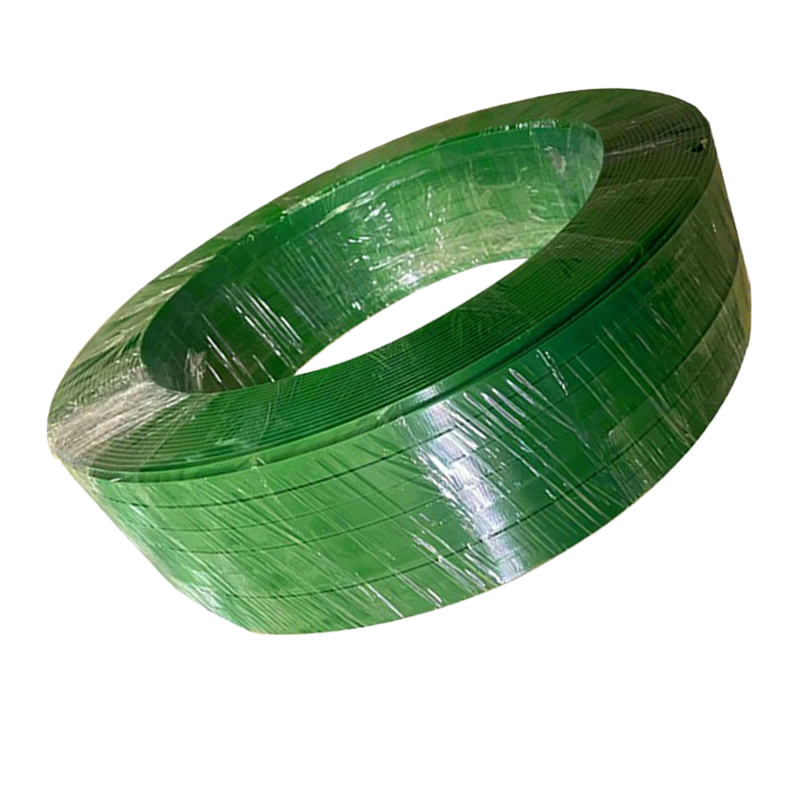
Recycled PET Strapping
Recycled PET Strapping for Evidence-Ready Industrial Procurement
Treat recycled PET strapping as an applied load-security system: the material claim, strap configuration, joint, equipment, route and acceptance evidence must agree.
PET Strapping Supply With the Supporting Packaging System
UD Packaging researches, develops and produces PET strapping for industrial load unitisation. The supplied brief identifies a manufacturing base in Jiangyin, Wuxi, Jiangsu Province, China.
- PET Strapping: Produced for industrial packaging and load unitisation.
- Integrated Chain: PET granulation to finished goods with automated PET strapping production lines.
- System Support: Strap, seals, buckles and equipment can be reviewed together.
- Evidence Boundary: An integrated production chain is a capability fact; it is not proof of recycled feedstock origin, recycled percentage or certification.
- Applied-System Scope Reference: ASTM D3950-23.

Approval Starts With Boundaries
01
No recycled percentage is inferred from colour or product naming.
02
No certificate scope is inferred from a scheme, competitor or product category.
03
No steel-to-PET change is approved without load and joint validation.
From PET Granulation to Finished Goods
UD Packaging covers the PET strapping chain from PET granulation to finished goods and operates automated PET strapping production lines. That wider process boundary gives buyers one place to request material, configuration and quality-control records.
01
Material Input
Identify source type, declared recycled share, calculation basis and the document that supports the declaration.
02
Process Control
Ask how drying, contamination control, intrinsic-viscosity monitoring and thermal history are managed for the offered grade.
03
Strap Configuration
Freeze width, thickness, surface, coil format and the values to be shown on the quotation or technical sheet.
04
Released Evidence
Connect the product identity and batch to the agreed inspection or test record before approval.
Why Material History Belongs in the Specification
Peer-reviewed rPET research links moisture, oxygen, heat and ultraviolet exposure with degradation, while intrinsic viscosity indicates average molecular weight. These are process-control questions, not assumed UD performance results.
Recycled Content, Recyclability, Colour and Certification Are Separate Claims
Search terms such as eco-friendly PET strapping, green PET strapping and sustainable strapping express buyer intent, not a proof level. Each environmental declaration needs separate documentation, scope and an acceptance boundary.
| Evidence Level | Buyer Requests | What It Can Establish | What It Cannot Establish Alone |
|---|---|---|---|
| Material declaration | Feedstock origin, pre-consumer or post-consumer split, percentage and calculation method | The supplier’s stated material claim for a named product | Independent certification or shipment traceability |
| Scope certificate | Certified organisation, site, scheme, validity and covered product category | Whether the listed organisation and scope are certified | That every product or shipment is covered |
| Product evidence | Product name or code tied to the offered strap | Whether the declared scope reaches the quoted configuration | Shipment-level custody by itself |
| Transaction evidence | Shipment or invoice linkage and custody records | Whether a specific transaction carries the claimed material | Load performance or local recyclability |
| Recovery confirmation | Destination collector, accepted colour, preparation, attachments, contamination and volume | Whether the used strap has a practical recovery route | Recycled content in the incoming strap |
Common Assumption
An integrated production chain does not necessarily prove recycled feedstock origin or percentage.
Certificate Scope
Contrary to a label-only reading, a certification explainer is not a substitute for the supplier’s active scope and product evidence. The trap is transferring another organisation’s certificate to the quoted strap.
Destination Reality
PET resin does not necessarily have a practical recovery route; collector acceptance must be confirmed.
GRS Scope
Textile Exchange describes GRS as a third-party system for recycled-material verification and chain of custody. That scheme description does not certify UD Packaging or an offered shipment.
Material Recycling Scope
ISO 18604:2013 defines assessment requirements for packaging classified as recoverable through material recycling and does not create conformity by itself. Destination acceptance still requires confirmation.
The Five-Link rPET Approval Chain
A recycled-material claim describes only a single link. A responsible strap decision maps material and process evidence to the physical system securing the load.
Why five links
The mismatch risk appears because material evidence, ASTM D3950-23 test dimensions and the installed joint system answer different questions. UD Packaging’s professional sales and technical team uses application inputs to support packaging-solution selection.
Link 01
Feedstock and process
Origin, declared share, drying, contamination and traceability.
Link 02
Strap configuration
Width, thickness, surface, coil and measured properties.
Link 03
Joint and equipment
Seal, buckle or weld method plus tool or machine settings.
Link 04
Load and route
Edges, settling, movement, storage and transport exposure.
Link 05
Evidence and recovery
Acceptance record, shipment scope and destination recycling route.
The applied-system rule
ASTM D3950-23 covers nonmetallic strapping and joining methods for shipment, unitising and palletising, with breaking strength, elongation and joint strength among its applicable dimensions.It supplies a test vocabulary, not evidence that an untested UD configuration conforms.
Application Fit and Hidden-Constraint Map
Use the table as a request-and-confirmation record. Blank values stay blank until the buyer supplies the application input and UD Packaging confirms the offered configuration. For nonmetallic strap and joint terminology, see ASTM D3950-23.
For low-risk repeat purchases, keep only the fields that may change acceptance. Retain the full comparison for a material change, new load, new machine, new route or audited sustainability claim.
Where rPET Fit Must Be Validated
PET strapping is not automatically a substitute for steel or polypropylene. Validate the load, joint, equipment and route before a material change; the wrong grade can leave a hidden system risk. Applicable test dimensions are outlined in ASTM D3950-23.
Situation
Sharp Or Abrasive Edges
Hidden Risk
Contact damage can invalidate a material-only comparison
Decision Path
Review edge protection and validate the applied pattern
Situation
Settling Or Expanding Loads
Hidden Risk
Initial tension does not describe retained system behaviour
Decision Path
Define route and load movement, then test the full system
Situation
Existing Weld Tools
Hidden Risk
Strap, tool condition and settings affect joint formation
Decision Path
Run the offered strap on the installed tool and inspect the joint
Situation
Extreme Route Exposure
Hidden Risk
Temperature, weather and storage can shift the acceptance boundary
Decision Path
Document the route and obtain a configuration-specific limit
Situation
Steel Conversion
Hidden Risk
Generic comparisons ignore edge, load and securing requirements
Decision Path
Keep steel where the PET system has not been validated
Quality Control and Product-Document Verification
UD Packaging states that its products undergo strict quality control, including tensile-property and joint-strength checks. The evidence risk remains because ASTM D3950-23 fields, the offered configuration, sample identity and report scope must still reconcile.
Read the test record literally
NIST states that its calibration and test results apply only to the specific instrument or standard at the time of test unless stated otherwise, and traceability alone does not establish fitness for purpose.4 Apply the same discipline when reading any supplier report: identify the sample, property, method, result, reference and acceptance boundary.
- Product name, code, width, thickness and batch match the quotation.
- Test method, laboratory or responsible function, date and sample identity are visible.
- Breaking-strength, elongation and joint results remain separate values.
- Certificate owner, site, product scope, validity and shipment linkage are read separately.
- Any missing evidence is marked as a pre-order request, not converted into a product claim.
Routine
Repeat configurationConfirm product code, dimensions, lot identity and the routine record agreed for the order.
Changed risk
New material or setupAdd product-linked mechanical and joint evidence when the strap, joint, tool, load or route changes.
Claim-sensitive
Audited sustainability claimAdd certificate scope, product scope and transaction evidence where the purchase specification requires them.
Strap, Consumables and Equipment in One Review
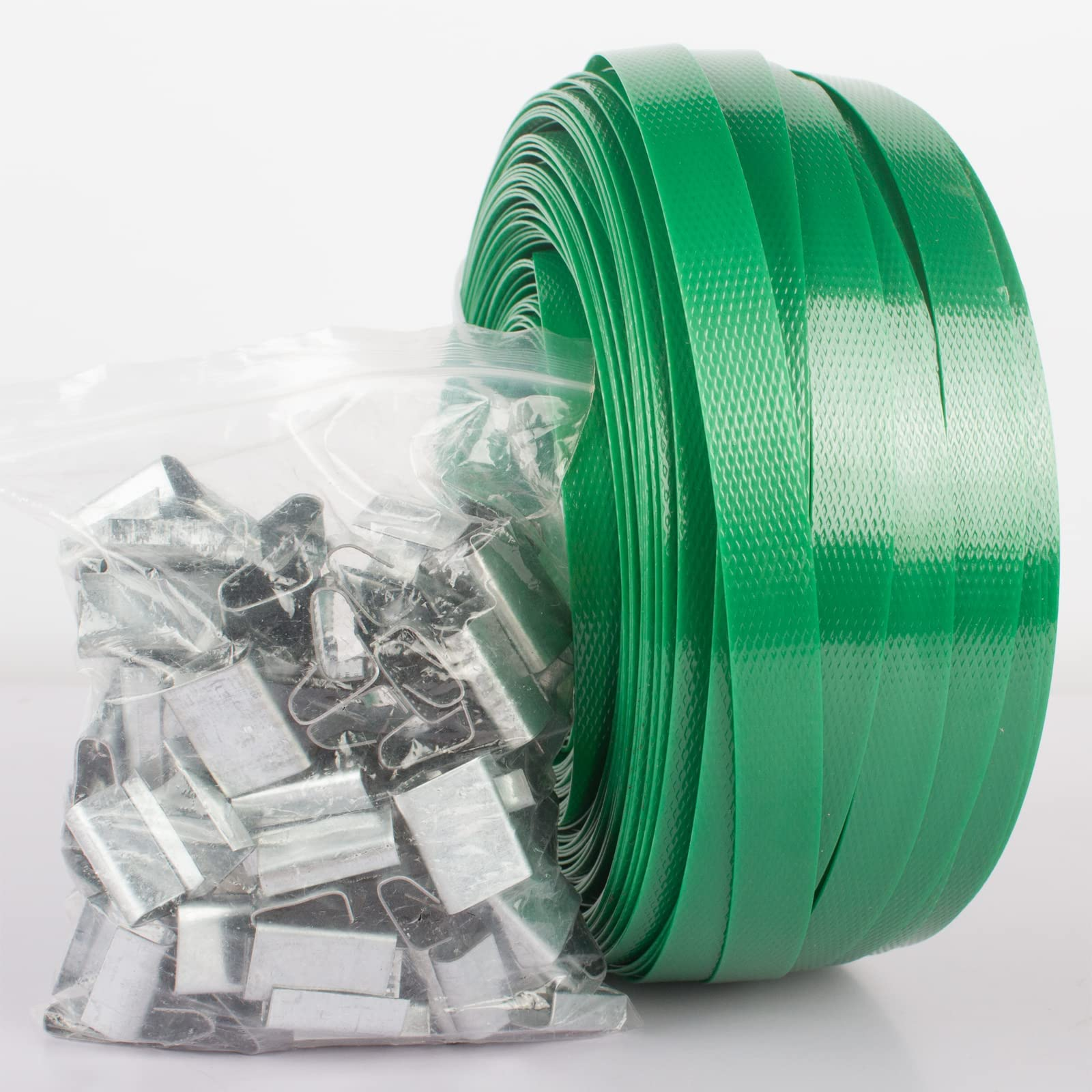
UD Packaging supplies strapping seals and buckles. UD Packaging also supplies manual, semi-automatic and fully automatic strapping machines, plus industrial stretch film for palletised-goods protection.
Strapping and joints
Review the strap configuration together with the seal, buckle or weld method used to create the joint.
Application equipment
Match core, feed, tensioning and sealing requirements to the manual, semi-automatic or fully automatic setup.
Pallet protection
Coordinate strap placement with stretch film and edge protection rather than treating each packaging material in isolation.
Strap and joining-method scope reference: ASTM D3950-23.
Industrial Loads Reviewed Against Their Own Conditions
UD Packaging serves metal manufacturing, solar photovoltaics, building materials, wood, paper, chemical fibre, cotton textile, agriculture, food, electronics and tobacco. Inclusion in this list does not approve one strap configuration for every load in that sector.
Steel and aluminium
Solar photovoltaics
Brick and building materials
Wood and paper
Chemical fibre and textiles
Agriculture and food
Electronics
Tobacco
Packaging Terms for ASTM D3950-23 Quote Comparison
A terminology mismatch creates an acceptance risk because a material label and an applied-system result answer different questions. Ask UD Packaging to use the same strap and joint terms in the quotation and the ASTM D3950-23 evidence request.
Material Terms
Application Terms
| Term on the request | What the buyer should clarify |
|---|---|
| PET strap | State whether “polyester PET” or recycled polyester is required, then attach the material evidence level to the strap code. |
| Plastic strapping | Name the polymer; plastic strapping can refer to more than one strap family. |
| PP strap | Do not apply a PP or polypropylene strapping value to a PET strap configuration. |
| Steel strap | Record the existing steel strapping pattern and load boundary before testing an alternative strap. |
| Banding | Clarify whether banding means the strap material, the completed joint or the entire securing pattern. |
| Strapping tool | Name the manual or powered strapping tool and the joint method used with the proposed strap. |
| Term on the request | What the buyer should clarify |
|---|---|
| Tensile strength | Keep strap tensile strength separate from joint strength and applied-system performance. |
| Heavy-duty load | Replace the label with the actual load, edges, movement and required strap acceptance evidence. |
| Transit exposure | Describe handling, storage, route and weather conditions that the strap system must face in transit. |
| Rust and handling | If rust or safer handling drives a change, record the objective without treating it as proof that the new strap fits the load. |
| Bundle and waste | Define the bundle pattern and how the site plans to cut, sort and reduce waste after strap removal. |
Recycled PET Strapping Application Tools
Recycled Content Evidence Readiness Checklist
Check what is available for the exact supplier, site, product and shipment. A high score means the evidence package is more complete; it does not certify the claim.
rPET Application Fit Completeness Checker
Record whether each link in the applied system is known. The result measures input completeness; it does not calculate strap size or approve a substitution.
Evidence-Ready rPET Strapping RFQ Builder
Enter only known requirements. The builder creates a browser-local summary for discussion; it does not size strap, submit data or create UD commercial commitments.
Recycled PET Strapping FAQs
01
/ 09
What is recycled PET strapping?
It is polyester strapping offered with a claim that some or all PET input comes from recycled material. Approval needs the declared percentage, pre-consumer or post-consumer classification, calculation basis and product scope rather than the product name alone.
Does green PET strapping prove recycled content?
No. Colour is a visual property, while recycled content is a material claim that needs a declaration or appropriate third-party and transaction evidence.
What should support a “GRS certified PET strapping” claim?
Ask for the active scope certificate, certified organisation and site, covered product category, validity and transaction evidence where required. GRS is a Textile Exchange scheme; the scheme’s existence does not prove UD certification.
Can rPET strapping replace steel strapping?
Only after application review. Use the five-link chain to check feedstock and process, strap configuration, joint and equipment, load and route, and evidence and recovery before approving a change.
Why can a PET strap joint fail to weld correctly?
The strap, joint method, tool condition and settings form one system. Confirm the offered grade on the installed tool, then record the joint result rather than relying on a strap-only tensile value.
How should used PET strap be removed from a load?
Use the site’s approved handling procedure and suitable cutting equipment, control stored tension and keep people out of the release path. This page does not replace a site-specific safety assessment.
Can used PET strap enter a local recycling programme?
Acceptance depends on the destination collector, colour, contamination, attachments, preparation, volume and local economics. ISO 18604:2013 supplies an assessment framework, but a local collector must confirm the actual route.
Which test fields belong in a technical review?
ASTM D3950-23 identifies breaking strength, elongation, transverse strength and joint strength among the applicable dimensions for nonmetallic strapping. Request only the fields relevant to the offered strap and applied system, with sample identity and results.
What information should accompany a quote request?
Send the load, route, edges, installed equipment, strap and joint requirement, evidence level, quantity, packing and destination. The full scorecard separates technical, quality, delivery and commercial inputs for a comparable review.