Get in touch with UD Packaging Company

Industrial packaging fit confirmation
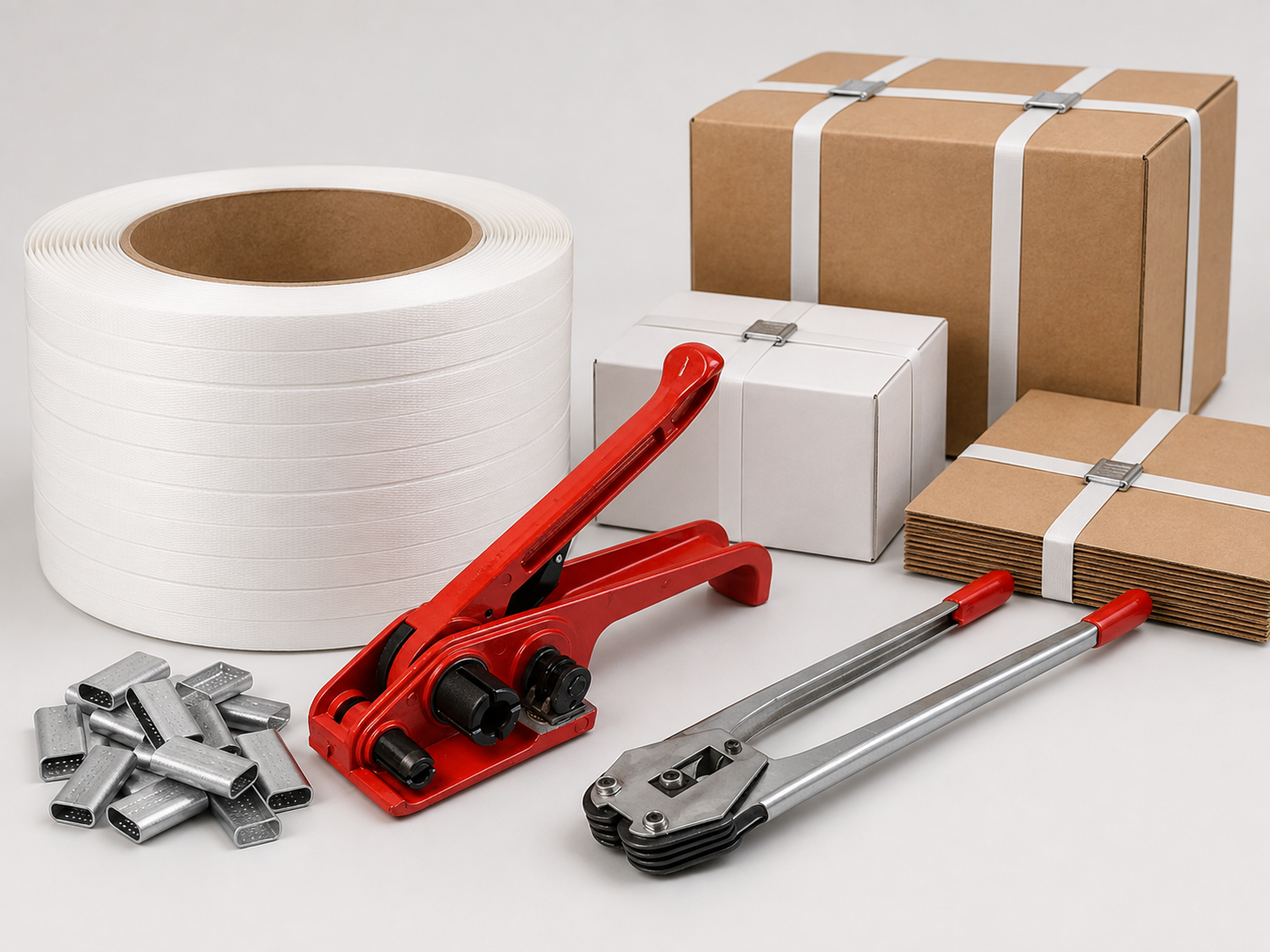
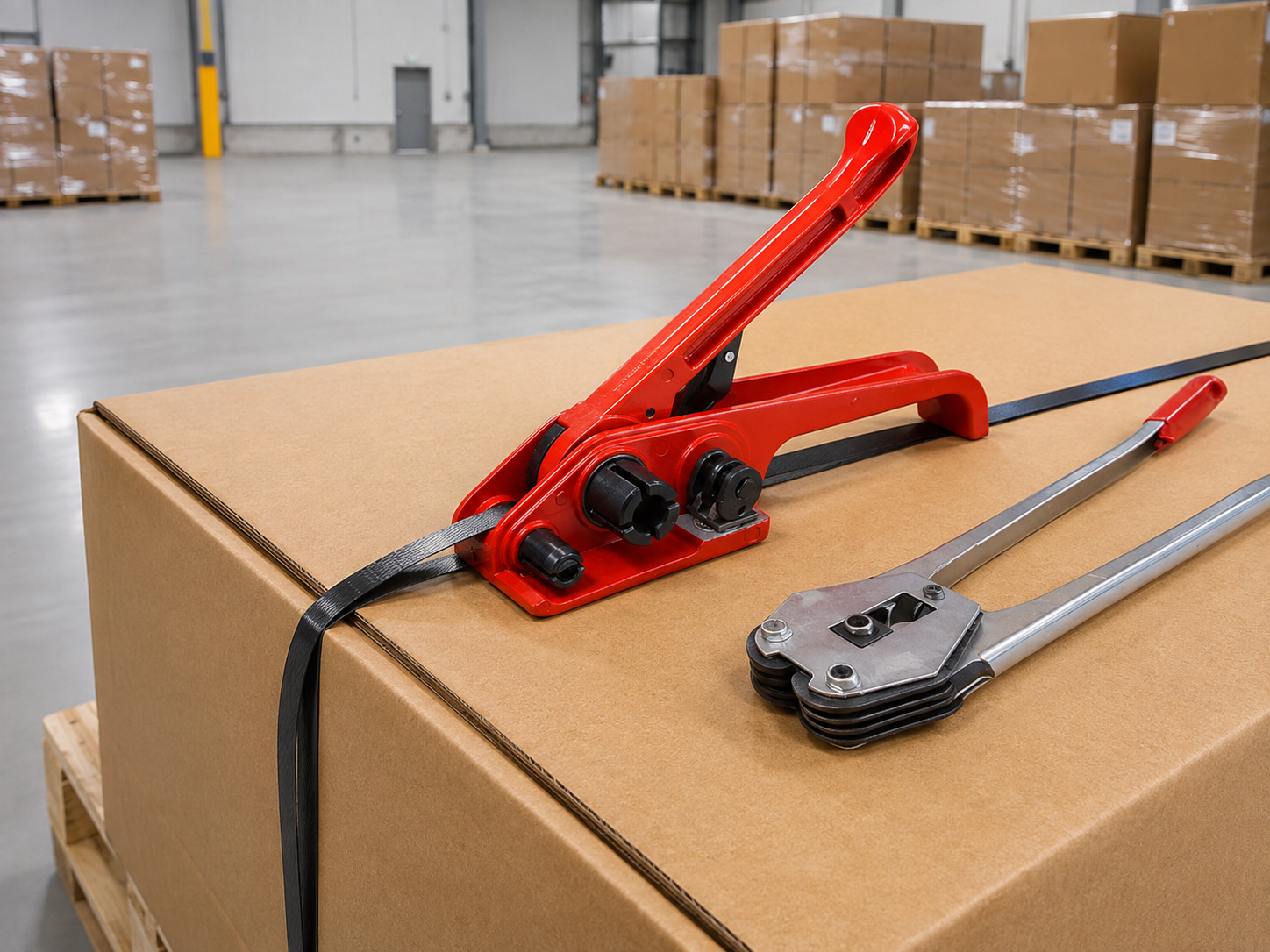
Strapping Tensioner for PET Packaging
Before a configuration goes to quote, match the tensioning tool to your strap, joint, package, work process and verification plan.
PET strapping tensioner sourcing built around application inputs
Manual, pneumatic, and battery categories compared without a blind recommendation
Strap, seal, joint and unit-load questions managed within a single RFQ path
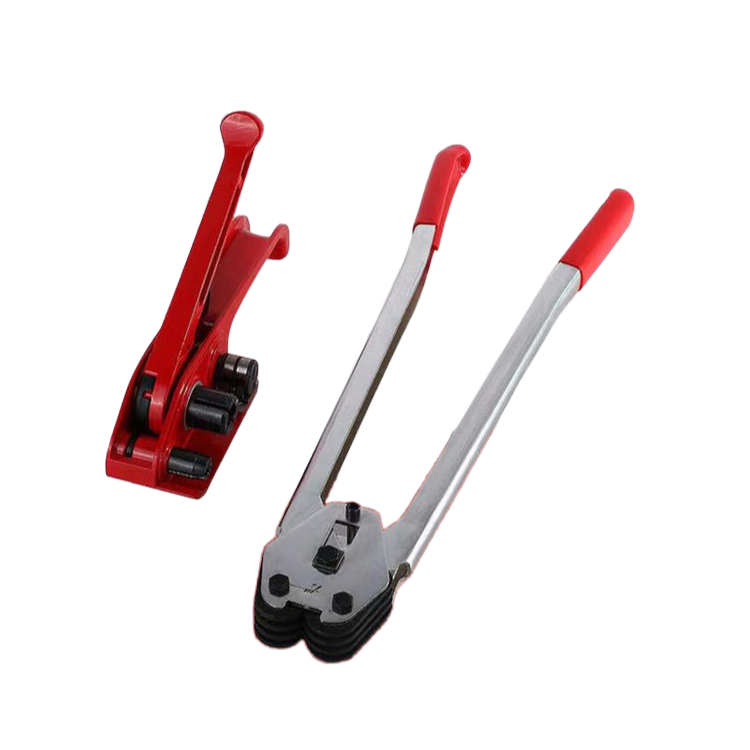
Summary: Start with six system facts
Strap material and dimensions
Package geometry and edges
Load behavior during handling
Joint method and closure
Work pattern and utilities
Distribution and acceptance plan
Industrial Packaging Fit for Strapping Tools
ASTM D4675 treats strap selection and use as a system question, not a tool-label shortcut. The strapping tensioner is one part of that system, and tool labels are not interchangeable. A useful sourcing decision first separates strap-to-tool fit from packaged-load requirements.
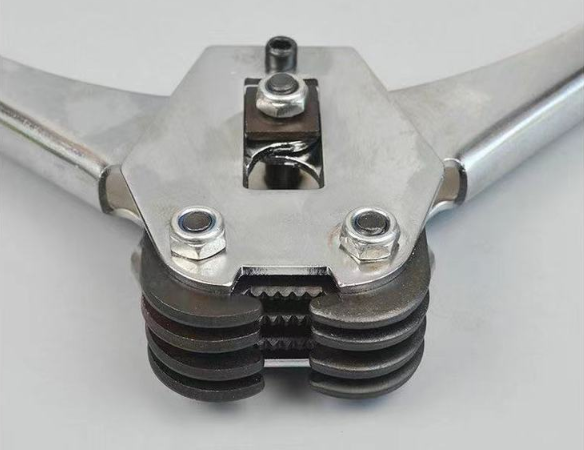
Material and size belong to an identified tool
Strap fit
PET is polyester strapping, one member of the broader poly and plastic strapping category. PET, polypropylene, woven, composite, and steel straps do not create an interchangeable tool category. Before you ship a unit load, record the exact material, grade, width, thickness, and surface condition for the identified strap tensioner.
Tensioning is not the same as joining
Function fit
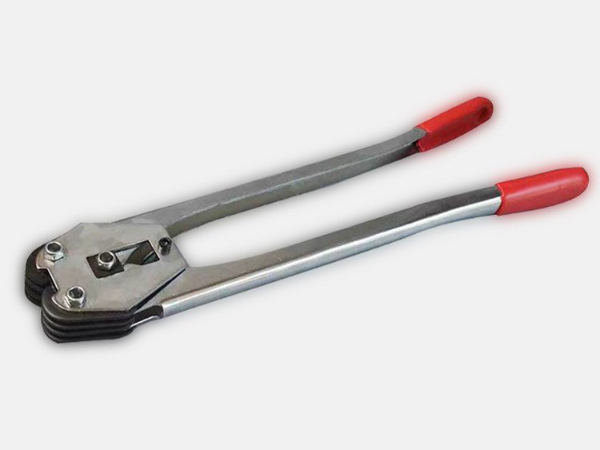
A tensioner applies force to the strap, while a sealer, buckle, or weld process forms the joint. A combination tool performs multiple functions only when its documentation says so.
The package determines the real duty
Load fit
Rigid edges, fragile surfaces, load settling, compression, movement, and handling interfaces change the system question. Tool selection cannot be separated from the package it serves.
Procurement checkpoint: Treat any model range or tension value as product-specific. UD Packaging confirms those fields in the quotation for the identified item.
Request QuotationPET Strap and Packaging-System Compatibility Inputs
ASTM D4675 places responsibility on the user to select suitable strapping and perform appropriate testing. Use the table to frame a PET strapping tensioner request as a system brief.
| RFQ field | Buyer provides | Supplier confirms | Verification record |
|---|---|---|---|
| Strap identity | Material, grade, finish, and supplier reference | Compatible strap family for the identified tool | Data sheet or written compatibility statement |
| Strap dimensions | Width, thickness, and allowed variation | Accepted dimensional range for the exact item | Model data and incoming-measurement record |
| Package geometry | Dimensions, edges, curvature, and contact surfaces | Access, orientation, and edge-protection needs | Package drawing, sample, or application review |
| Load behavior | Weight distribution, compression, settling, and movement | Suitability questions and test inputs | Unit-load test plan and acceptance record |
| Joint method | Seal, buckle, weld, or method to be selected | Compatible joining components and process boundary | Joint configuration identified in writing |
| Joint qualification | Required strength or efficiency criterion | Available method, sample identity, and result documentation | Product-linked report or buyer validation result |
| Work pattern | Stations, shifts, mobility, frequency, and operator interface | Manual, pneumatic, or battery category to evaluate | Approved configuration and identified manual |
| Distribution duty | Transport modes, storage, climate, vibration, and handling | Open validation questions and system boundaries | Ordered test sequence with acceptance criteria |
Two independent qualifications: Joint method identifies how the overlap is closed. Joint strength or efficiency addresses what the completed joint can withstand under the applicable test.
Tensioner-to-Seal Boundary Map
Map the packaging station by function before comparing tool names under the joining-method boundary in ASTM D3950. The differentiator is a functional boundary: a tensioner is not a substitute for a sealer. Confirm against the identified manual and joint system before choosing the trade-off between separate and combination tools.
SEC. 01
Control the tensioning function
Confirm how the identified tool grips the selected strap, applies tension, releases, and limits adjustment. Use the exact manual and configuration record for the operating method.
SEC. 02
Define the joining function
Identify the seal, buckle, or weld process and its compatible components. Keep joint qualification separate from strap-body properties and tensioner selection.
SEC. 03
Place cutting in the scope
Record whether cutting is integrated, performed by a separate tool, or outside the requested station. Include guarded handling and release requirements in the workplace review.
SEC. 04
Verify the packaged system
Evaluate the complete unit load across its distribution sequence. An input checklist organizes the work but does not certify the package or the tool.
Manual, Pneumatic, and Battery Tool Decision Inputs
Match the strapping system and operator interface for each manual, pneumatic, or battery-powered tool category. Compare the work pattern, infrastructure, service route, and charger or air supply where applicable. Use the OSHA technical manual and the applicable workplace assessment for noise and vibration questions.

Manual
Pneumatic
Battery
Portable work with direct operator input
Review operator force, posture, repetition, access around the load, separate joining steps, and consistency requirements.
- No power utility assumption
- Operator-dependent workflow
- Separate-tool scope to confirm
Air-supplied work at a defined station
Review the available pressure and air quality against the identified manual, plus hose routing, couplings, noise, vibration, and maintenance access.
- Air system becomes part of fit
- Hose and connection management
- Noise and vibration assessment
Cordless mobility with charging control
Review battery and charger identity, duty pattern, charging location, spare strategy, inspection, thermal protection, and service support.
- Battery platform must be identified
- Charging and storage controls
- Electrical and thermal review

Decision rule
Choose a category for evaluation, then confirm an exact model. Do not turn a work-volume label or a power-source preference into a universal recommendation.
Tool-Mode Risk Boundaries Before Operation
Begin the safety review before strap is threaded or tension is applied. The exact tool identity, manufacturer manual, workplace procedure, and trained operator govern the operating steps. Battery and charger screening should also use current CPSC battery guidance.
Risks shared across tool categories
- Stored energy and recoil after strap release or breakage
- Sharp strap ends, package edges, and cutting surfaces
- Pinch, crush, and cut points near moving components
- Load movement when the package is not stable

Risks that change with the power source
- Manual: repeated force, posture, reach, and grip demand
- Pneumatic: hose condition, coupling integrity, pressure, noise, and hand-arm vibration
- Battery: pack condition, charger match, electrical damage, overheating, fire, and thermal burns
All powered tools: isolation and service controls from the identified manual

Load and Package Qualification
A strap may appear to suit a tool and unit load yet still be wrong for the shipment. Define the pressures, surfaces, movements, and handling constraints the packaged load will encounter before specifying the application.
RESOURCES
01
Geometry and contact
Record package dimensions, corner radii, sharp or abrasive edges, curved surfaces, voids, overhang, contact points, and the available path for the tool.
02
Load behavior
Describe whether the load settles, compresses, expands, shifts, vibrates, or contains fragile surfaces. Include how the unit changes from packing through final handling.
03
Handling and environment
Identify forklifts, conveyors, manual handling, stacking, storage duration, temperature, moisture, sunlight, dust, and other relevant exposure.
04
Unitization and transport securement
ASTM D3950 includes nonmetallic strapping for unitizing and some car or truck-load bracing. Unitization is not a substitute for vehicle cargo securement, and lifting still requires the applicable rated devices, system criteria, and documentation. Do not infer those functions from a packaging-tool category.
Unit-Load Validation Input Set
Evaluate each packaging unit as a complete assembly. Use ASTM D4169-23e1 as a framework for developing a distribution-cycle test plan that reflects the intended route and handling sequence.
UD Packaging RFQ review principleA tool is identified only after the strap, joint, load, workflow, and evidence requirements are connected in one review.

Record transport modes, transfers, storage, handling equipment, route conditions, and environmental exposures.
Combine stacking, vibration, shock or impact, handling, and environmental conditioning in the order that represents the distribution path.
Document the assurance or severity basis and explain why it represents the shipment instead of choosing an arbitrary level.
Identify the package, load, strap, joint, and application method, then define when inspection may occur without invalidating the sequence.
Define allowable movement, package damage, product damage, joint condition, strap condition, retained-tension observations, and decision ownership.

Industries We Serve: Application Context for the RFQ
UD Packaging supports industrial buyers with different packaging requirements. An industry label can hide important edge, impact, contamination, or handling conditions. Use the application name to start the load review, not to replace package and tool qualification.
Rigid and high-edge-contact loads
Metal manufacturing, solar photovoltaics, building materials, and wood projects should describe edge conditions, surface protection, bundle geometry, settling, and handling interfaces.
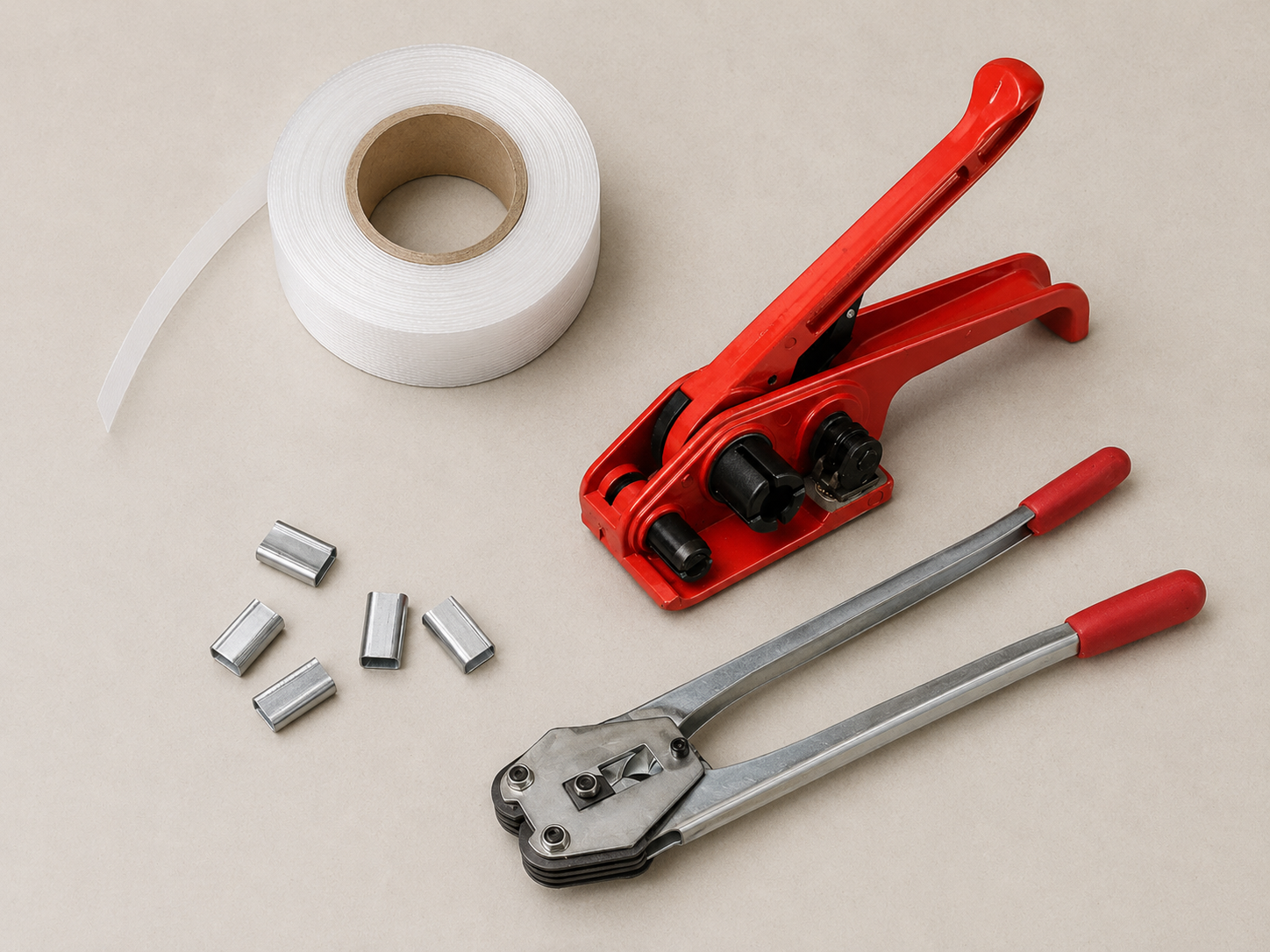
Compressible and changing loads
Papermaking, chemical fibers, cotton textiles, and agricultural products should identify compression, recovery, moisture, storage, and retained-tension concerns.
Controlled product environments
Food, electronics, and tobacco packaging should state cleanliness, marking, contact, environmental, and traceability requirements relevant to the package.

PROCESS
How We Work: Coordinate Packaging-System Procurement
A fragmented order can create a compatibility gap because strap, seals, and equipment are reviewed separately. UD Packaging is an integrated industry and trade enterprise in plastic packaging materials, and over the past 10 years we have built strategic partnerships with domestic and overseas enterprises. Our base is in Jiangyin, Wuxi, Jiangsu, and our mission is to promote renewable-resource utilization.
Coordinate Procurement
Manufacturing and supply context
We operate a modern manufacturing base. We have independently developed and introduced automated PET-strapping production lines.
Partnership context
We have built strategic partnerships with domestic and overseas enterprises over the past decade. The exact product, document, and commercial scope is confirmed in each quotation.
Packaging materials
We supply PET strapping. We supply industrial stretch film, and we supply strapping seals.
Equipment categories
We supply manual, semi-automatic, and fully automatic strapping machines. We support one-stop industrial packaging procurement.
Ordering Process: RFQ and Confirmation for Packaging Tools
Guidelines
Price follows confirmation of the identified tool, compatible strap range, joint system, quantity, support scope, required documents, and destination. The commercial quotation records these details after the technical questions have been resolved. Request a specific RFQ from UD Packaging once the input package is complete.
Technical input package
- Strap material, grade, width, and thickness
- Package dimensions, edge condition, and load behavior
- Joint method, closure components, and qualification need
- Tool mode, work pattern, utilities, and station layout
Commercial input package
- Requested quantity and delivery destination
- Required manuals, data sheets, reports, and traceability
- Spare, service, training, and support questions
- Price, order minimum, delivery timing, warranty, and payment fields to quote
Submit the system brief.
Use measured inputs, an approved specification, or a representative package record.
Resolve fit questions.
UD Packaging identifies the information that must be clarified before a product configuration is quoted.
Confirm the quotation.
Review item identity, strap compatibility, included accessories, documentation, commercial terms, and exclusions.
Commercial checkpoint: Request a specific quotation only after the technical input package is complete.
How We Work: Procurement Tools for Packaging Systems
Use these strapping tools as structured inputs for supplier discussions and internal review. The same framework supports a manual strapping tensioner, poly strapping tensioner, plastic strapping tensioner, or strapping tensioner tool inquiry. These tools do not select a model, calculate return on investment, or guarantee performance.

Request a Reviewable RFQ for a Packaging Tool
Send the strap, package, joint, workflow, and distribution inputs. UD Packaging will use them to confirm the product category and quotation scope.
- No borrowed competitor specifications
- No automatic tiedown or lifting inference
- Exact terms confirmed in writing
Strapping Tensioner Technical Tools
Strapping Tool Function Boundary Mapper
Define precise operational limits and analyze function overlaps to optimize your industrial strapping line configuration.
Launch Tool
Strapping Tensioner RFQ Input Builder
Generate standardized, technically accurate RFQ specifications to streamline procurement and ensure equipment compatibility.
Launch Tool
Unit-Load Validation Checklist
Systematically verify strapping tension and pallet stability against international transit safety standards and protocols.
Launch Tool
Strapping Tensioner FAQs
What information is needed to select a strapping tensioner?
Provide the strap material, grade, width, thickness, package geometry, load behavior, joint method, work pattern, utilities, distribution environment, and requested documents.
Can a tensioner replace a sealer?
Tensioning and joining are separate functions. An identified combination tool may perform both only for the documented strap and joint system.
Can this page confirm that a tool works with PET strapping?
The page defines PET fit inputs but does not assign compatibility to an unidentified item. Compatibility is confirmed for the exact tool, strap grade, and dimensions in the quotation.
How do strap width and thickness affect tool selection?
They define the dimensional range the gripping, feeding, tensioning, and joining components must accept. Use the identified model data and the actual strap variation for the check.
When should manual, pneumatic, and battery tools be compared?
Compare them when the work pattern, mobility, utilities, operator interface, charging or air infrastructure, maintenance route, and service support are known.
What should be confirmed about the joint?
Confirm the joint method, closure component, strap configuration, test method, sample identity, result, and any required strength or efficiency criterion as separate fields.
Does unitization prove vehicle cargo-securement suitability?
No. Some strapping standards cover unitization and certain vehicle-load bracing uses, while commercial-vehicle securement still requires applicable rated devices, system criteria, and documentation.
Can a strapping tensioner be used for lifting?
Do not infer lifting suitability from a packaging tensioner or strap. Lifting requires equipment and components identified and rated for that function.
What safety information should be requested?
Request the current manual for the identified model plus workplace controls for stored energy, recoil, sharp edges, pinch points, ergonomics, air systems, noise, vibration, batteries, and chargers as applicable.
How are price, order quantity, delivery, and warranty handled?
They are confirmed in the quotation after the item, quantity, destination, documentation, service scope, and technical fit are defined.