Get in touch with UD Packaging Company

POLYESTER STRAP
ISO Certified
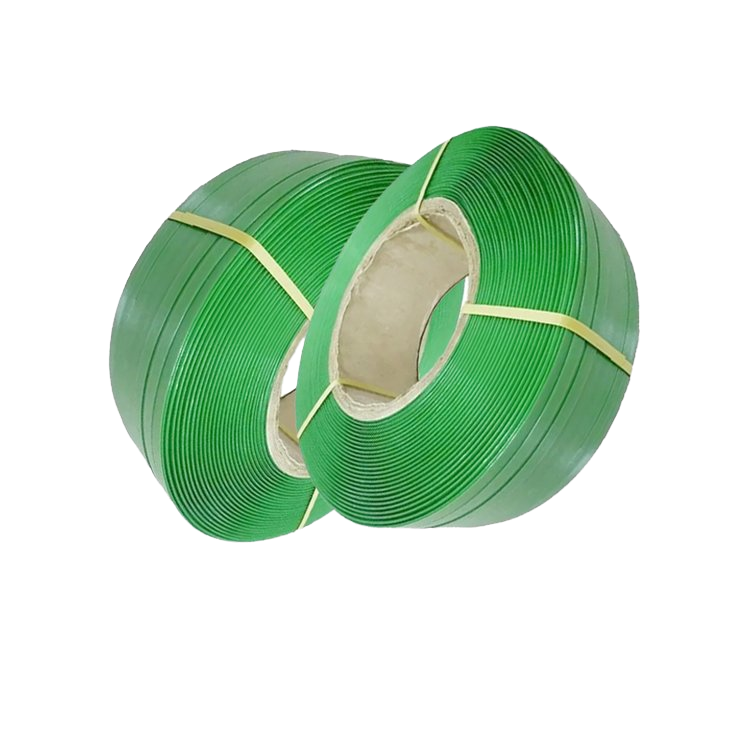
PET Strapping Roll
PET Strapping Roll Manufacturer — Polyester Strapping Coils 9–25 mm
A PET strapping roll should be selected as part of a complete load-securing system, not as an isolated coil. For hand tools, semi-automatic stations and automatic strapping machines, we manufacture polyester strapping and match the width, gauge, surface, core and coil format to your equipment and shipping load.
- Quotes within 24 hours
- MOQ 500 kg
- Stock and small batches in 3–7 business days
- Custom production in 15–20 business days
Use the size and selection grid to prepare a specification, or send the current strap label, tool model, joining method, pallet description and annual demand. For each RFQ, we review the combination before returning a written quotation.
Supply range
9–25 mm wide and 0.50–1.27 mm thick
Order formats
Hand, semi-automatic and machine grade
Surface choices
Smooth or embossed polyester banding
Trade terms
FOB, CIF or DDP
Sample route
Free sample rolls from standard stock
Customisation
Core, coil length, colour and own-mark printing
Polyester Strapping Production and Grade Options
For industrial loads, we supply PET strap as a plastic banding material for stabilising compressed, palletised and bundled goods. Its useful behavior comes from the relationship between break strength, working elongation, retained tension, joint quality and the load itself. A larger nominal strap is not automatically the safer choice if it cannot feed through the machine, sit correctly in the guide path or form a repeatable seal.
Hand-applied strapping
For hand application, we size rolls for a compatible PET strap tensioner and sealing tool. The RFQ should identify the tool model, seal or friction-weld method, core requirement and the number of straps applied to each package.
Semi-automatic operation
For machine fit, we review coil dimensions, unwind direction and feed behavior alongside the existing strapping machine. A machine trial checks whether the strap advances, tensions and joins consistently before a volume order is released.
Automatic line supply
For automatic lines, we produce machine-grade coils around the approved width, gauge, surface and core combination. Line speed alone is not a sufficient specification; guide geometry, tension setting, heater condition and joint design also affect the result.
OEM roll configuration
Width, gauge, coil length, core size and colour are made to order, and straps can be printed with your own mark. In the quotation, we confirm the approved combination and order record.
PET Feedstock and Grade Decisions
Polyester PET strapping is produced from polyethylene terephthalate, but a material name does not define an interchangeable grade. Feedstock labels are not interchangeable purchasing specifications because melt preparation, extrusion control and orientation can change how a strap splits, stretches and retains tension. The trade-off belongs in the written order: lock the required grade instead of inferring it from colour or roll appearance.
Grade lock before production
Before production, we record the approved material grade with the dimensional and packaging requirements. A buyer that requires a particular feedstock origin should put that requirement in the RFQ so it can be reviewed and stated in the quotation.
Performance approval on the line
During approval, we pair the written specification with a machine trial because material identity alone does not prove feeding, welding or retained-tension performance. The trial uses the buyer’s tool, settings, package and joint method.
Green PET strap is common in industrial packaging, but colour is not a strength grade. Marketing labels such as heavy duty polyester strapping or heavy duty plastic strapping carry the same trade-off: approve measurable dimensions and the complete strap-and-joint system instead of buying from a name. Confirm against the machine trial before changing material or grade.
Do not approve a PET strap from the roll label alone. Approve the strap, tool, joint and load as one package during the machine trial.
UD Packaging Engineering Team
Strap Surface, Color and Printing Options
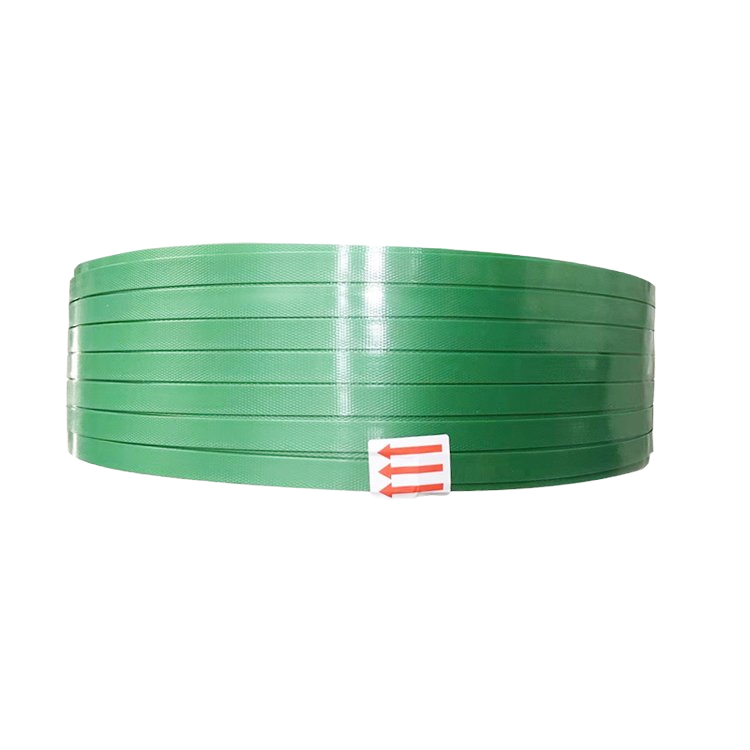
Smooth and embossed surfaces change the contact pattern between the strap, feed path and joining area. Best results come from the surface that runs consistently in the intended machine and produces a repeatable joint. Surface should never be treated as a decorative choice after the tool has already been selected.
| Option | Selection focus | Approval check |
|---|---|---|
| Smooth PET packaging strap | Stable contact through the guide path and joining head | Observe feeding, tension and weld consistency across repeated cycles |
| Embossed polyester banding strap | Surface interaction with grippers, guides and joint method | Inspect for dust, shaving, slip and joint separation during the trial |
| Green plastic strapping | Visual identification without treating colour as a grade | Match the same written dimensions and material requirement |
| Own-mark printing | Readable identification without disrupting the joining zone | Approve artwork position and repeat on a production sample |
For reviewed orders, we can prepare smooth or embossed polyester strapping roll formats and colour or print requirements. Surface appearance does not replace dimensional inspection or a trial on the actual packaging line.
PET Strapping Roll Size and Selection Grid
Our supply envelope is 9–25 mm wide and 0.50–1.27 mm thick. This is a conservative ordering range, not a universal technical envelope for every PET product. Final selection must fit the tool path, core, joining method and load plan.
| Specification or release point | UD Packaging supply commitment | Buyer input |
|---|---|---|
| Width range | 9–25 mm (0.354–0.984 in) | Current strap width and guide-path limit |
| Thickness range | 0.50–1.27 mm (0.020–0.050 in) | Current gauge and tool range |
| Quote turnaround | 24 hours on business days | Width, gauge, core, quantity and destination |
| Minimum order | 500 kg | Quantity by size, colour and print version |
| Standard-stock sample route | 7–10 days | Machine model, joint method and delivery address |
| Stock and small-batch route | 3–7 business days | Approved standard specification |
| Production route | 15–20 business days | Approved custom specification and order release |
| Deposit band | 30–50% deposit against the proforma invoice | Final payment schedule confirmed in the quotation |
This table stops short of assigning a universal break force to each size. Two rolls with the same nominal width and thickness can differ in grade, orientation, split behavior and joint performance. State the required break strength or load-securing target in the RFQ, then validate the proposed strap on the package.
Inspection Steps and Packaging Documents
Quality approval follows the ordered specification and the working system. At order release, we check dimensions and roll configuration, review the joint and load trial, and retain the written release criteria used for production. A pass requires the strap to feed, tension, join and hold the actual package without unacceptable splitting, slip or edge damage.
A weld failure can become the buyer’s damage claim even when the strap itself is strong enough. Joint inspection and the loaded-package trial therefore remain separate from the nominal strap test.
Order inspection sequence
Specification review
— We confirm width, gauge, coil length, core, surface, colour, grade requirement, application method and package description.
Sample and machine trial
— Free sample rolls from standard stock, sized for a machine trial on your own strapping equipment, let your team check the complete system.
Production release
— We lock the approved roll specification and any printing requirement before the run is scheduled.
Packing and document check
— Before dispatch, we verify roll identification, packing method, order quantities and the requested shipping-document set.
An SGS test report and a RoHS declaration are supplied according to the written order scope. Certificate of origin, REACH and SDS documents are available on request. These documents support purchasing and material review; the machine trial remains the acceptance step for tool, joint and load compatibility.
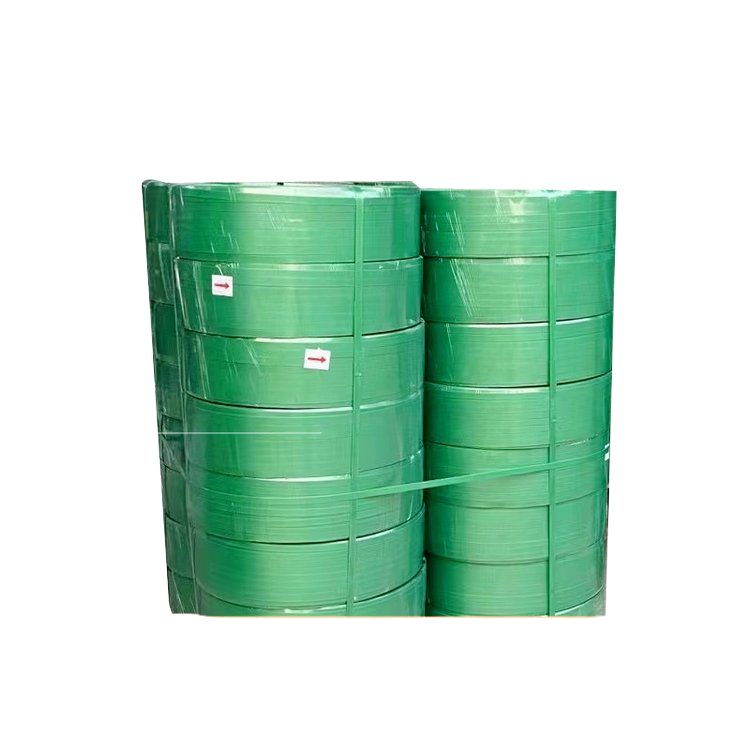
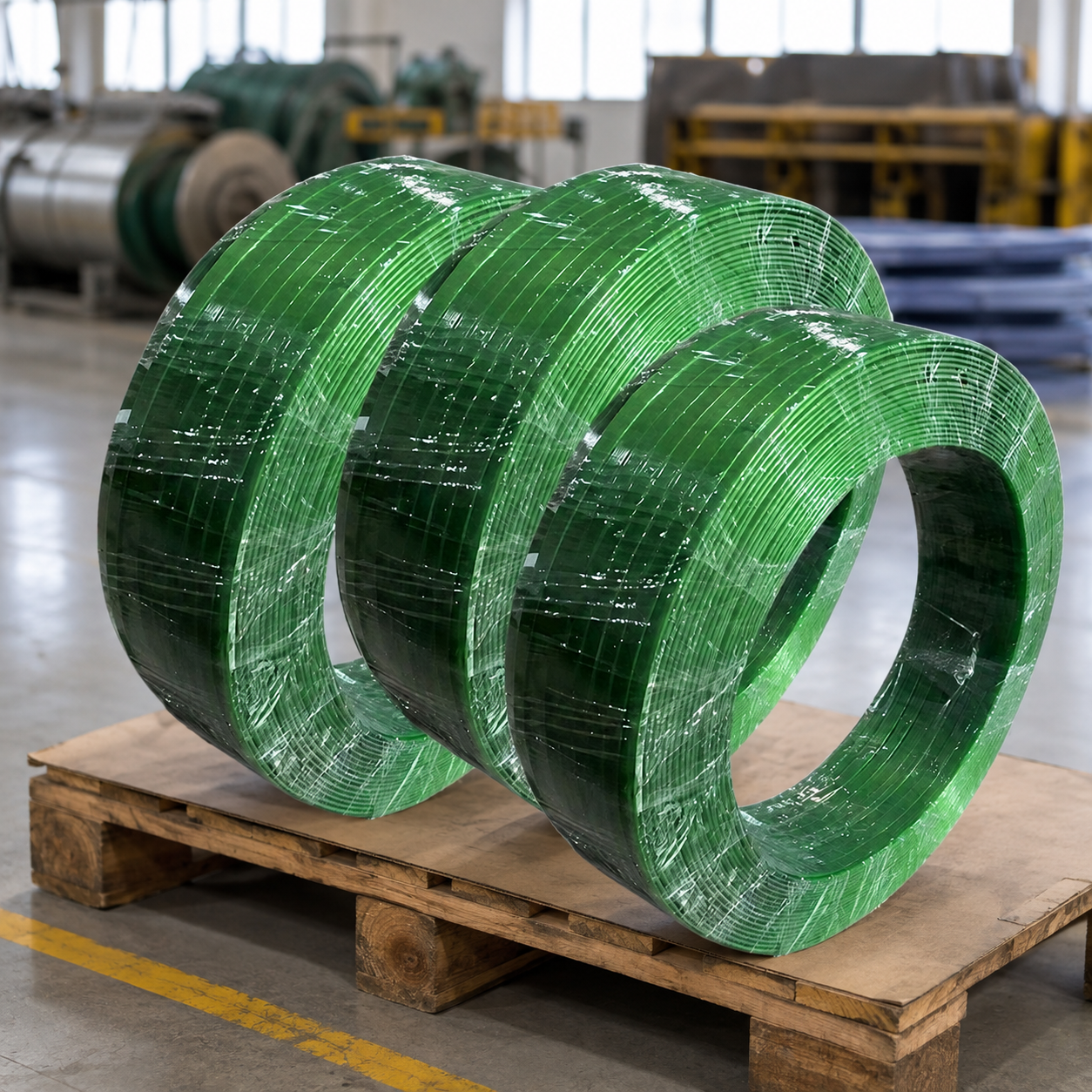
Each roll ships wrapped in kraft paper and palletised under stretch film, with the pallet braced for transit. We confirm labelling and pallet details before dispatch so receiving teams can identify the product and order line.
Where PET Strapping Is the Wrong Choice
PET is not a universal replacement for steel strapping or polypropylene. It is not a substitute for steel where sharp edges, heat or a near-zero-elongation restraint governs the load plan. Material choice must account for edge condition, load rigidity, operator safety, joining equipment and failure consequence.
| Situation | Why it works against PET | Safer decision path |
|---|---|---|
| Sharp or poorly protected edges | A concentrated edge can cut or initiate a split in plastic strapping under tension | Add validated edge protection or evaluate steel with the correct guards and handling controls |
| Sustained contact with a hot product or hot surface | Heat can change polymer behavior and joint stability | Measure the contact temperature and select a material system approved for that thermal exposure |
| A rigid load that permits almost no stretch | PET working elongation may not match the restraint requirement | Compare steel, joint design and load engineering requirements before switching |
| An unverified automatic head | Core mismatch, feed friction or joint settings can cause jams and inconsistent joins | Run a sample through the complete cycle and approve the tool-and-strap pair |
| Light cartons with modest tension demand | Polyester may add cost and tension beyond what the package needs | Evaluate PP or another suitable plastic banding strap on the packed product |
A loose strap after transit does not automatically mean the tension setting was too low. Load settlement, joint slip or a changed path around the package edge can produce the same symptom. Likewise, adding heat is not a universal fix for a weak friction weld; the strap surface, joining window and equipment condition must be checked together.
Professional PET Strapping Roll Evaluation & Quote Tools
PET Strap Application Selector
Use five application conditions to prepare a material review. The result is a screening route, not a break-force calculation or final load-securement approval.
Start Selector
PET Strapping Roll Quote Builder
Collect the seven inputs that control a factory quotation, then add equipment and shipping details. This tool builds an RFQ; it does not calculate a price.
Build Quote
PET Strap Machine Trial Checklist
Record what happens on the intended tool and loaded package. The checklist does not impose universal thresholds; your written acceptance criteria determine release.
View Checklist
PET Strapping Roll FAQs
What is the difference between PET and PP strapping?
PET and polypropylene are different plastics with different working behavior. PET is commonly considered for heavier or settling loads where retained tension matters, while PP can suit lighter packages. The package, joint and equipment should decide the material rather than the product name alone.
Does a wider PET strap always have more usable holding strength?
No. Width contributes to the nominal section, but grade, gauge, orientation, split behavior and joint efficiency also affect usable performance.[1] Approve the stated break strength together with the completed joint and the load trial.
Are smooth and embossed PET straps interchangeable?
Not automatically. Surface changes how the strap interacts with guides, grippers and the joining zone. Repeat feeding and joint tests on the intended strapping machines before approving a change.
Which details are needed to match a PET strap tensioner?
Send the tensioner or combination-tool model, strap width and gauge, joint method, current core and target package. These details narrow the mechanical fit before a roll is trialled.
Why can PET strap loosen after transit?
Low applied tension is only one possible cause. Load settlement, joint slip, edge movement, the wrong machine grade or a changed strap path can produce the same symptom. Inspect the package and joint before changing the setting.
Will adding more heat fix a weak friction weld?
No single heat increase is a reliable fix. Excess heat can damage the joining area, while contamination, surface, equipment condition and an unsuitable setting can also weaken the joint. Check the complete joining window through repeated trials.
What PET strapping roll sizes can UD Packaging supply?
We supply 9–25 mm wide and 0.50–1.27 mm thick coils. Width, gauge, coil length, core size and colour are made to order, and straps can be printed with your own mark.
What is the minimum order for a production order?
The MOQ is 500 kg. Quantity should be split by width, gauge, core, colour and print version so the quotation reflects the actual production setup.
How long does a PET strapping order take?
We return quotes within 24 hours on business days. Standard-stock samples take 7–10 days, stock and small-batch orders are scheduled at 3–7 business days, and custom production runs are scheduled at 15–20 business days.
Can I test a roll on my own machine before ordering?
Yes. Free sample rolls from standard stock are sized for a machine trial on your own strapping equipment. Record feed, tension, joint and load behavior before releasing the 500 kg production order.
Which documents can accompany an order?
An SGS test report and a RoHS declaration are included in the written document scope, with certificate of origin, REACH and SDS documents available on request. Confirm the required set before order release.
How is a PET strapping roll packed for shipping?
Each roll ships wrapped in kraft paper and palletised under stretch film, with the pallet braced for transit. We quote FOB, CIF or DDP and confirm the route in writing.