Get in touch with UD Packaging Company

UD-PACKAGING // HIGH-STRENGTH EXTRUSION // PET-STRAPPING-BAND // SYS.ONLINE // UD-PACKAGING // HIGH-STRENGTH EXTRUSION // PET-STRAPPING-BAND // SYS.ONLINE //
ISO Certified Standards
PET Strapping Band
PET Strapping Band Manufacturer
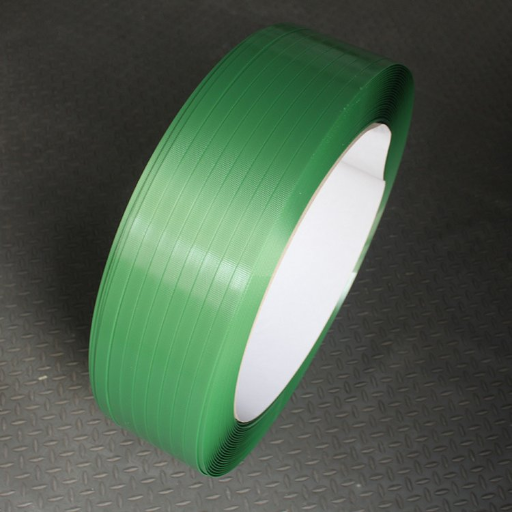
PET strapping band is an extruded polyester strap used to bundle and unitise heavy palletised loads—steel coils, brick, timber, paper reels and solar modules—where steel strapping may rust, mark the product or form sharp handling edges. UD Packaging extrudes it on its own lines in Jiangyin, China.
- Extruded on our own lines
- One-pallet minimum order
- 15-30 working day production
- Lot documentation supplied
Request a Quote
Send the current strap label, machine model or a clear photo if you do not have a written specification.
Premium Extrusion
ISO 9001 / CERT
Quality Assurance and Order Facts at a Glance
Manufacturing
Extrusion, stretching and winding all run on our own lines; strapping production is not outsourced.
Location
Our lines run in Jiangyin, Wuxi, Jiangsu Province, China.
Test Methods
Tensile strength and elongation at break are tested to GB/T 1040.1-2018 and GB/T 1040.3-2006.
Minimum Order
Minimum order is one full pallet per size, roughly 500-700 kg depending on strap width.
Production
Production runs ship in 15-30 working days after order confirmation.
Payment
Payment is a 30% T/T deposit with the 70% balance settled before shipment; orders under USD 1,500 are prepaid in full.
Extrusion Capability and Strap Construction
We control the chain from PET granulation through extrusion, stretching, surface formation and winding. That matters because a strap is not judged by resin name alone: feed consistency, orientation, cooling and winding condition all influence how it feeds, seals and holds tension.
Production ownership
At the UD Packaging factory, PET granulation, extrusion and winding run in-house on our production lines. A roll that does not match the machine core, feed path, surface or sealing method is unusable even when its resin name is correct.
Resin preparation
Moisture and contamination management come before extrusion. Processing history can change ductility, so recycled content by itself is not a strength certificate.
Extrusion and orientation
The band is formed, drawn and oriented along its length. Orientation is the reason a polyester strap can combine tensile strength with useful recovery after a load settles.
Surface and winding
Surface pattern, straightness and winding affect machine feeding and weld formation. We confirm those order fields before production instead of treating width as the whole specification.
Grades by application method
Automatic machine grade:
specify the machine model, core, feed direction and sealing method.
Battery or pneumatic tool grade:
match strap width and thickness to the tensioner and friction-weld head. A pneumatic PET strapping tool must be checked against the stated strap range.
Manual tool grade:
confirm tensioner, sealer, metal seals or buckles, and the load’s edge condition.
PET strapping seals and a PET strapping dispenser belong in the line review when they control the joint or coil handling.
PET Resin, PP Strap and Steel Strapping
PET, polypropylene and steel solve different containment problems. The right choice follows load rigidity, settling, edge condition, storage, transport rules, tool investment and the strength of the completed unit-load system—not a one-line material ranking.
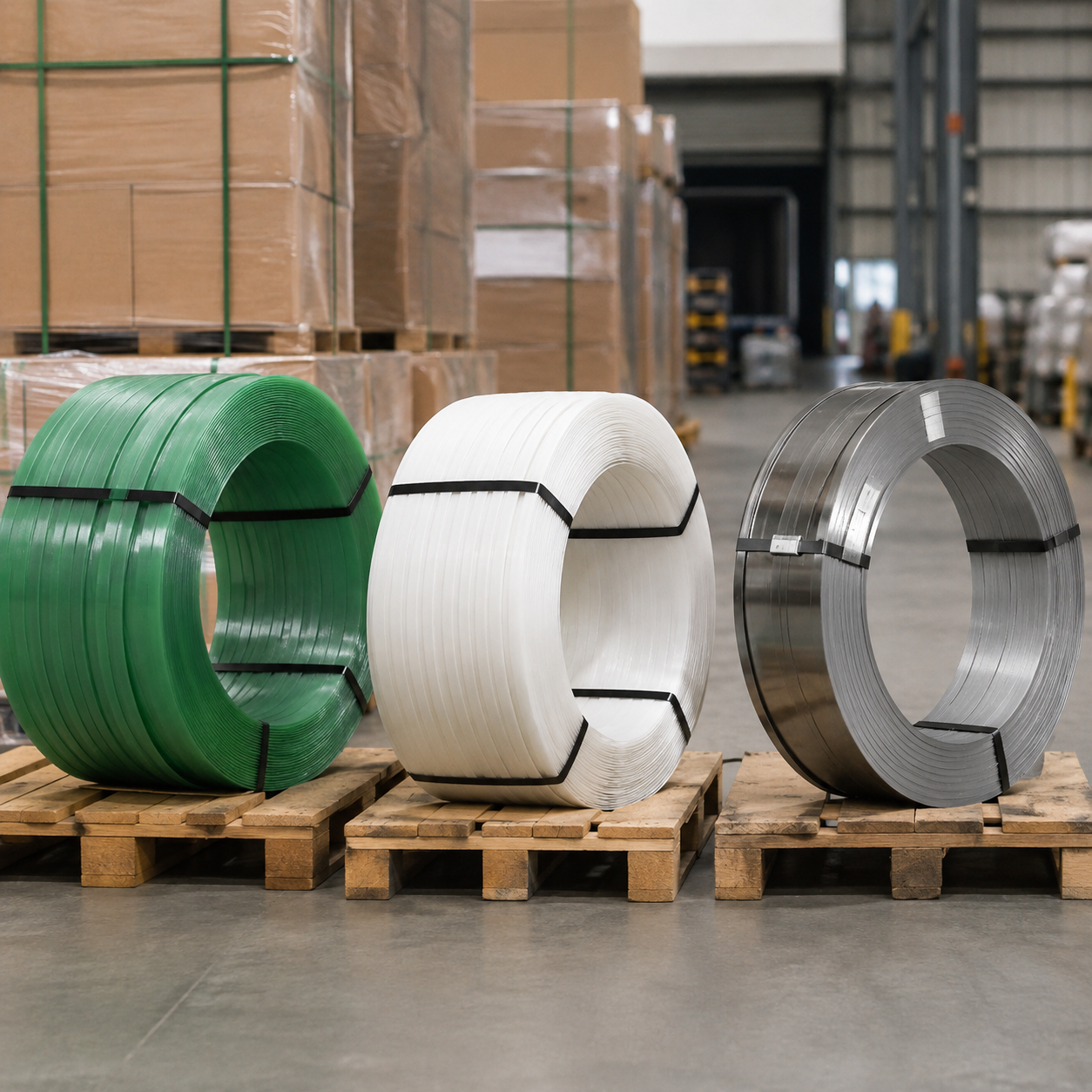
| Decision Field | PET Strap | PP Strap | Steel Strapping |
|---|---|---|---|
| Best Starting Point | Medium-to-heavy pallet loads that settle or need retained tension | Cartons and lighter bundles with lower sustained tension demand | Rigid, very heavy, hot or approval-controlled loads |
| Load Response | Elongation and recovery let the strap follow some load contraction | Higher stretch can be useful on lighter packages but can surrender tension | Low stretch keeps a rigid load tight but gives little recovery after settling |
| Edges | Use edge protectors where sharp corners can nick or split plastic banding | Needs protection from cutting edges | Resists cutting better, while sharp strap edges raise handling risk |
| Moisture | Does not rust | Does not rust | Corrosion protection can be necessary |
| Joining | Friction weld, heat seal or specified metal seal | Heat seal, friction weld, buckle or metal seal by grade | Seal joint, notch joint or sealless tool by system |
| Tool Change | Confirm tension range, feed path, core and weld program | Confirm the tool’s PP setting and strap range | Steel tools are not assumed to run PET |
01
Failure Diagnosis
Buyers often blame strap strength when a load arrives loose, but strap strength is not always the cause. The cheapest roll is not always the best securement choice because settlement, the joint, the tool and the load edges can control the result.
02
Application-Engineering Rule
If a load arrives loose, check settlement, joint formation, tool setting and edge damage before moving straight to a higher break strength. A stronger roll cannot repair a poor weld or a compressing pallet.
03
Inspection Order
Start with the failed joint. Then inspect the tool settings. Finish at the strap and lot test record.
Smooth and Embossed Surfaces by Sealing Method
Surface is a functional order field. It changes contact in the feed path and at the joint, so the same nominal width can behave differently in a friction welder, heat-seal machine or manual sealer.
Surface Or Joint
Selection Logic
RFQ Input
Smooth PET Strap
A clean surface is suited to friction-weld systems when the tool is matched to the strap material.
Machine model, weld program and current strap label
Embossed PET Strap
The texture changes contact and feed behavior; it is used with compatible heat or friction sealing systems.
Emboss pattern, surface photo and seal method
Friction Weld
Joint heat comes from rapid movement between overlapping strap faces.
Tool make, model, tension setting and weld time
Heat Seal
A heated element melts the overlapping surfaces before pressure forms the joint.
Machine model, heater condition and joint sample
Metal Seal Or Buckle
The joint depends on seal geometry, notch or crimp quality, not strap strength alone.
Seal type, sealer model and closure photo
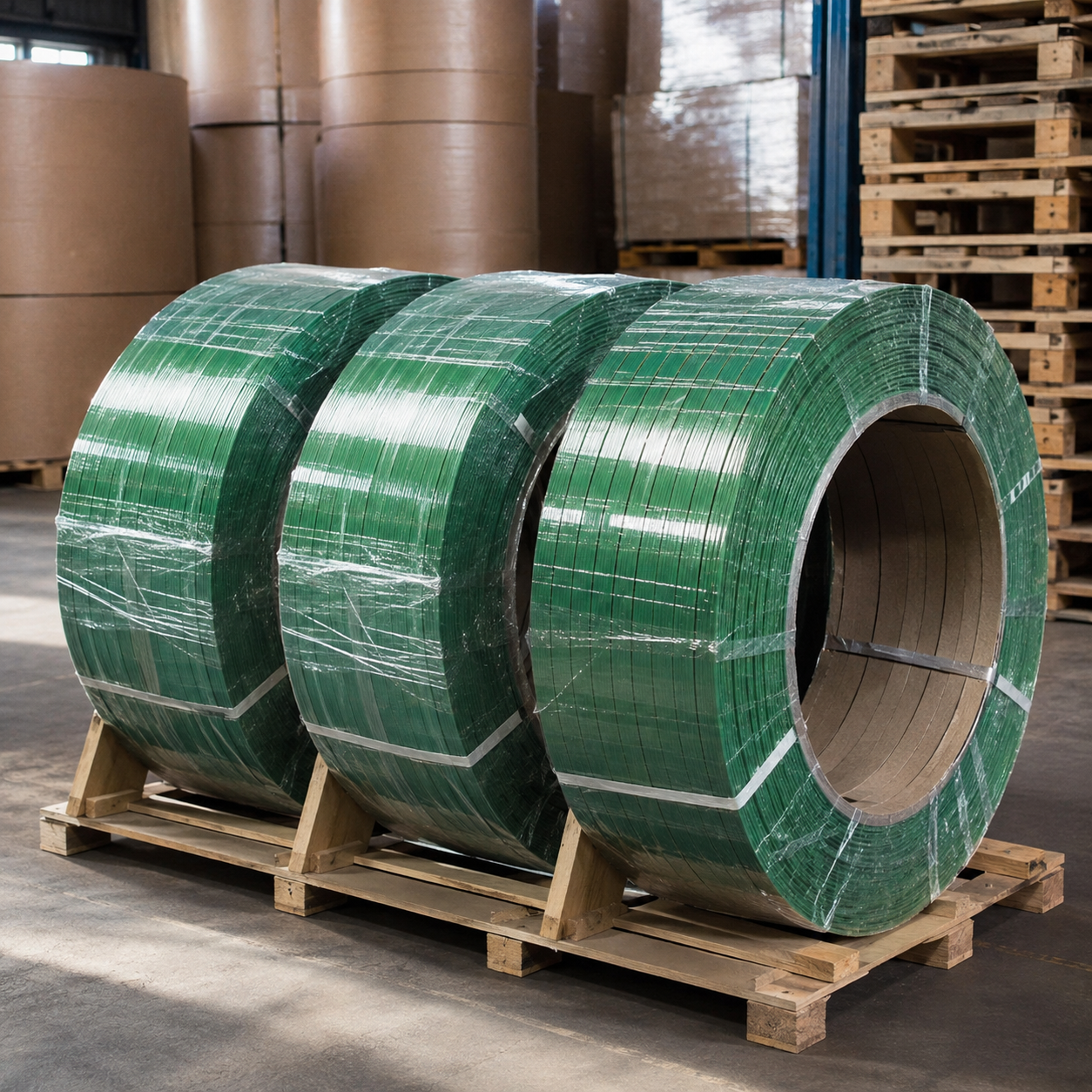
Specification
Specification Fields That Decide Whether the Strap Holds
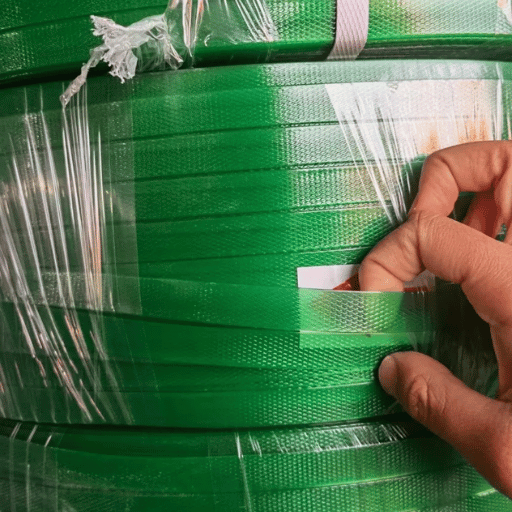
The Four Ways a Strapped Load Comes Loose
| Failure route | Property or system factor | Field to verify |
|---|---|---|
| The product settles and the loop loses tension | Recovery and retained tension | Elongation at break, retained tension and load compression |
| A shock event breaks the band | Break strength and energy absorption | Tested strap value, joint value, pallet mass and route |
| An edge nicks or splits the strap | Thickness, orientation and edge protection | Corner profile, surface, gauge and protector |
| The joint opens or the machine misfeeds | Surface, tool program and dimensional fit | Width, thickness, core, seal method and machine model |
BS EN 13394 provides a framework for dimensions and physical properties of nonmetallic strapping, while application-specific dimensions can be agreed between buyer and supplier. Cargo securement rules also evaluate the installed system under directional forces; laboratory strap values are only one part of that system.
Supplier comparison
Two suppliers can publish different break strengths for the same nominal size. The mistake is treating a catalogue ladder as a transferable product specification; confirm against the quoted size and produced-lot result.
| Order field | Reference form | What you should provide |
|---|---|---|
| Width | Catalogue widths include 9 / 11 / 12 / 15 / 16 / 19 / 25 / 32 mm (about 0.35–1.26 in) | Exact tool or machine width |
| Thickness | Catalogue bands span about 0.5–1.5 mm (0.020–0.060 in) | Current label or measured gauge |
| Break strength | Product-specific result in N and lbf; 1 lbf equals 4.448 N | Maximum pallet mass and handling shocks |
| Elongation | Product-specific tested result in %; record to the agreed report precision | Load settling, route and storage duration |
| Core | Common machine formats include 200 mm and 406 mm (16 in) | Mandrel diameter and core width |
| Coil format | Record net coil mass in kg (lb) and length in m (ft) | Dispenser limit and changeover target |
| Surface | 2 order states: smooth or embossed | Feed path and sealing method |
| Joint | 4 listed routes: friction weld, heat seal, buckle or metal seal | Tool model and a finished-joint photo |
| Production lead time | 15-30 working days after order confirmation | Required arrival date and destination |
Use the quoted specification and the produced-lot test result as the release criteria for the order.
Industries We Supply and Their Strapping Problems
We supply PET strapping band, industrial stretch film, strapping seals and buckles, and manual, semi-automatic and fully automatic strapping machines from one supplier. The application list below reflects the industries supplied; each still needs its own load and tool review.
Steel and aluminium
High mass and sharp edges put the focus on split resistance, break strength and edge protection.
Solar photovoltaics
Module and frame surfaces need containment without rust marks or metal-edge scratching.
Brick and building materials
Abrasive corners, outdoor storage and unstable stacks make surface damage visible fast.
Timber and wood
Moisture movement changes bundle dimensions, so retained tension matters after dispatch.
Paper reels
Too much local tension can damage a soft edge or crush a core while too little permits movement.
Chemical fibre and cotton
Compressed bales recover after packing and place sustained demand on the loop and joint.
Agriculture and food
Clean handling and freedom from rust matter alongside load containment.
Electronics
Surface protection and a controlled tension setting matter more than maximum force.
Tobacco and cartons
Orderly unitisation and reliable machine feeding are the main concerns on lighter loads.
Where PET Strapping Band Is the Wrong Choice
PET and steel are not interchangeable. PET is not a substitute when the load plan specifies an exact approved product. High heat or unprotected cutting edges can make PET the wrong choice.
Situation
Why PET may work against you
Better next step
Product-specific rail approval is mandatory
Approval attaches to the named strapping product and application, not to polyester as a category.
Use the exact approved product listed for the load plan.
Hot material contacts the band
Heat can change polymer behavior or damage the joint.
Separate the strap from heat or qualify steel or another securement method.
Sharp, unprotected edges carry the load
A cut or notch can start a split before the nominal break strength is reached.
Add engineered edge protection or select a system qualified for the edge.
The existing line cannot feed or weld PET
A material switch without tool qualification can trade steel handling issues for jams and weak joints.
Run the free sample on the actual machine and review tool settings first.
PET Strapping Band Interactive Tools & Guides
PET Strap Specification Brief Builder
Enter only what you know. Blank fields remain marked for supplier review; the tool never inserts a strength, width or core default.
Explore Tool
PET, PP or Steel Strapping Decision Guide
This screen narrows the material and trial path. It does not calculate product strength or replace a cargo-securement design.
Explore Guide
Coil Change and Handling Estimator
Use your own monthly consumption and coil mass. The result shows handling frequency and changeover time; it does not assume any UD coil format.
Explore Estimator
PET STRAP
FAQ: PET Strapping Band Questions
Focus Insight
What does PET stand for in strapping?
01PET stands for polyethylene terephthalate, a polyester. In strapping, the resin is extruded and oriented into a narrow load-containment band.
Yes. PET strapping and polyester strapping describe the same polymer family, though a purchase still needs width, thickness, surface, core, strength and elongation fields.
Banding and strapping are often used for the same packaging operation. The material name still matters because plastic banding, cord, PET strap and steel use different tools and joints.
PP is a starting point for lighter cartons and bundles. PET offers higher retained tension for demanding pallet loads, while the final choice must match load compression, tool, joint and route.
Consider PET when the load is within the tested strap-and-joint design, retained tension matters and rust or sharp metal edges are unwanted. Keep steel or an approved alternative where heat, cutting edges or a transport specification requires it.
The surface changes feeding and joint contact. Match smooth or embossed material to the sealing method and confirm it with a machine trial.
Minimum order is one full pallet per size, roughly 500-700 kg depending on strap width.
Free samples are available for testing on your own tensioner, sealer or strapping machine before you commit to a production order.
Production runs ship in 15-30 working days after order confirmation. Payment is a 30% T/T deposit with the 70% balance settled before shipment; orders under USD 1,500 are prepaid in full.
A test report for the produced lot, an SDS, RoHS and REACH declarations and a Certificate of Origin ship with your order, confirmed against your destination market when the order is placed.
Start with tested break strength, elongation, retained tension, joint method and edge condition. Plastic strapping band sizes alone do not settle the choice, and a plastic strapping band for metal loads still needs a matched tool, joint and protector.