Get in touch with UD Packaging Company

ISO Certified Manufacturing
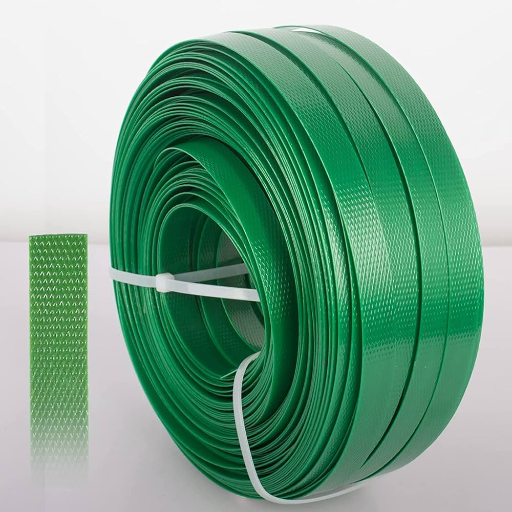
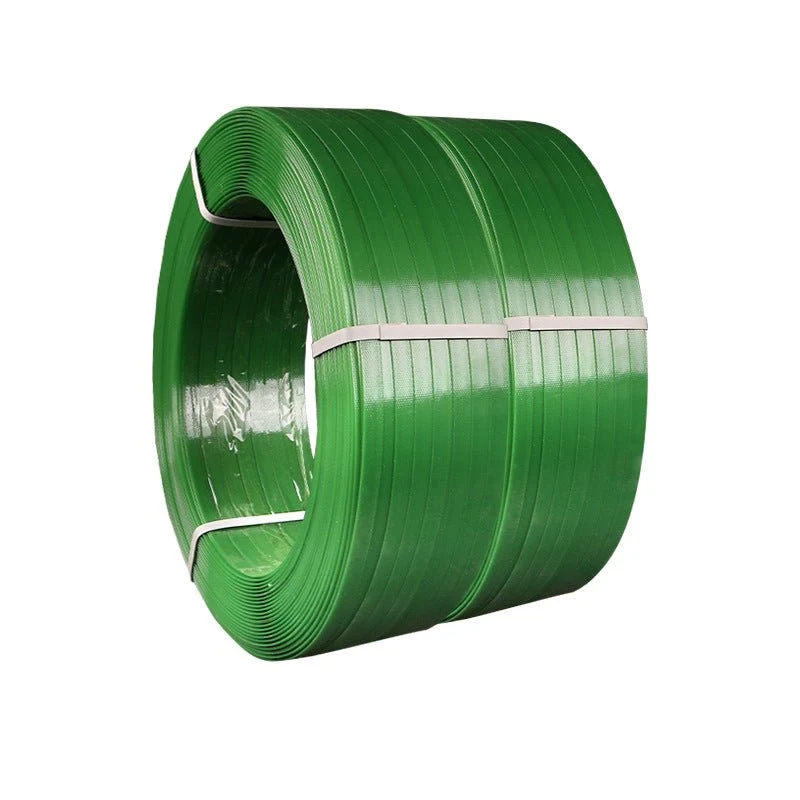
PET Packing Strap
PET Packing Strap — Polyester Strapping Band Made in Jiangyin, China
- Samples in 5–7 business days
- Stock orders in 7–15 business days
- Width controlled to ±0.5 mm
- Machine-fit review before production
UD Packaging makes PET packing strap for palletized industrial loads. Send the label from your current coil, your required break strength, and the model of your strapping machine or tool; we will use those details to match the polyester strapping band before you commit to an order.
Polyethylene terephthalate strap is often called PET strap, polyester strapping, PET packing belt, plastic strapping, or plastic banding. The name matters less than the fit: width, thickness, core, surface, joint method, retained tension, and load condition must work together.
Request a quote
A stock-size sample is free; the buyer pays the first courier charge.
PET Strapping at a Glance
Stock-size sample
We prepare it in 5–7 business days.
Stock order
We schedule production in 7–15 business days.
Custom run
We schedule production in 10–20 business days.
Stock MOQ
One pallet, normally 56–99 rolls depending on width.
Custom MOQ
2 tonnes.
Dimensional control
Width ±0.5 mm, thickness ±0.05 mm, roll length ±2.5%.
PET Strap Production from Granulation to Finished Coil
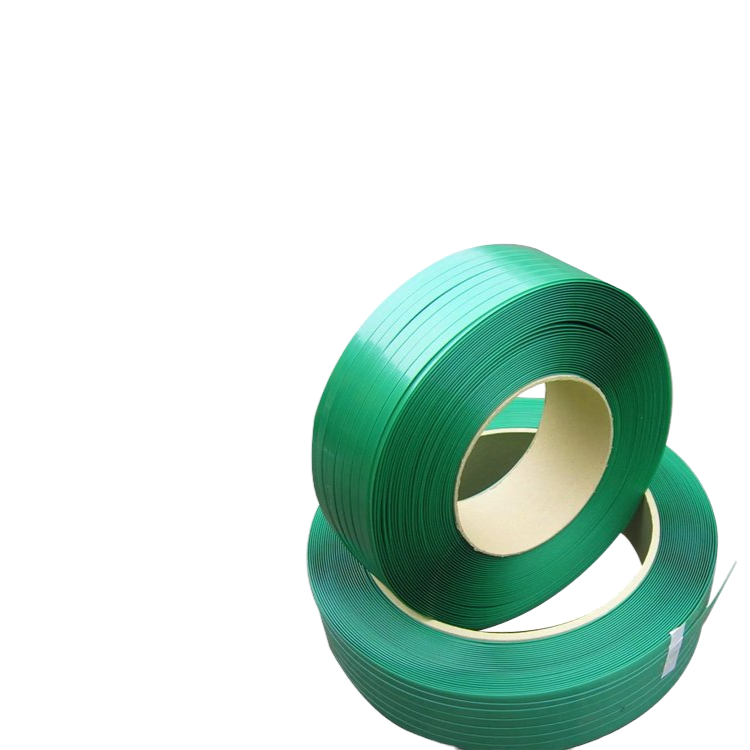
In our factory, UD Packaging runs the production chain in-house from PET granulation to the finished strapping coil in Jiangyin, Wuxi, Jiangsu. Our self-developed and imported automatic lines cover extrusion, stretching and orientation, cooling, surface preparation, winding, labeling, and packing.
ASTM D3950 treats nonmetallic strapping and its joining method as a system used for bundling, palletizing, unitizing, reinforcing, securing, and closing. That system view is useful at the buying stage because a high-strength strap still fails the job if its coil, feed path, tension setting, or joint does not match the application.
Machine-grade PET strapping
A width, thickness, coil, or core mismatch can stop feeding or keep the roll from fitting. We review roll dimensions, splice restrictions, surface condition, straightness, and feeding behavior for semi-automatic and fully automatic strapping machines.
Tell us the machine model and current coil label so we can screen fit before sampling.
Hand and pneumatic tool grades
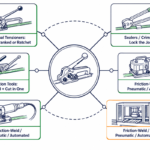
We review the tensioner, sealer, joint type, and operator method for manual or pneumatic tools. Friction welds, heat seals, and metal seals place different demands on strap surface and joint setup.
Color and order identification
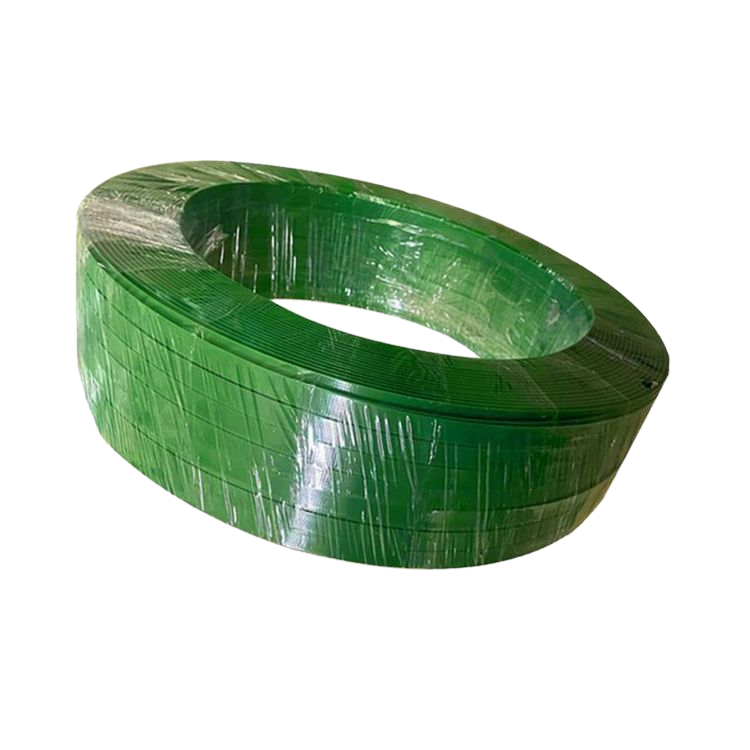
We can quote green or black strap and record the agreed color with the rest of the specification. Each roll carries a barcode label with color, batch, pallet, and production date.
Export order preparation
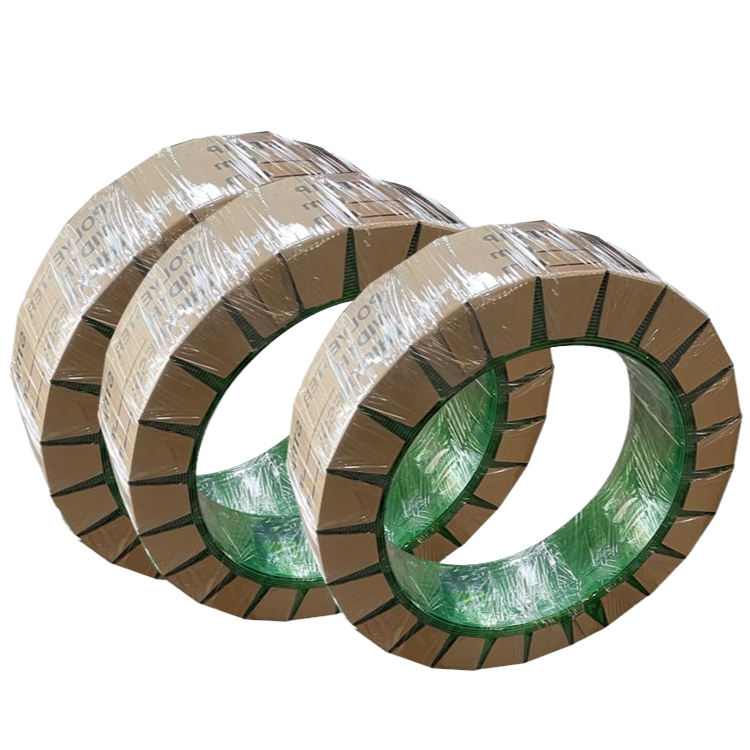
We pack rolls by pallet and prepare the commercial documents stated in the quotation. An SGS test report, RoHS declaration, and certificate of origin are available on request.
Load families served
Bricks and blocks
Lumber and panels
Paper and corrugate
Bottles and cans
Ceramics and tiles
Textiles
Metal products
Logistics pallets
Construction materials
Warehouse bundles
Export packaging
Polyester Resin, Orientation, and Strap Performance
PET strap is made from polyethylene terephthalate resin that is melted, extruded, stretched, heat-set, cooled, and wound. Stretching aligns the polymer structure; process stability then affects tensile strength, elongation, split resistance, straightness, and the tension the strap retains after the initial pull.
Published polyester-strapping work discusses split resistance, seal strength, and tension retention as separate performance concerns. A 2014 production demonstration also showed that washed post-consumer bottle flake can be processed into PET strapping. The reason UD Packaging separates those checks is that a recycled-content or resin label cannot predict the finished strap-and-joint result by itself.
Virgin PET input
Virgin resin gives the production team a controlled starting material. It can be considered when a buyer prioritizes a tightly defined processing window or a specific performance requirement.
Recycled PET input
Recycled PET can reduce demand for new resin, but recycled content is not a performance certificate. Feedstock sorting, drying, contamination control, intrinsic viscosity, extrusion, orientation, and final testing still determine whether a strap meets the written requirement.
Elongation and recovery
Polyester strapping can elongate under tension and recover part of that movement as a load settles. The useful question is not “does it stretch,” but whether the complete strap-and-joint system keeps enough clamping force through handling and transit.
Water, moisture, UV, and rust
PET material does not rust like steel. That can matter when metal corrosion could mark lumber, paper, textile, or other contact-sensitive products, while edge protection, outdoor storage, and UV exposure still need review.
Specification rule
Ask for the tested finished-strap value you need. A resin label, recycled-content statement, color, or “high strength” description does not replace break-strength, elongation, joint, and machine trials.
Smooth, Waxed, and Embossed Surfaces for Seal Compatibility
The strap surface changes friction in the feed path and at the joint. A common assumption is that a deeper emboss is always better, but embossed strap is not always the right call.
The trade-off is grip and heat transfer against splitting, tracking, feed resistance, and joint consistency. Confirm the surface against the selected strapping machine and seal method.
ASTM D4675 frames strap selection around the load, package geometry, strap and joint performance, application method, carrier requirements, and user testing. That is why we ask for the current coil label and tool or machine model before choosing a finish.
| Surface or joint | Selection point | Trial check |
|---|---|---|
| Smooth PET strap | Review contact friction, feed control, and weld settings. | Watch for slip, incomplete weld area, or inconsistent tension. |
| Waxed smooth strap | Review the wax level against the feed path and friction-weld head. | Confirm feeding and joint formation at operating speed. |
| Embossed PET strap | Review the emboss profile against grip and heat-transfer needs. | Check splitting, tracking, and seal consistency; do not assume more texture is better. |
| Friction-weld joint | Surface, tool condition, clamp pressure, time, and cooling all affect the weld. | Inspect the joint and test it with the chosen strap and tool. |
| Heat-seal joint | Heater condition, contact time, pressure, and surface must work together. | Check for weak fusion, excessive melt, or strap distortion. |
| Metal seal or clip | The seal profile and sealer must match strap width and thickness. | Check crimp engagement and joint efficiency on the actual banding material. |
Cheap imported PET strapping may not weld correctly on the existing head. Changing the break-strength label may not solve that fault; start with the surface, exact dimensions, joint method, tool condition, and settings, then confirm with a sample on the real line.
PET Strap Specification and Pre-Trial Selection Table
This table is a requirement builder, not a stock list or transport-securement approval. A common assumption is that a nominal break-strength band can select the strap, but that shortcut is not always the right answer.
ASTM D4675 treats strap choice as initial guidance followed by evaluation under handling, transit, and storage conditions, and it calls for user testing. The trade-off must be confirmed against the package, machine, joint, and transport role.
Complete all eight rows before comparing quotes. Break strength by itself does not reveal retained tension or joint performance, and it cannot account for creep, stress relaxation, package geometry, sharp edges, load settlement, tiedown rules, or the way a machine applies tension.
| No. | Requirement to send | How we use it |
|---|---|---|
| 1 | Nominal strap width in mm and in | We match the feed path and hold the agreed width to ±0.5 mm. |
| 2 | Nominal thickness in mm or mil | We match the tensioner, sealer, and feed setting and hold thickness to ±0.05 mm. |
| 3 | Roll length in m or ft | We calculate roll yield and hold the agreed roll length to ±2.5%. |
| 4 | Core inside diameter and face width in mm and in | We screen whether the coil fits the dispenser or machine mounting position. |
| 5 | Required break strength in N, kgf, or lbf | We separate the nominal strap value from the expected joint and applied-tension conditions. |
| 6 | Joint method: friction weld, heat seal, or metal seal | We shortlist surface and dimensions for a sample trial. |
| 7 | Machine or tool brand, model, and operating mode | We screen feeding, splice restrictions, coil fit, tension range, and seal setup. |
| 8 | Load weight, geometry, edges, temperature, storage, and transport mode | We identify where edge protection, a different strap material, or a packaging review is needed. |
Traceability
Current Tensile-Test Methods and Batch Traceability
GB/T 1040.1-2025 is the current general standard for determining tensile properties of plastics. GB/T 1040.3-2006 remains current for films and sheets until GB/T 1040.3-2026 takes effect on December 1, 2026.
We can support third-party product testing through SGS, with the current test method and report scope stated in the quotation. A test method defines how a property is measured; the purchase order must still define the finished-strap value to be accepted.
Specification review
We record width, thickness, roll length, color, break strength, machine or tool, joint method, core, and packing before production. Missing fields are raised before the order is released.
Dimensional control
We hold width to ±0.5 mm, thickness to ±0.05 mm, and roll length to ±2.5%. The agreed nominal values remain the buyer’s reference points.
Finished-strap testing
We check the finished strap against the written requirement rather than treating resin identity as the result. Tensile behavior, surface, winding, and joint trials are reviewed at the level stated in the order.
Roll and batch identity
We place a barcode label on each roll with color, batch, pallet, and production date. That record gives procurement and receiving teams a common reference if a variance is reported.
We provide an SGS test report, RoHS declaration, and certificate of origin when they are requested and listed in the quotation. Buyers with a customer-specific test format should send it with the enquiry so the document scope is agreed before production.
Limits of PET Strap and Better-Fit Alternatives
A common assumption is that PET replaces steel for every heavy load, yet the materials are not interchangeable. PET is not always the right choice, and steel is not automatically the better answer for every heavy load.
The trade-off covers strength, application, joint performance, rust risk, temperature, handling, and the governing transport rule rather than one weight threshold. Confirm the decision against the whole package and its securement role.
| Situation | Why PET may work against you | Better next step |
|---|---|---|
| Hot product or prolonged high-temperature exposure | PET is temperature-sensitive, and creep can increase as temperature rises. A film study confirms the material effect but does not establish a packing-strap service limit. | Define the real temperature cycle and obtain an application-specific material review. Do not use a generic temperature claim. |
| Sharp, abrasive, or high-contact edges | Concentrated edge contact can cut or abrade plastic strap and reduce the useful system strength. | Add suitable edge protection and test the package, or review steel and other securement methods. |
| Extreme-duty construction or transport-rule-specific securement | A pallet band may be mistaken for a vehicle tiedown even when it was not selected or rated for that job. | Apply the governing cargo or carrier rule and select rated securement hardware; use packaging strap only for its approved role. |
| Very light or highly compressible cartons | PET stiffness and applied tension can deform a soft package or add unnecessary material cost. | Review polypropylene strapping, corner protection, stretch film, or a lower-tension package design. |
| Weekly replenishment with no safety stock | Overseas production and transit may not match a short recovery window after an unexpected demand change. | Use a local source, dual-source the item, or hold a calculated buffer before switching. |
Rust-sensitive contact can reverse the steel preference for some lumber, paper, cotton, or finished surfaces. The material decision belongs to the entire package and transport system, not a slogan such as “alternative to steel.”
Professional PET Strapping Tools
PET Strap Requirement Builder
Fill what you know. The tool creates a plain-text enquiry you can paste into the quote form; it does not select or approve a strap.
PET, PP, or Steel Strapping Selector
Select the conditions that matter. The result is a discussion starting point, not a load-securement design or regulatory approval.
PET Strap Roll and Pallet Planner
Estimate lineal strap demand for an ordering period. Enter measured usage from your own pallet pattern and coil label.
PET Packing Strap FAQs
It is polyester banding made from polyethylene terephthalate. It is used to unitize pallets and bundles and is also called PET strap, polyester strapping, PET packing belt, PET strapping belt, or PET packaging strap.
PET is the stiffer option and is used where higher retained tension and heavier pallet work are required. Polypropylene strapping is often selected for lighter or more compressible packages, but the load, equipment, joint, and transport conditions decide the fit.
PET does not rust and can recover part of its elongation as a load settles. Steel remains the strongest material and can be required for extreme, sharp-edged, lifting, lashing, or rule-specific work; neither material should be chosen from load weight alone.
Not by default. Emboss depth, wax, dimensions, tool condition, pressure, heat or friction, and cooling time all affect the joint, so test the proposed strap on the actual head.
Common checks include the wrong surface, width or thickness drift, contaminated contact faces, worn components, incorrect pressure or time, and a strap that does not track through the head. Start with a coil-label comparison and a controlled sample trial instead of increasing tension at random.
Send width, thickness, roll length, color, required break strength, core dimensions, joint method, machine or tool, order quantity, and destination. The requirement builder creates a copyable list.
We hold the agreed width to ±0.5 mm, thickness to ±0.05 mm, and roll length to ±2.5%. Those tolerances apply around the nominal values recorded in the order.
We prepare a stock-size sample in 5–7 business days. The stock sample is free, and the buyer pays the first courier cost; custom samples may carry a quoted charge.
We schedule stock specifications in 7–15 business days and custom production in 10–20 business days. Stock MOQ is one pallet, normally 56–99 rolls depending on width, while custom production starts at 2 tonnes.
We can provide an SGS test report, RoHS declaration, and certificate of origin when requested in the quotation. Every roll is labeled with color, batch, pallet, and production date.
AAR status applies to identified products and rail applications, so it cannot be inferred from PET material or break strength. We do not present an AAR approval here; send the governing rail specification before requesting a product for that route.
Run it on the actual machine or tool, record feed and tension settings, inspect the joint, test the package, and observe it through the relevant handling and storage cycle. ASTM D4675 also treats selection as guidance followed by user testing.