Get in touch with UD Packaging Company

UD PACKAGING
ISO Certified
Stretch Film
Industrial Stretch Film for Pallet Wrapping
UD Packaging supplies industrial stretch film that secures pallet loads through storage, warehouse handling and transit. Instead of choosing from gauge alone, we turn your current roll, pallet profile, wrapping method and destination into a written film specification.
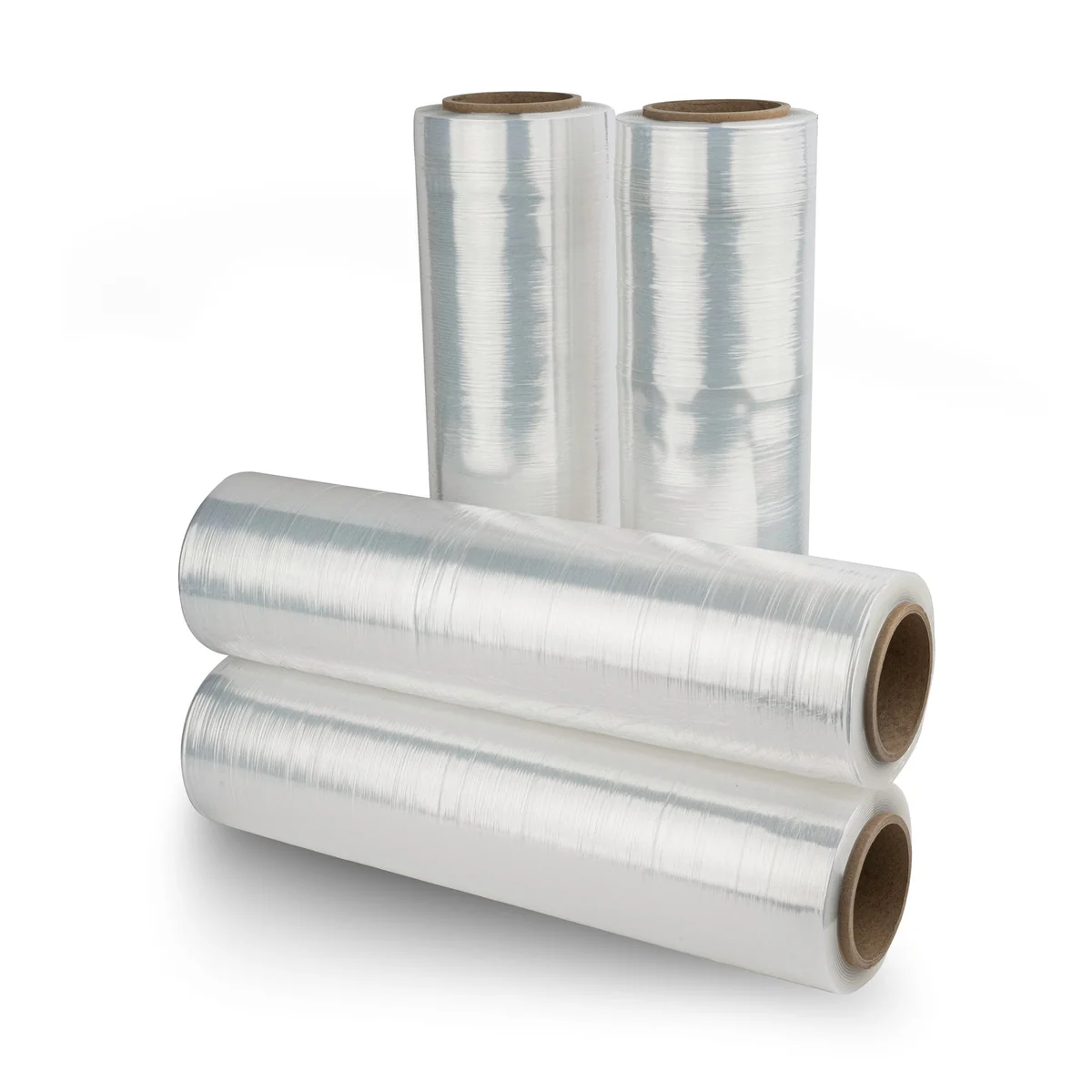
- Hand stretch film for manual wrapping, dispenser use and extended-handle formats.
- Machine stretch film for powered pre-stretch systems with controlled wrapper settings.
- Cast, blown and pre-stretched routes selected for cling, puncture resistance, clarity and load containment.
Send the current film label, roll dimensions, pallet photos or load sketch, monthly quantity and destination. We reply within 24 hours on business days and can arrange a free evaluation sample; freight and dispatch terms are confirmed with the quotation.
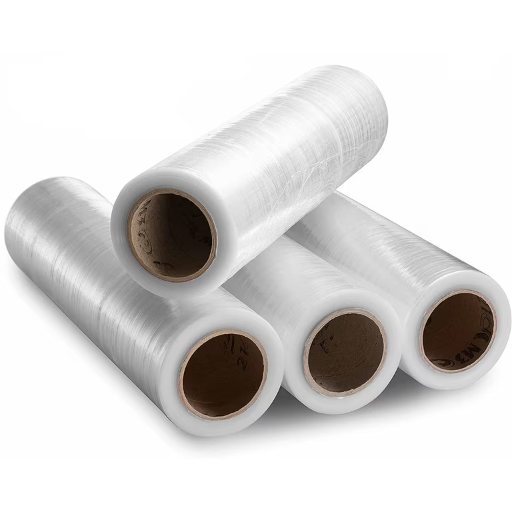
Quotation response in 24 hours
20-25 day production schedule
Free evaluation samples
FOB, EXW or CIF
Stretch Film Supply — At-a-Glance
Quote response
Within 24 hours on business days
Production schedule
20-25 days after deposit and specification confirmation
Minimum order
Set by film specification, roll format, packing and trial-order needs
Evaluation sample
Free sample; freight and dispatch fixed in the quotation
Payment
30% T/T deposit; balance before shipment or against the copy of the B/L
Trade basis
FOB standard; EXW and CIF available on request
Document scope
Data, inspection, test, shipment and market-specific documents identified against the quoted product
Hand-film enquiry range
450 or 500 mm width, 12-25 µm, 50 or 76 mm core
Manufacturing base
Jiangyin, Wuxi, Jiangsu Province, China
Stretch Film Constructions and Application Routes
Stretch film is a stretchable plastic film that holds a box, carton or mixed bundle tightly to a pallet without the heat used for shrink wrap. The right packaging solution maintains containment on the actual load after application; it is not simply the film with the largest gauge number on a product sheet.
We supply both hand stretch film and machine stretch film routes, then fix the quoted roll format against the application method. Trade descriptions such as cast stretch wrap, machine stretch wrap film and pallet stretch film wrap are useful search labels, but the quotation still needs dimensions, application and a load result.
Construction Route
What The Buyer Gains
Trade-off To Check
Evidence To Send
Cast stretch film
Quiet unwind, good clarity and a consistent visual surface for barcode reading.
Sharp corners and difficult protrusions still need a puncture trial; clarity does not prove load retention.
Load photos, edge profile, present break points and required scan-through area.
Blown stretch film
A route to evaluate when tear resistance and irregular, sharp-edged loads dominate the decision.
Higher unwind noise and optical haze may matter in a warehouse or retail flow.
Corner geometry, film usage, hand or machine route, and failure location.
Pre-stretched film
Lower pull force for hand wrapping and controlled starting length before application.
Nominal pre-stretch is not delivered coverage. Neck-in, overlap and breakage can cancel the expected saving.
Applied width, roll weight, number of wraps and film weight per pallet.
Engineering judgment: do not rank these routes as good, better and best. Resin, extrusion route, orientation, film manufacturing control and wrapper settings interact; more layers or a higher pre-stretch claim does not improve every property.
Hand And Machine Application
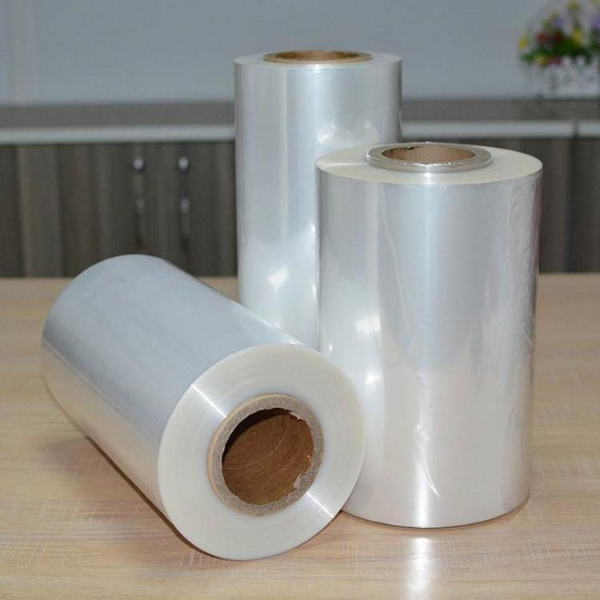
Hand Stretch Film
Use hand film for low-to-moderate pallet counts, mixed warehouse work and loads that need close operator control. A suitable hand wrap format considers roll weight, core, dispenser or handle, required pull force and the operator’s ability to maintain overlap.
Review Hand Stretch Film
Machine Stretch Film
Use machine film when repeatable pre-stretch, rotation speed and wrap patterns matter. We ask for wrapper type, carriage ratio, film roll dimensions, current settings, throughput and the exact point where film breaks or the load shifts.
Review Machine Stretch Film
Load Details That Change The Route
▹Stable A-profile cartons, mixed-height cases, drums, pails or irregular machinery parts.
▹Load weight, pallet footprint, centre of gravity and gaps between packages.
▹Sharp corners, protrusions, low-friction cartons and contamination on the outer box.
▹Indoor storage, cold warehouse, hot transfer terminal, sunlight or outdoor exposure.
▹Manual packing, turntable stretch wrapper, rotary arm or orbital stretch wrapper.
Resin Systems, Film Structures and Variants
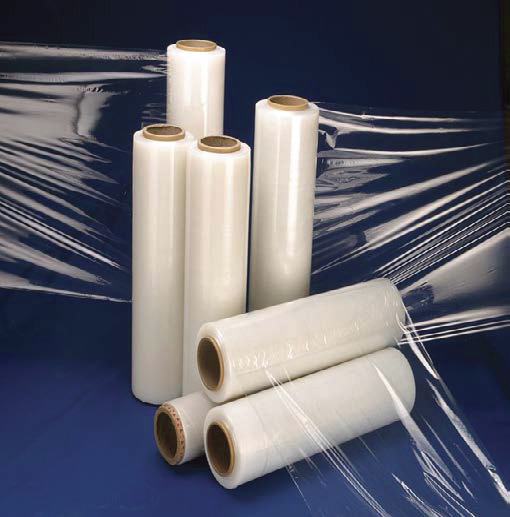
Most pallet stretch wrap is built around linear low-density polyethylene (LLDPE). Resin selection, layer design, the cling package and extrusion conditions tune the film for its application. Each row below is a quotation route: the written quote names the supplied construction, available data and sample plan.
| Variant to evaluate | Buyer objective | Load risk to expose | Evidence requested | Quote status |
|---|---|---|---|---|
| LLDPE stretch film | Balanced stretch, elastic recovery and everyday pallet stabilization. | Generic resin naming hides comonomer, orientation and process differences. | Current data sheet, roll label and applied film result. | Construction named in quote. |
| mLLDPE-supported film | Evaluate puncture and downgauging potential without losing secure containment. | A resin label alone does not establish puncture resistance or tear propagation. | Puncture point, target gauge and sample-pass rule. | Resin system confirmed in quote. |
| Single-layer film | Simple packaging material route where cost and a known load dominate. | One layer can still work well; it should not be dismissed without a load trial. | Current film performance and failure record. | Available route checked at enquiry. |
| Coextruded multilayer film | Separate cling, structural and handling functions across layers. | More layers do not automatically raise tensile strength, puncture or tear resistance. | Required surface function and independent test values. | Layer architecture disclosed when quoted. |
| Transparent stretch film | Barcode scanning, visual inspection and load identification. | Clarity can fall after stretch, overlap or contamination. | Scan distance, label position and overlap pattern. | Optical requirement written in quote. |
| Black stretch wrap | Concealment, load coding and reduced visual access. | Opaque film can block barcode and inspection workflows. | Required opacity, code colour and label plan. | Colour matched by sample. |
| Variant to evaluate | Buyer objective | Load risk to expose | Evidence requested | Quote status |
|---|---|---|---|---|
| Colored stretch wrap | Warehouse zoning and fast product-family identification. | Tint level can conflict with scan-through needs. | Colour target and scan requirement. | Colour and opacity confirmed by sample. |
| Vented pallet wrap | Airflow for hot-filled, chilled or moisture-sensitive loads. | Vent pattern reduces continuous film area and changes containment. | Temperature, condensation risk, hole pattern and load test. | Vent route reviewed separately. |
| UVI stretch film | Outdoor or sunlight exposure beyond an indoor storage route. | ASTM D4649 does not cover outdoor exposure; duration and UV dose matter. | Location, season, uncovered time and failure consequence. | Outdoor route requires separate validation. |
| Antistatic film | Reduce static concerns around selected industrial loads. | Target surface resistance, duration and regulatory context cannot be guessed. | Required test method and acceptance band. | Requirement reviewed before quote. |
| Pre-stretch hand film | Lower operator pull force and easier manual handling. | Loose application can reduce load containment even when the film feels easy to use. | Operator method, overlap, applied width and pallet result. | Sample trial recommended. |
| Stretch film jumbo roll | Conversion or high-volume film products with buyer-controlled rewinding. | Winding, core, roll hardness and handling capability become part of the supply risk. | Converting line, roll dimensions and winding specification. | Jumbo-roll scope quoted separately. |
Cling, Clarity and Handling Options
The contact surface and roll format affect daily use as much as the bulk resin. We treat cling, unwind, clarity, core and grip as purchase fields so a technically acceptable plastic wrap also works for the operator and machine.
| Handling field | Decision rule | Trial observation |
|---|---|---|
| One-sided cling | Place the cling face toward the load or underlying film layer while keeping the outside less tacky. | Check dust pickup, adjacent-pallet contact and tail hold. |
| Two-sided cling | Use when overlap bonding matters on both faces and blocking risk is controlled. | Check unwind force and roll blocking after storage. |
| High clarity | Specify the barcode, label or visual inspection that must remain readable. | Scan after the planned number of overlaps, not from a loose sheet. |
| Quiet unwind | Prioritise for operator-facing packing areas where noise is a working-condition issue. | Listen at the real unwind speed and tension. |
| Controlled unwind | Match pull force to the dispenser, operator or film carriage. | Watch for jerking, edge damage and inconsistent overlap. |
| 50 mm core | Hand-film enquiry candidate for the buyer's holder or roll format. | Confirm 1.97 in core fit before a sample run. |
| 76 mm core | Hand-film enquiry candidate for a 3 in class core route. | Confirm 2.99 in core fit and roll support. |
| Extended core or handle format | Reduce finger contact with the rotating core during hand stretch work. | Check grip, roll balance, fatigue and final lower-pallet reach. |
Operator Fit
For hand wrapping, note glove use, dispenser type, roll weight and whether operators control tension at corners. A comfortable handle does not replace a containment test, but poor ergonomics can destroy repeatability.
Machine Fit
For machine stretch, record core size, outer roll diameter, width, net film weight, pre-stretch carriage ratio and rotation speed. A dimension mismatch can stop the trial before film performance is even measured.
Stretch Film Specification and Gauge Reference
Gauge is a thickness expression, not a load rating. The mathematical relation used here is 100 gauge = 1 mil = 25.4 µm, so 1 gauge = 0.254 µm; trade labels are often rounded and the quoted micron value remains the supply basis.

| Specification line | Metric basis | US-unit translation | How to use it |
|---|---|---|---|
| Lower hand-film thickness candidate | 12 µm | 0.472 mil / 47.2 gauge | Start of the confirmed enquiry range, not a universal light-load recommendation. |
| Reference thickness | 15 µm | 0.591 mil / 59.1 gauge | Mathematical translation for comparing a current label. |
| Reference thickness | 17 µm | 0.669 mil / 66.9 gauge | Use with puncture, applied width and load data. |
| Reference thickness | 20 µm | 0.787 mil / 78.7 gauge | Close to the rounded 80 gauge trade label. |
| Reference thickness | 23 µm | 0.906 mil / 90.6 gauge | Do not assume it outperforms a thinner engineered film without a trial. |
| Upper hand-film thickness candidate | 25 µm | 0.984 mil / 98.4 gauge | End of the confirmed enquiry range; the quote fixes the actual value. |
| Specification line | Metric basis | US-unit translation | How to use it |
|---|---|---|---|
| Hand-film width candidate | 450 mm | 17.72 in | Check effective applied width after stretch and neck-in. |
| Hand-film width candidate | 500 mm | 19.69 in | Check overlap, pallet height and roll handling. |
| Hand-film core candidate | 50 mm | 1.97 in | Confirm holder, dispenser and operator grip. |
| Hand-film core candidate | 76 mm | 2.99 in | Confirm 3 in class equipment fit. |
| Length translation | 1,000 m | 3,280.84 ft | Conversion only; actual roll length is fixed in the quotation. |
| Mass translation | 1.00 kg | 2.205 lb | Compare net film mass, not gross roll weight alone. |
| Production schedule | 20-25 days | 20-25 days | Starts after deposit and specification confirmation; transit is separate. |
Load Containment Test Boundaries and Shipping Documents
A test name answers one defined question. We use the load, application method and acceptance rule to select the evidence package; a standard title alone is not a certification, a batch result or proof of repeat film manufacturing.
“A pallet is approved by the load result, not by film gauge alone.”
Unlike a catalogue comparison built on gauge alone, this review separates film-property data from applied-load evidence. A common assumption is that more gauge automatically creates a safer unit load. More nominal pre-stretch does not necessarily reduce film cost per pallet once neck-in and breaks are counted, and one fixed wrap count is not always transferable across different load signatures.
Method
What it can answer
What it does not answer
Buyer input
ISO 527-3:2018
Tensile properties of plastic film or sheet below 1 mm under defined test conditions.
Applied pallet stability, outdoor life or supplier repeatability.
Required tensile property, direction, conditioning and acceptance band.
ASTM D882
Tensile properties of thin plastic sheeting, including film below 1.0 mm.
Cling, puncture, actual machine pre-stretch or unit-load result.
Specimen direction, conditioning and requested report fields.
ASTM D5459-95(2025)
Machine-direction elastic recovery, permanent deformation and stress retention.
Transport simulation or the success of a particular pallet by itself.
Extension level, time, force and acceptance rule.
ASTM D4649-20R25
Indoor selection, specification and use of stretch films for unitising and palletising.
Outdoor exposure; the guide also warns that extreme temperatures can hurt performance.
Indoor route, storage/transport environment and temperature exceptions.
ASTM D8314-20R25
Film performance after hand or machine application to a real or test unit load.
Independent film properties outside the stretch-wrapper application.
User-defined success criteria and a representative load.
ISTA transport procedure
Selected distribution hazards under a stated simulation level.
Every field event, exact duty cycle or all moisture/pressure/handling conditions.
Distribution route, handling modes and failure consequence.
ASTM / ISO Protocol

Acceptance Package for a First Order
Record the load signature: pallet footprint, height, weight, centre of gravity, edge profile and package friction.
Record the application: hand or machine route, wrapper type, carriage ratio, speed, overlap and reinforcement pattern.
Define the pass rule: allowed displacement, deflection, film break, corner damage, scan-through and storage period.
Run the sample. Use the free evaluation sample on a representative load and keep the applied-film result with the specification.
Approve the written scope. The quotation identifies the film, packing, document attachments and market-specific requests.
Documents to Name in the Enquiry
Product data requested for the quoted stretch film.
Inspection or test report with the exact method and acceptance fields.
Packing list, commercial invoice, transport document and destination-specific shipment paperwork.
Any market declaration, material statement or third-party test required by the buyer.
We identify data, inspection, test, shipment and market-specific documents against the quoted product scope. Ask for the exact report or declaration by name; the quote states what is attached and what needs a separate route.
Industries Served and Adjacent Packaging Scope
UD Packaging // Industrial Scope
UD Packaging is a stretch film manufacturer and an integrated industry-and-trade enterprise in plastic packaging materials, with its manufacturing base in Jiangyin, Wuxi, Jiangsu Province, China. We route stretch film enquiries by load and application across the following industrial settings.
Warehousing and Distribution
Mixed cartons, transfer terminals, storage and outbound pallet loads.Food and Beverage Logistics
Case loads and cold-chain routes that need temperature conditions stated.Building Materials
Heavy or sharp-edged products that need a puncture and reinforcement review.Chemicals
Drums, pails and regulated loads with separate compatibility and document requirements.Consumer Goods
Transparent, coloured or concealed pallet wrapping with label and scan needs.E-commerce Fulfilment
Variable carton mixes, frequent wrapping and film-usage control.Paper and Printing
Moisture-aware loads and clean handling where contamination is a concern.Automotive Supply
Dense components, reusable packaging and defined plant handling routes.Furniture and Appliances
Large surfaces and irregular geometry where edge protection may lead the decision.Agriculture Inputs
Bagged and bundled loads; agricultural wrapping film itself requires a separate product scope.General Manufacturing
Finished goods, work-in-process moves and export pallets.Applications That Need a Separate Review
A good packaging solution includes the cases where the first route is wrong. Each condition below has an alternative path so the decision protects the load instead of forcing stretch wrap into every job.
Condition
Why the standard route can fail
Next route
High, repetitive hand-wrapping volume
Operator fatigue and inconsistent pull can raise film usage and variation.
Review machine stretch film and a stretch wrapper.
Sharp edges or protrusions
Puncture can start a tear even in a thicker film.
Trial a puncture-focused construction, add corner protection or combine with PET strap.
Long outdoor or sunlight exposure
ASTM D4649 does not cover outdoor exposure.
State duration and UV conditions; review a UVI route or another cover system.
Extreme cold or heat
Elasticity, cling and recovery can change outside the evaluated temperature range.
Run a route-specific conditioned sample and transport test.
Direct food or pharmaceutical contact
Pallet wrapping suitability does not establish direct-contact compliance.
Run a separate material, migration and market-regulation review.
Dangerous or regulated goods
Load containment does not replace dangerous-goods packaging approval.
Start from the applicable transport regulation and approved packaging system.
Rigid bundling or very heavy movement
Elastic film may not supply the rigid restraint the load needs.
Evaluate PET strapping or a film-plus-strap system.
Advanced Stretch Film Evaluation Tools
01
Stretch Film Spec Translator
Translate gauge, micron, width and roll length, then estimate theoretical net film mass from an adjustable density assumption. This is a specification worksheet, not a load-rating recommendation.
Access Tool
02
Film Construction Trade-Off Bench
Screen cast, blown and pre-stretched routes from three buyer priorities. The result is a sample-test starting point; it does not claim that a construction will pass your load.
Access Tool
03
Unit-Load Containment Method Bench
Screen stretch film, PET strap or a combined route from load mass, edge risk and the need for rigid restraint. The rule set points to the next test; it does not approve a dangerous-goods package or replace transport validation.
Access Tool
Stretch Film Buyer Questions
What is industrial stretch film used for?
It is used to secure pallet loads, boxes and bundles for warehouse storage, handling and transport. The film stretches around the load and its elastic recovery maintains holding force; it is not heat-shrunk.
What are the main types of stretch film?
The useful buying groups are cast film, blown film, pre-stretched film, hand stretch film and machine stretch film. Colour, cling, venting, antistatic and UV routes sit under those application choices.
Cast or blown stretch film—which one fits my load?
Choose from the load risk. Cast film is a strong route when clarity and quiet unwind matter; blown stretch is worth testing when sharp edges, irregular geometry and tear propagation lead the problem. A sample on the actual load decides.
Hand film or machine film—how do I decide?
Use hand wrap when pallet counts are modest or loads change often and close operator control matters. Use machine stretch when throughput, repeatable pre-stretch, wrap patterns and film usage justify a wrapper; the roll and core must fit the carriage.
What does stretch film gauge mean, and how does it convert to microns?
Gauge is a thickness expression: 100 gauge equals 1 mil or 25.4 µm, so micron ÷ 0.254 gives gauge. An 80 gauge trade label is close to 20.3 µm, but use the written micron value for the purchase specification.
Is stretch wrap the same as shrink wrap?
No. Stretch wrap is applied under tension and holds through elasticity and cling; shrink film or shrink plastic contracts after heat. If the load needs a heat-sealed cover rather than elastic pallet wrap, route it as a separate packaging process.
Can a lower-gauge film run faster without breaking on my wrapper?
It can, but gauge alone cannot predict it. Film quality, edge condition, pre-stretch carriage, rotation speed, tension, neck-in and the load's corners all matter; record the setting and film break location during a controlled sample run.
How much stretch film is used per pallet?
Measure it rather than estimate from roll length. Record gross roll mass before and after a known number of accepted pallets, subtract core and packaging where needed, then divide net film usage by accepted pallets.
What width, thickness, core and roll length should I specify?
Start with your current roll and equipment fit. For UD hand-film enquiries, 450 and 500 mm widths, 12-25 µm thickness and 50 or 76 mm cores are confirmed candidates; roll length and net film weight are set in the written quotation.
How do I know whether my wrapper is using too much film for this load?
Set a buyer-defined containment result, then weigh actual film per accepted pallet and record speed, tension, pre-stretch and wrap pattern. If film usage rises without improving displacement, deflection or damage, test a lower-use setting instead of assuming more wraps are safer.
What changes the price of stretch film?
Resin, film construction, gauge, width, roll length, core, cling, colour or additive, net film weight, quantity, packing and destination move the quote. Compare suppliers on the same written specification and total cost per accepted pallet, not on a loose price per kg.
What are the minimum order quantity and production schedule?
MOQ is confirmed from film specification, roll format, packaging and trial-order requirements. Production runs are scheduled at 20-25 days after deposit and specification confirmation; international transit, customs and final mile are separate.
Which test reports and shipping documents can be supplied?
Name the exact product data, inspection, test, shipment or market-specific document and the target market. UD identifies the attachment against the quoted film scope; ISO 527-3, ASTM D882, ASTM D5459, ASTM D4649 and ASTM D8314 each answer different questions.
Which HS or HTS code applies to stretch film for export?
Classification depends on the actual resin composition, density, self-adhesive condition, dimensions, processing, origin, destination and import date. Confirm the exact code and duty with the destination tariff and customs broker; the generic product name “stretch film” is not enough.
Can UD quote a replacement for Sigma or another current film brand?
Yes—quote from measurable inputs rather than a brand name alone. Send the Sigma, Uline or other roll label, gauge or micron, width, length, core, net film weight, wrapper settings and the load result you need to keep or improve.