Get in touch with UD Packaging Company

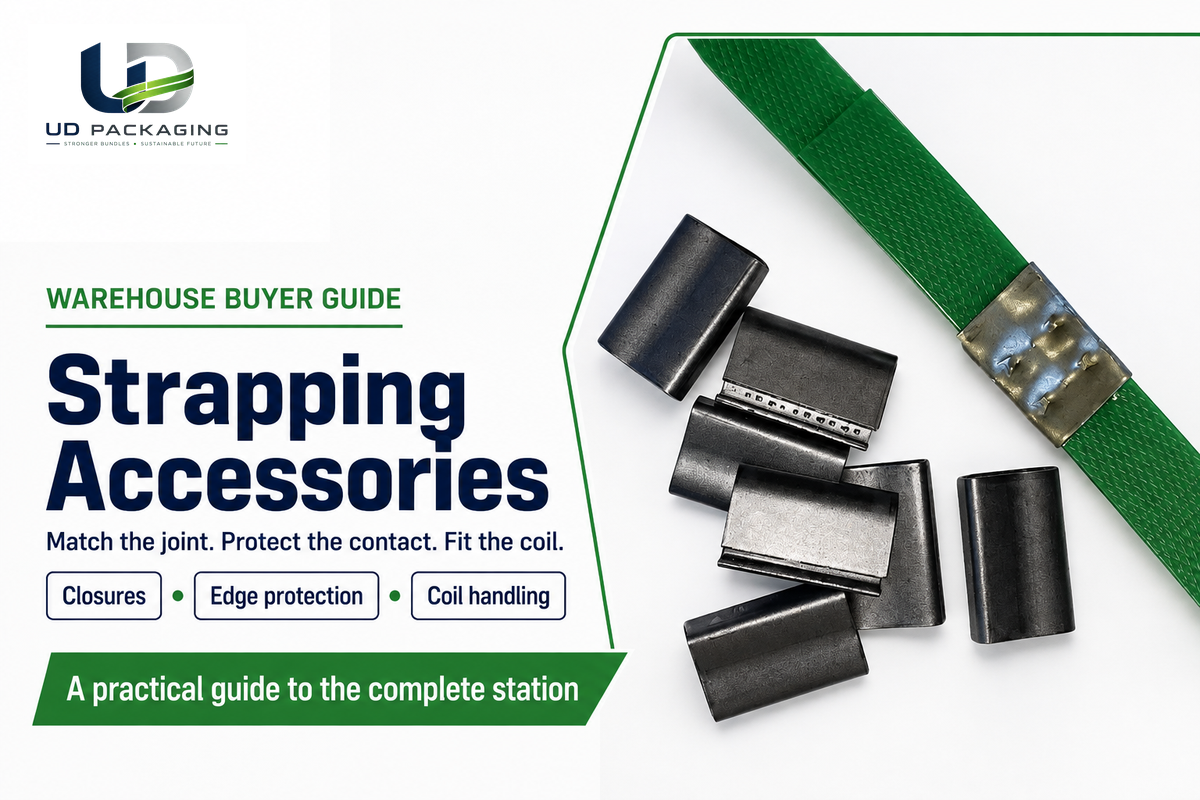
Strapping accessories join the strap, protect the contact with the package, and control the coil feeding the job. Match the closure and tool next, then the contact protection and dispenser. A warehouse buying more seals needs a different shopping list from a new packing station.
Quick selection guide
- Same-width seals can require different strap materials and sealer jaws.
- Solid PET and corded polyester use different joining routes.
- Coil fit includes the core, coil face and winding pattern.
- Compare kit prices against the compatible items the station still needs.
Strapping accessories include seals, buckles, edge protectors and coil dispensers. Select the joint for the identified strap and tool, the protector for the package contact, and the dispenser for the coil geometry.
What Do Strapping Accessories Do?
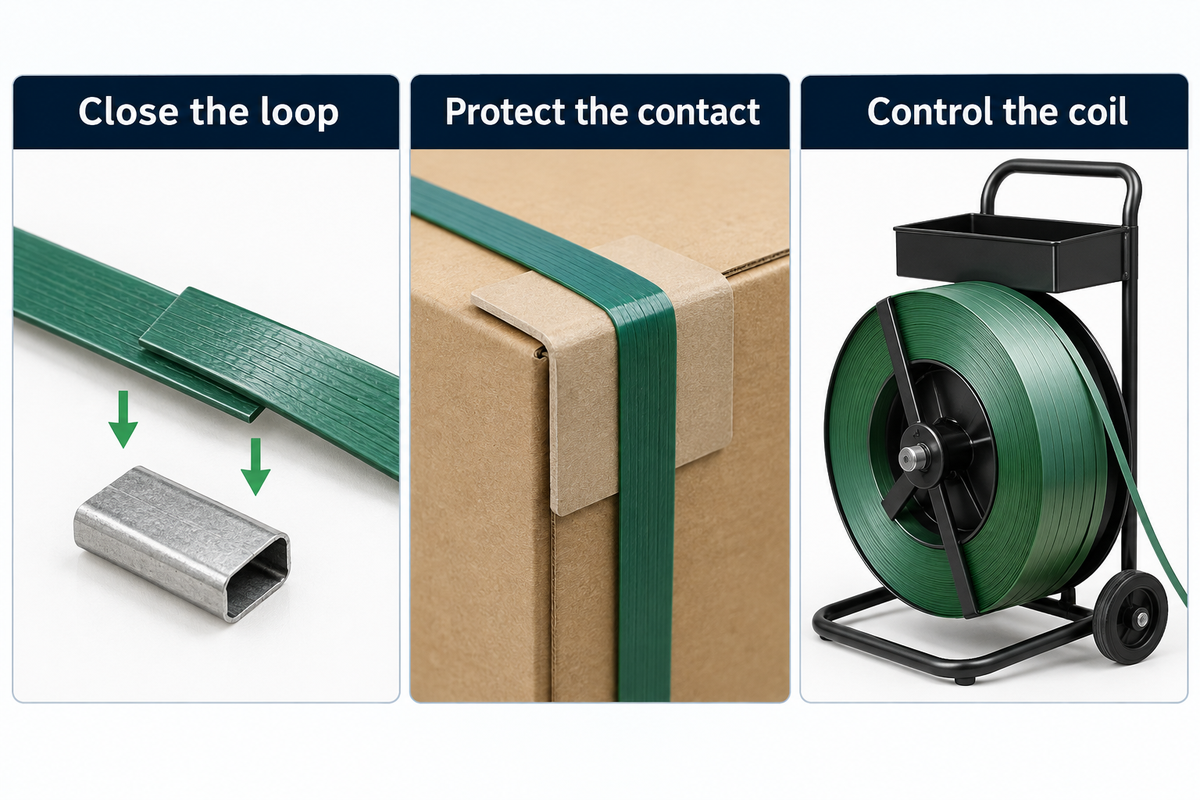
Strapping accessories perform several functions in a banding system. These include closing the loop, spreading contact pressure, and controlling the coil. Accessories also aid the operator in routing and removing the strap. An accessory list should reflect these functions. Strapping equipment with integrated tensioning, joining and cutting needs fewer separate pieces than a manual tensioner-and-sealer station.
In shipping, a damaged package edge can affect an otherwise correctly made joint, so protective pieces adjacent to a vulnerable corner also require individual attention. Joining and contact protection deserve equal attention. A seal grips the overlapping strap after the matching sealer forms it. Steel and plastic strapping also use their closing design to perform their separate functions. A buckle, however, doesn’t replace contact protection.
| Item | Function | Selection question |
|---|---|---|
| Metal seal | Forms a joint around overlapping strap | Which material, profile and jaw does it require? |
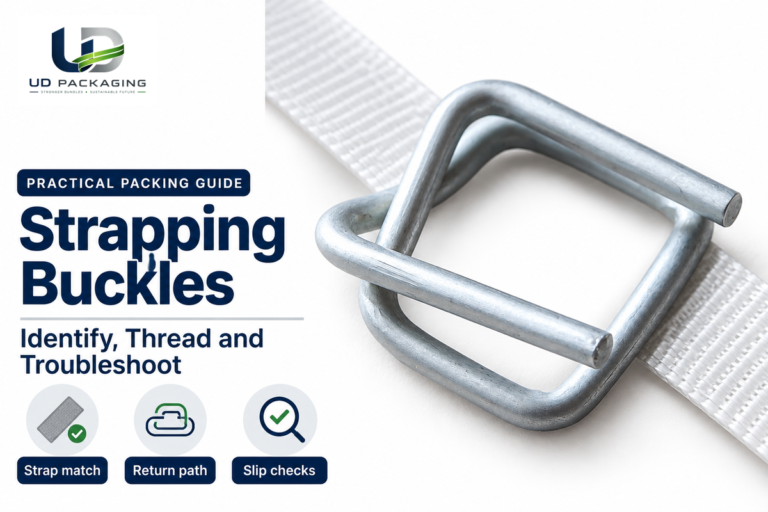
| Wire buckle | Holds a threaded strap loop | Which strap construction and threading route? |
| Plastic buckle | Closes a specified hand-applied system | Which strap grade is listed for the buckle? |
| Small corner guard | Separates strap from a local corner | Does its shape seat on this package? |
| Continuous edge board | Spreads contact along an edge | Which length, profile and exposure? |
| Coil dispenser | Supports and controls strap payout | Which core, face and winding? |
| Dispenser cart | Moves the coil and carries equipment | Can it reach and serve the station? |
| Routing aid | Passes strap through an accessible pallet path | Does the pallet opening suit the aid? |
| Strap cutter | Cuts the specified banding material | Which material and size is the cutter designed for? |
Stretch film and shrink film perform different jobs from the closure and should appear separately on a packing station’s supply list.
Seals, Wire Buckles and Seal-Free Joints Compared
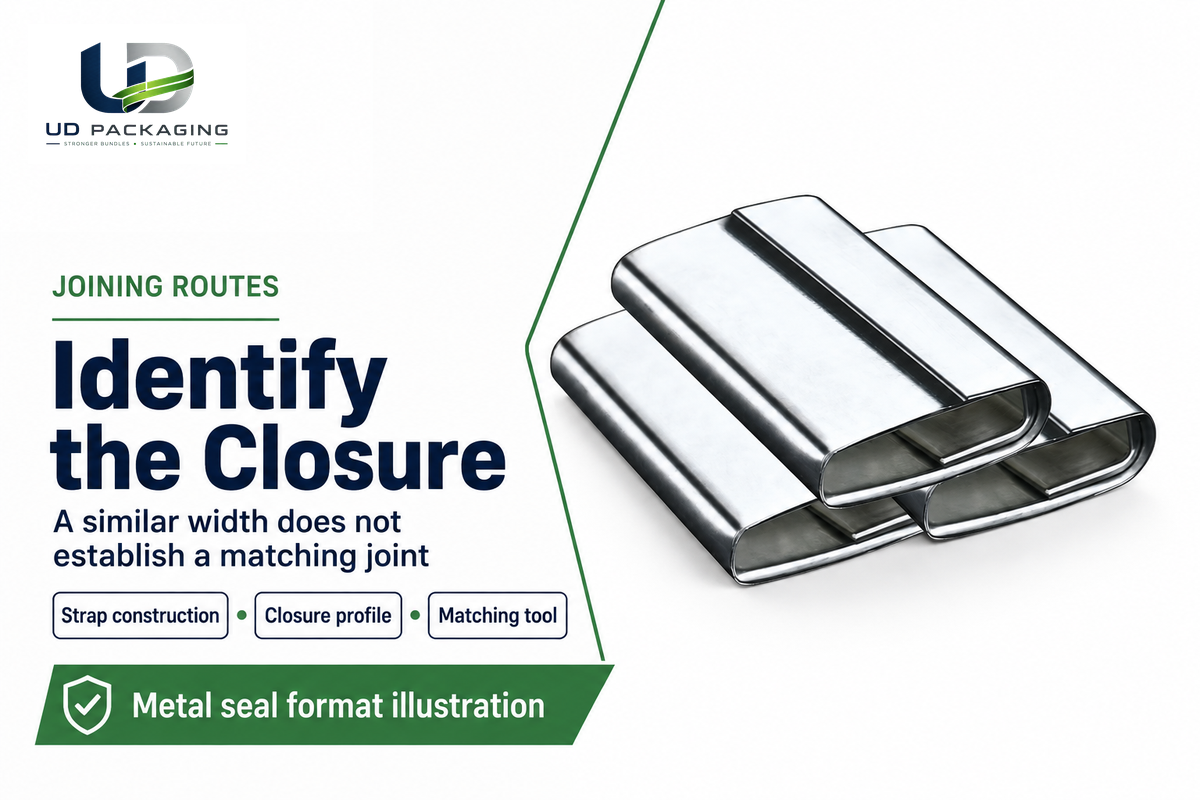
There are different ways to join strap systems. Metal seals, wire buckles and seal-free joints are available options. Choosing the right alternative is based on the strap system construction and the tool that forms or tensions the joint. A name of a material alone isn’t sufficient. A matching material name alone is insufficient: solid polyester strapping and a woven polyester product can require different closures.
ASTM D3950-23 treats nonmetallic strapping and joining methods together. ASTM D3953-15(2022) addresses flat carbon-steel strapping and seals, including several joint styles. Keep unjoined strap break strength separate from the strength of the completed joint. Package performance also involves the load, contact geometry and handling.
| Route | Strap or system | Match before purchase |
|---|---|---|
| Serrated metal seal | Specified solid PET strapping | Seal grip profile, strap dimensions and sealer |
| Open flange seal | Specified polypropylene strapping | Seal width, strap grade and forming jaw |
| Plastic buckle | Specified hand-grade PP strapping | Buckle geometry and intended threading |
| Wire buckle | Specified corded or woven system | Strap construction, buckle finish and tensioner |
| Friction-weld joint | Approved solid PET or PP tool combination | Tool material, width and thickness range |
| Snap-on steel seal | Specified steel strapping | Seal style and compatible sealer |
| Push-type steel seal | Specified steel strap and tool | Loading sequence and tool instructions |
| Sealless steel joint | Specified steel combination-tool system | Tool’s approved strap grade and dimensions |
| Machine-made joint | Specified machine-grade plastic strap | Machine feed, strap grade and joining setup |
Open seals can be placed over overlapping strap. A push type seal employs a different loading arrangement. Judging by appearance can lead an operator to purchase a seal that resembles an old one, but the seal may not allow the intended joint. Appropriate strapping seal options follow the documented joining route.
The various types of strapping require different closure options. A weave of a woven product is different from a braid. Composite strap combines reinforcing fibers with a polymer coating. Nylon is different from polyester and a closure listing of polyester shouldn’t be assumed to cover it. Generic poly strapping labels should be replaced by the polymer and grade to determine closure.
Match the Seal or Buckle to the Strap and Tool
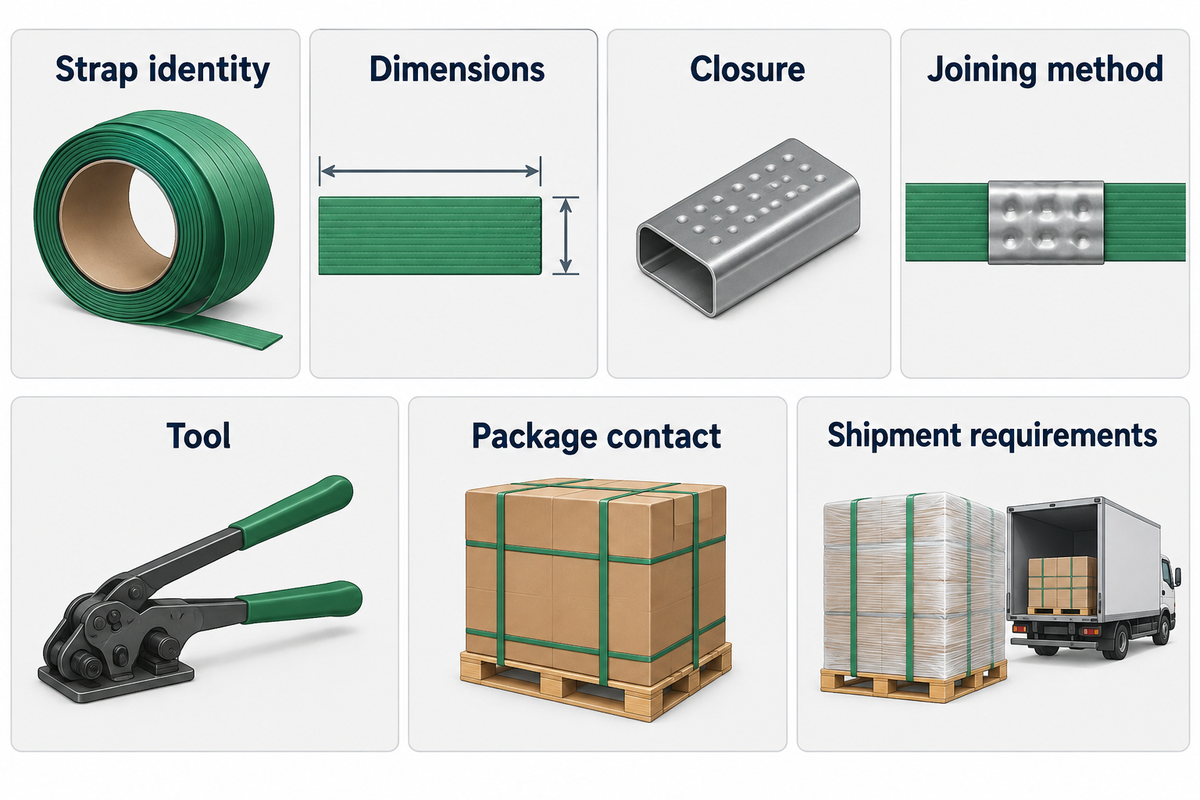
A compatible joint starts with seven checks: strap identity, dimensions, closure, joining method, tool, package contact, and application acceptance. Width is only one of the checks. The strap’s thickness and surface affect how it sits in a closure, while the tool’s jaw determines how that closure is formed around the overlap.
- Identify the strap. Record steel, solid PET, PP or the specific cord construction and product grade.
- Read its dimensions. Use the specified width and thickness or profile, including surface texture and coating.
- Identify the closure. Match the part number, geometry and intended strapping material.
- Keep the joining method. Separate formed seals, threaded buckles and tool-made welds.
- Match the tool. Include the strapping tensioner, sealer model and fitted jaw or die.
- Review the contact. Choose the protector for the package edge and intended exposure.
- Apply the shipment requirements. Include the carrier’s applicable conditions and the package acceptance test.
FROMM’s catalogue lists serrated PET seals for 12 mm or 16 mm strap, and open-flange PP seals for 12–19 mm strap. Those are separate product families. A 16 mm label appears in both, yet the intended strap and closure profile remain different.
Which Strapping Accessories Should I Use?
Use the specified closure for your identified strap and tool, protect the band where it comes in contact with a vulnerable edge, and select the dispenser for the actual coil. For inventory control, keep accepted part numbers. Add every missing function, including cutting and coil control, before comparing an all-in-one kit with separate equipment.
Picture a team replacing a box of seals in an established PET station. The useful next step is to retain the existing PET closure part and identify its sealer jaw, rather than trying the substitute on outgoing loads. Quality staff review the package before allowing the change to be made. For a buckle-based system, procurement should evaluate strapping buckle options. A buckle isn’t an automatic replacement for the seal formed at that station.
For details on equipment operation and cutting, refer to the strapping tool operating guide. An electric combination tool and a pneumatic tool have varying utility needs; the pneumatic tool requires a compressed-air supply.
Edge Protectors: Protect the Package and the Strap
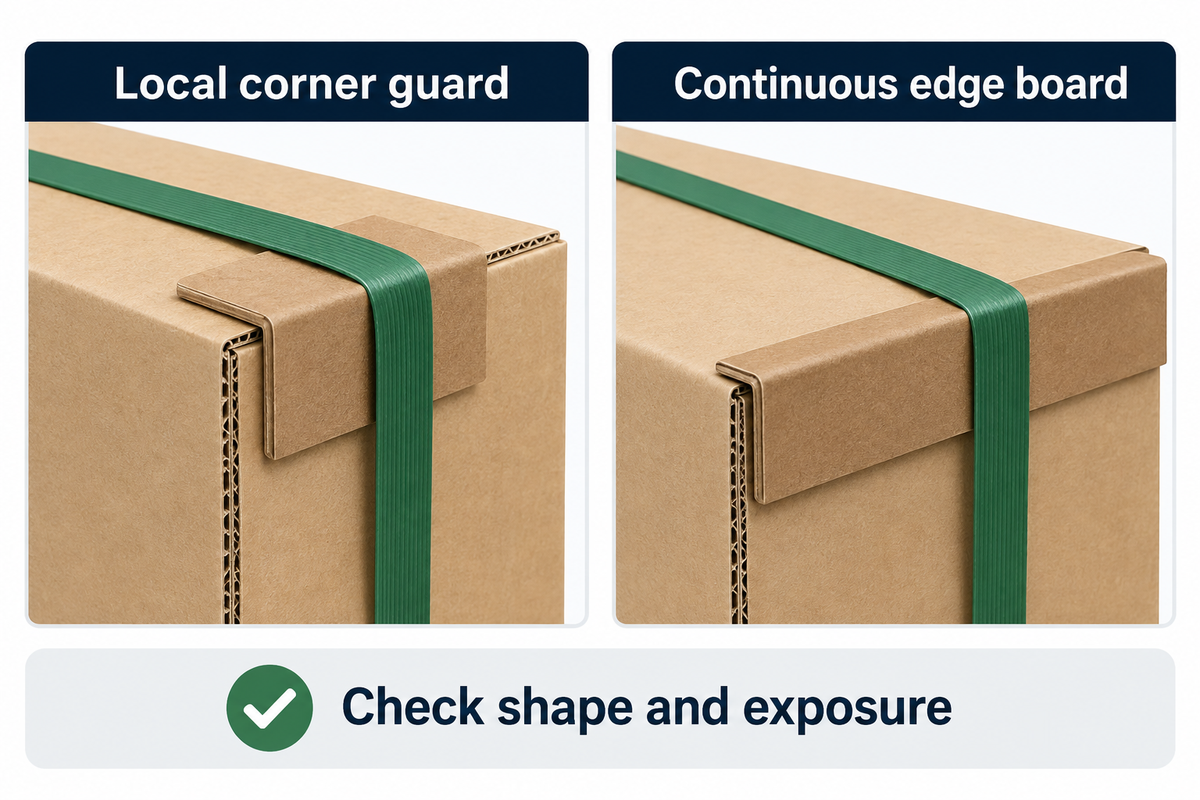
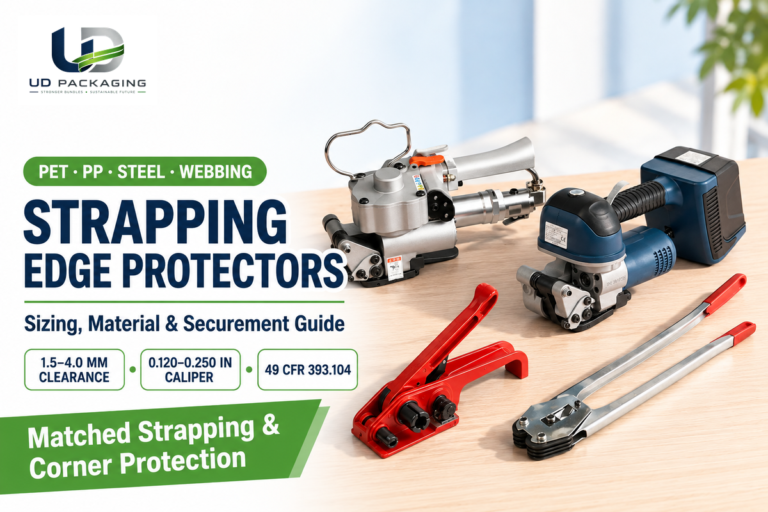
Edge protectors spread or separate contact where a strap crosses corners and edges. A local contact point is handled by a small guard; continuous board protects a long edge. Select the shape for the load and the material for its exposure. An edge protector changes the contact path without increasing the strap’s rated breaking strength.
Paperboard, moisture-resistant designs and shaped coil edge protectors serve different functions. A durable indoor protector isn’t automatically suitable for rain or ultraviolet. On a carton, examine crushing and indentation; on metal, examine sharp edges and abrasive contact. The strapping edge protector guide goes into more detail on those formats.
In a 2013 Packaging World glass-packaging case, Z-Line utilized UChannel protection, honeycomb, and corrugated cardboard, with strapping for attachment. This case study addressed glass flexing around attached components. Their lesson was to inspect the complete contact and support arrangement for damage when loss occurs, as opposed to using a stronger strapping to protect a vulnerable package.
Choose a Strapping Dispenser and Cart That Fit the Coil
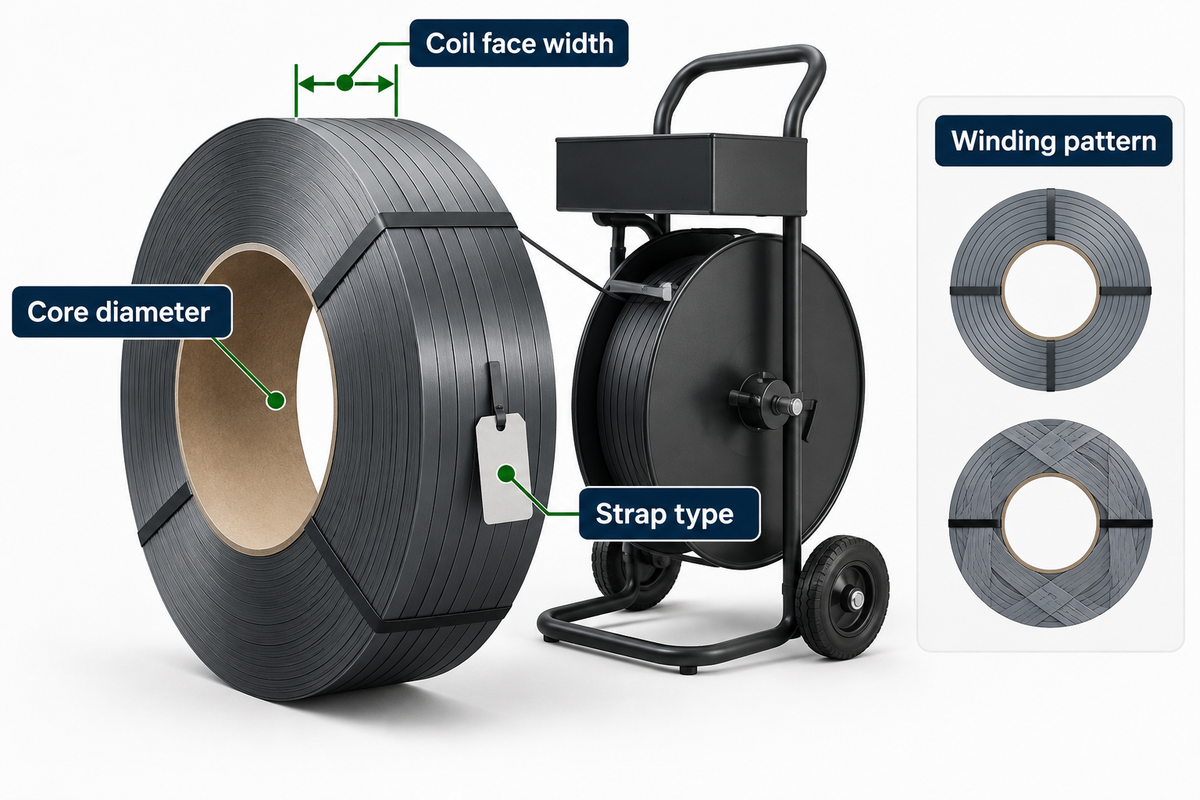
For coil fit, the dispenser’s core diameter, supported face width, winding pattern, and type of strap all need to align with the roll. A strapping dispenser supports controlled payout and a cart provides mobility and equipment storage. Strapping coils that fit over a spindle can still run poorly when the winding or payout arrangement is wrong.
PAC describes its DSP STD dispenser for 8″ and 16″ cores with specified coil-face combinations. Encore’s EP-3045-8 is an 8″ core ID oscillated cord dispenser.
Let’s say a warehouse switches its coil supplier while keeping the cart. The width of strap is unchanged, and therefore receiving takes the delivery. At the station, the new roll touches the retaining plate and payout is uneven. Comparing old and new coil labels shows a face width or winding change, which the original order didn’t show. The operator should use the dispenser’s loading and adjustment instructions for that coil, with service staff handling worn parts. A tensioner tool somewhere else in the process can’t correct an incorrectly supported roll. Later orders contain the core, face and winding fields as well as the PET strapping roll specifications.
Loading and payout are part of the supply side of the strapping process, and the workplace needs room to attach the specified retaining parts and move the cart without dragging loose strap across walkways.
What Changes for Cartons, Timber and Metal Bundles?
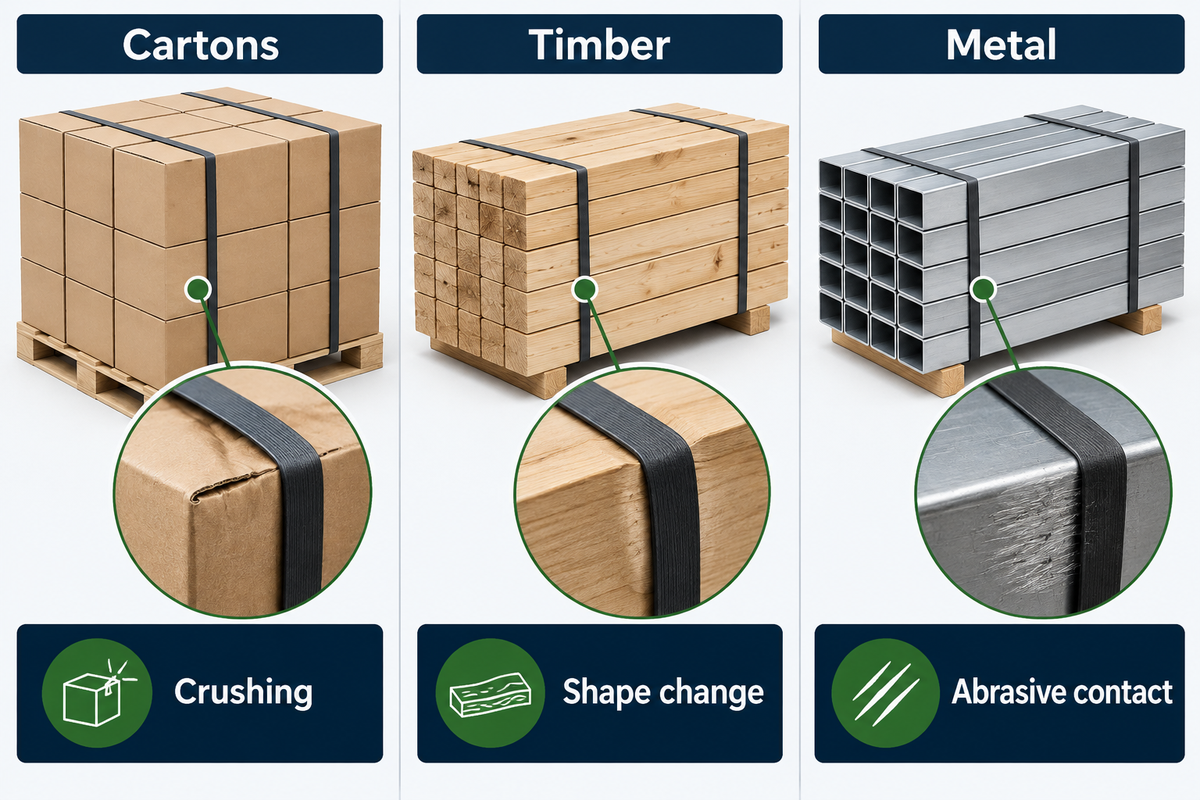
Package contact and movement change the accessory choice: cartons need attention to crushing, timber bundles can change shape, and metal bundles can create abrasive contact. For heavy-duty work, choose the grade and edge protection of strap for the shape of the load. A heavy-duty metal bundle with sharp corners needs a different contact review from a carton stack.
For an illustrative carton stack, a narrow guard that tilts away from the corner leaves the strap pressing into the board; a properly seated contact shape addresses that interface. A properly designed contact shape addresses this contact situation. Bundles of timber can change shape. For timber, a settling bundle needs evaluation over the handling and storage cycle, including strap elongation and retained tension. For metal, the contact material and edge shape need review before increasing tension.
ASTM D4675-14a(2022) includes load geometry, friction and handling, transit and storage evaluation in strap selection. It also suggests the assessment of carrier requirements for strap. Packaging unitisation and the securing of cargo to a vehicle are done separately. Specific equipment and method are to be used for lifting and lashing.
“Thorough user testing is essential”
A 2014 Packaging World case explains how VGuard was used beneath nested liner lips while a wood frame remained part of the pack, and how the familiar protector performed a different function in a customized assembly. This design belongs to Indiana Vac-Form and its packaging partners.
Accessory Faults: Find the Interface That Failed
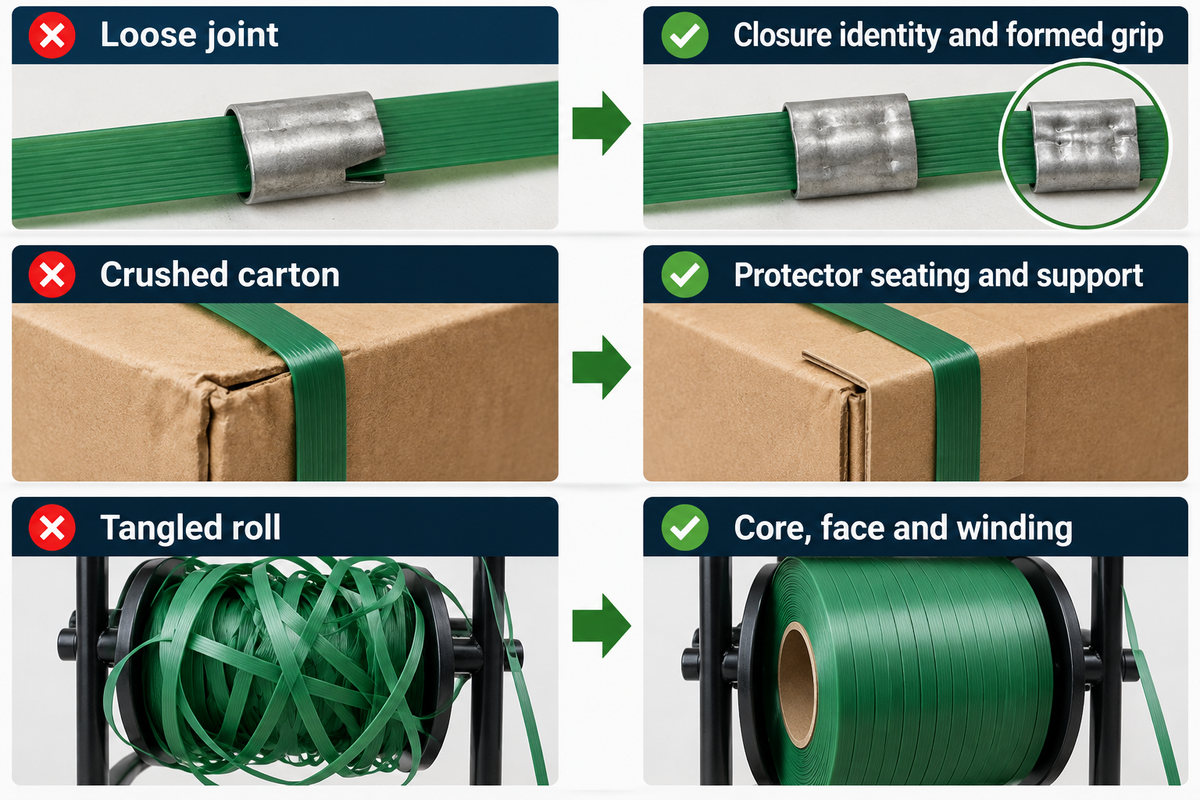
Separate a joint fault from contact damage or a coil-feed problem before changing accessories. Strap slipping through a closure calls for a different inspection from a crushed corner or a tangled roll. Stop using a visibly damaged assembly and retain its component identities so quality and service staff can examine the actual combination.
The Joint-to-Coil Fault Finder below is a tool for isolating faults. Start at the observed damage location, and note what changed. The responsible person should be notified about the affected interface. If a joint is loose, don’t increase the tension as the default response.
| Observation | Inspect first | Next action and owner |
|---|---|---|
| Strap pulls through the closure | Closure identity, threading or formed grip | Quality compares the strap, closure and tool with the accepted combination |
| Splitting beside the joint | Strap damage and tool contact | Service inspects the tool and affected parts using its maintenance instructions |
| Carton crushed under the band | Protector seating and package support | Packaging staff review the contact arrangement and pack setting |
| Damage at a sharp corner | Edge geometry and protective material | Packaging staff evaluate protection with the intended load |
| Roll tangles or drags | Core, face, winding and dispenser condition | Operations compare the coil label with dispenser requirements |
| Problems begin after a delivery | Changed strap or accessory part | Stores and procurement trace the received parts and isolate the substitution |
Can Strapping Accessories Be Repaired?
Serviceable dispensers and tools can be repaired with the manufacturer’s specified parts and procedures. Used formed seals and visibly damaged strap should be replaced.
In fault prevention, training also requires coverage on unfamiliar buckles mistaken for interchangeable clips. Keeping the correct part identification and product instructions at the station is useful, especially after a purchase substitution. “quality strapping” or “high-quality strapping” should be supported by a product grade and accepted joint and not be used as diagnostic aids.
Strapping Kit or Separate Accessories: Compare the Same Job
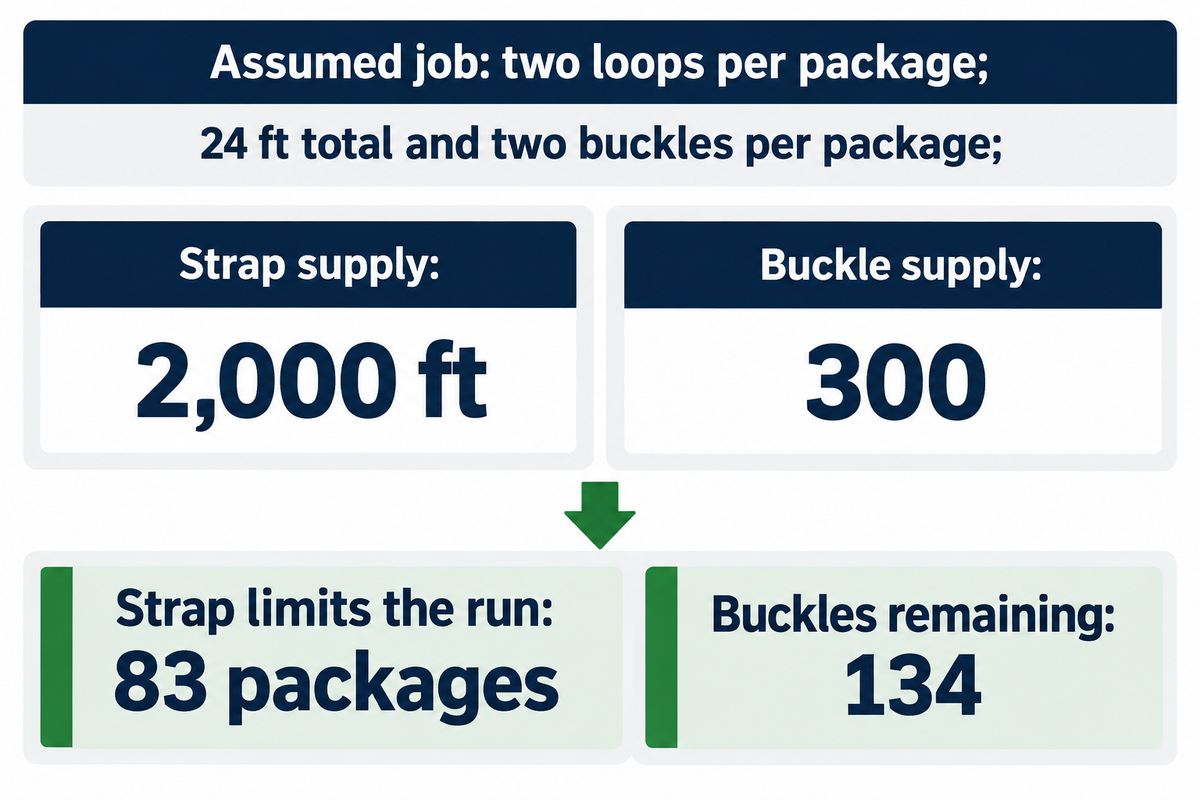
A strapping kit would fit a new station if its compatible contents cover the lacking equipment and consumables. Separate accessories are appropriate for replenishment if the tools of the trade are already on the job. Compare like strap quantity, closure quantity and delivery basis before comparing totals. An unneeded second sealer provides no immediate refill value.
Actual kits vary. Quick-pac configurations from U.S. Packaging & Wrapping include 2,000 ft or 3,000 ft of strap, 300 buckles, and a puller. Their Jumbo configurations include different roll lengths, 1,000 open seals, and other tensioning and sealing tools. Complete Packaging Products also has steel tool kits based on the equipment. A kit that includes consumables meets the need of a user, while a kit that includes only tools satisfies a different need.
Example: compare the usable refill quantity. Take the published Quick-pac configuration containing 2,000 ft of strap and 300 buckles. Assume the planned job uses two 12 ft loops per package, with the stated length covering overlap and application allowance. Each package consumes 24 ft and two buckles. The strap therefore covers 83 complete packages before any additional wastage, while the buckles cover 150. After those 83 packages, 134 buckles remain. A buyer pricing the next run should compare the extra strap needed with the cost of another complete kit. At a new station, the missing compatible tools belong in that comparison; at a refill station, usable existing equipment remains in service. Purchasing surplus buckles has a different cash and storage consequence from purchasing the limiting strap quantity.
New station
- Count every missing compatible tool.
- Include the correct coil dispenser.
- Match consumable quantities and delivery.
Existing station
- Retain accepted tools in serviceable condition.
- Replace only missing or unsuitable equipment.
- Compare the same refill basket and delivery.
Functions missing in a process are identified. Quality evaluates if the component meets the specification. Procurement compares the delivered basket; finance separates today’s cash outlay from equipment already owned. Wholesale strapping quantities matter only when storage and usage suit the order. A PET strapping kit should be reviewed based on the usage requirements. The bundle should be evaluated for a quantity discount.
Where to Buy and What to Check Before Reordering
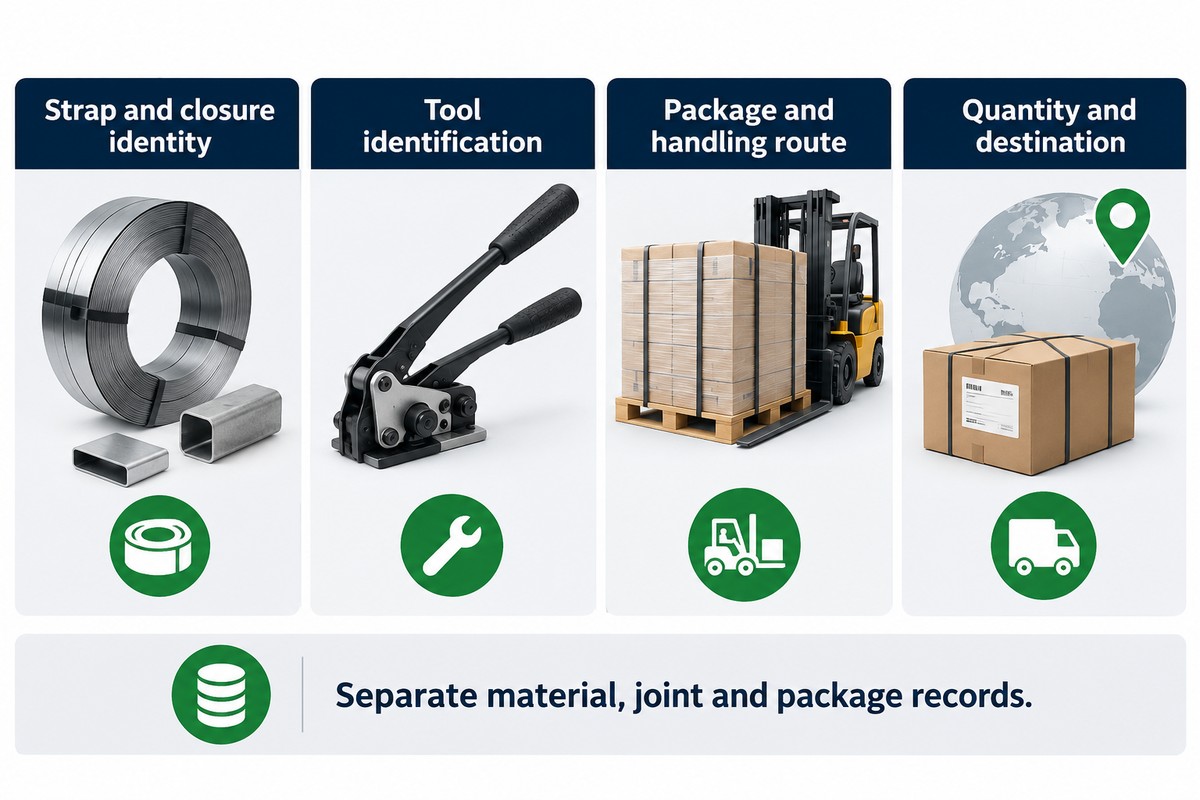
Purchase a repeat accessory by its accepted part number, and use a supplier who can match the strap, closure and tool for a changed system. General distributors suit identified replenishment; a system review suits a new material or joining route. UD Packaging supplies strapping seals and buckles, PET strap and supporting manual, semi-automatic and automatic equipment.
Send your existing strap label, closure and tool identification, package pictures, monthly requirement and delivery destination. Provide outdoor exposure and/or damp storage, if any, as well as the planned logistics route. This information will enable the supplier to determine the part number of your requirement as compared to the existing system, as opposed to evaluating it from “metal or plastic” or “plastic or metal” descriptions.
- Confirm the strap grade, width and thickness or profile, plus the closure part and tool model.
- Confirm coil core, face and winding when ordering dispensing equipment or replacement rolls.
- Confirm quantities, included equipment, freight and any proposed substitutions in writing.
- Ask for the applicable material, joint and package test documents with their product identity and edition.
The official Chinese standards registry lists GB/T 1040.1-2025 effective from October 1, 2025, to replace GB/T 1040.1-2018. This standard is about the tensile properties of plastics. Keep the material test, joint assessment and package acceptance as separate records.
Send your existing combination or new station requirements through UD Packaging’s Strapping Accessories solution page to get a written quotation that will list the selected products and terms of sale.
FAQ: Strapping Accessories
What Is Strapping?
Strapping holds a package or bundle together with a tensioned band.
The band passes around the intended load path and is joined with the specified seal, buckle or tool-made joint. It can close a carton, bundle products or help unitise pallet loads. Material selection also affects the joining equipment. Steel, polypropylene and solid polyester have different characteristics, so the accompanying accessories follow the identified strap system and package requirements.
What Are Strapping Systems?
Strapping systems combine the strap, joint and application equipment.
A working system includes the joining route, compatible tooling and the way the strap contacts the package. Coil handling belongs in the station setup too. For a repeat job, the accepted combination provides the starting point for replenishment. Changing one component can change how the joint forms or the coil feeds, so the replacement needs evaluation within the same application.
What Is Polyester Strapping?
Polyester strapping includes solid PET bands and distinct fiber-based constructions.
Solid PET strap is a thermoplastic band used with a specified sealing or welding system. Corded or woven polyester products have a different structure and can use a specified buckle route. The word polyester alone therefore leaves out a critical purchasing detail. Record the construction and product grade alongside dimensions before choosing the tensioning equipment, closure or replacement coil.
Will Strapping Accessories Damage My Package?
Incorrect contact or excessive pressure can damage a package.
A poorly seated protector can leave the strap pressing directly into a carton corner. An unsuitable edge shape can also damage the strap itself. Select protection for that contact and evaluate the package with its intended strap arrangement.
Why Are Strapping Accessories Important?
Accessories make the joint, contact and coil-handling functions work together.
A roll of suitable strap still needs the intended joining route. Protection handles vulnerable contact points, while the dispenser feeds the roll in the required orientation. Missing one function can disrupt an otherwise appropriate station. A useful purchase list therefore starts with the job and existing equipment, rather than buying every accessory in a catalogue. For a new line, count the missing functions. For replenishment, preserve the accepted component identities and investigate substitutions before introducing them into routine production.
Can I Reuse a Strapping Seal?
Replace a formed seal after opening the strap.
The seal was deformed to make the original joint. Reopening and reforming it doesn’t recreate the accepted new-part condition. Reusable buckle designs are a different product category and follow their own manufacturer instructions and inspection criteria.
Prepared by Karry for UD Packaging. Examples of manufactured products are shown for illustration only. Selection methods are described using worked out examples and a cost calculation; they aren’t customer test reports. Accessory selection should be done in conjunction with the specified handling and acceptance requirements for the package.
References & Sources
- ASTM D3950-23: nonmetallic strapping and joining methods, public abstract and scope.
- ASTM D3953-15(2022): flat steel strapping and seals, public abstract and scope.
- ASTM D4675-14a(2022): selection and use of flat strapping, public significance and scope.
- SAMR: GB/T 1040.1-2025 status and replacement record.
- Packaging World: custom glass edge protection, Anne Marie Mohan, April 2013; attributed company case.
- Packaging World: edge protection for nested liners, Anne Marie Mohan, September 2014; attributed company case.