Get in touch with UD Packaging Company

The film wrapped around a pallet may end up in the same bin as strapping and cardboard cores at the end of the shift, alongside a half empty drink. It starts long before the recycler sees the load. Fortunately, an effective warehouse program offers staff a place to set aside film, at the point of removal, that’s approved.
Stretch wrap recycling is the recovery of clean, dry polyethylene film through an accepting collection route. Confirm what your receiver accepts and its material and shipment requirements. A resin code or a recycling symbol on the material doesn’t establish local acceptance.
- Find out what the film is and obtain the receiving facility’s written acceptance list.
- Keep approved film separate from straps, rigid plastics, food and wet waste.
- Agree collection quantity, shipment form, charges and rejection terms.
- Record collection and processing separately before reporting results.
Is Warehouse Stretch Wrap Recyclable?
Warehouse stretch film can enter a recycling stream if its composition, condition, and collection route are aligned with the receiver’s requirements. The question is whether a named facility accepts your used film in the quantity and form that you produce. Generic descriptions don’t suffice. For operators processing the collected material, plastic film recycling equipment from Kitech can be evaluated against film type, contamination, moisture and throughput; equipment availability does not establish that a local collection program accepts the film.
Most pallet stretch films are from the polyethylene family, commonly linear low-density polyethylene (LLDPE), while LDPE also appears in film packaging. Verify the film on the roll. Industrial stretch film has different constructions and applications. Appearance is a poor substitute for the supplier’s material statement.
Collection rules can vary within the same neighborhood. Montgomery County’s film guidance cites clean, dry pallet and stretch wrap in its transfer-station stream, while stating no plastic bags in the curbside recycling provided by the County each week. That’s an example of a local collection route; it isn’t permission to ship warehouse loads to any recycling center.
Keep collection advice separate from statements to the public. The Green Guides Summary by the Federal Trade Commission addresses how availability of appropriate facilities impacts recyclable claims. One accepting contractor doesn’t establish nationwide access or substantiate a broad environmental claim across your packaging.
Sort Used Stretch Film Before It Becomes Mixed Waste
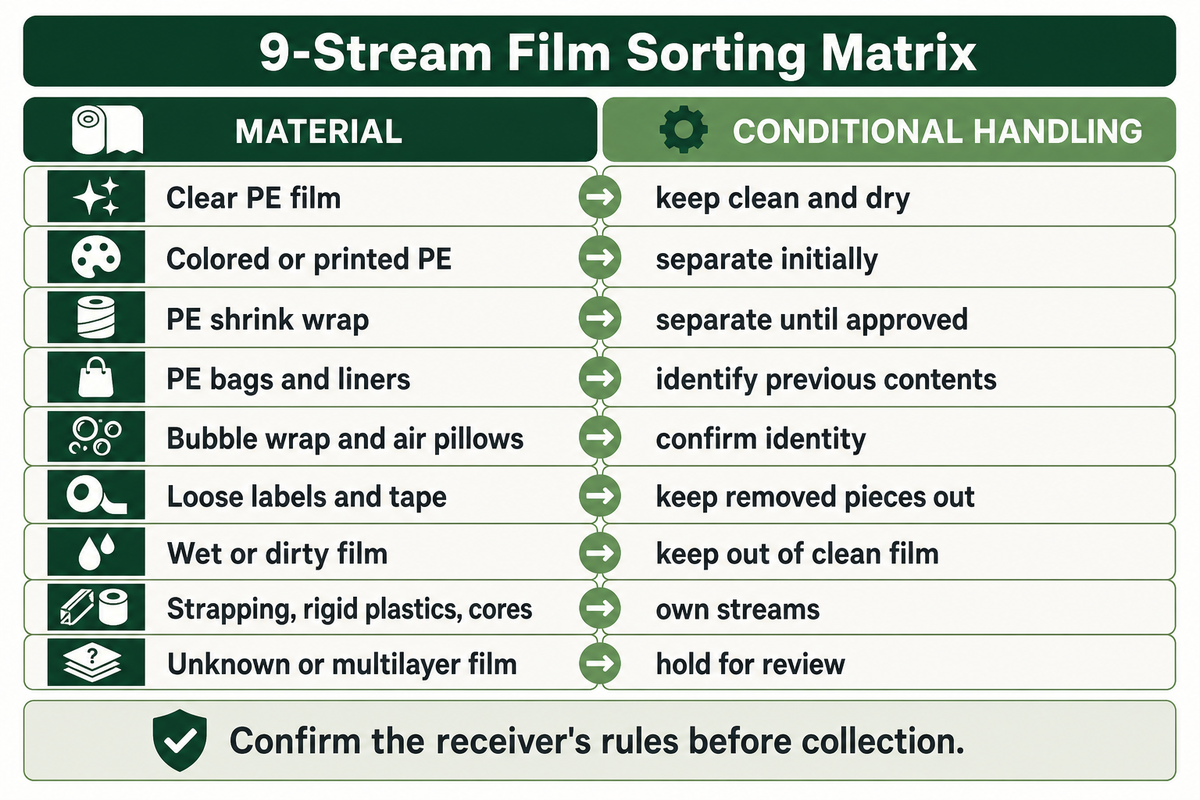
As a first step, identify the known polyethylene stretch wrap. Separate all other materials whose identity or acceptance is unknown. Clear, colored and printed films may fall into different grades. Use the sorting matrix provided below to prepare for a discussion with the receiver, and then replace the conditional instructions with written site-specific collection rules.
The Association of Plastic Recyclers’ model bale specifications distinguish different grades of polyethylene film. They also allow for individually negotiated contracts. Therefore, clear-film grades and mixed commercial collection programs shouldn’t use the same acceptance sign without receiver confirmation.
9-Stream Film Sorting Matrix
This warehouse sorting matrix provides an example of a planning aid for separation of recyclable plastics and isn’t a complete list. It separates approved plastic film for recycling from other plastic waste before collection.
| Material at the unwrapping point | Keep it separate? | Decision to obtain from the receiver |
|---|---|---|
| Known clear PE stretch film | Keep clean and dry | Confirm grade, labels and shipment form before collection starts. |
| Colored, opaque or printed PE film | Separate from clear film initially | Ask whether it enters the same stream or a different grade. |
| Known PE shrink wrap | Separate until approved | Confirm resin construction and whether mixing with stretch wrap is allowed. |
| PE bags and liners | Separate until approved | Identify previous contents, coatings and the exact bag type. |
| Bubble wrap and air pillows | Use a distinct holding stream | Confirm material identity and any preparation requirements. |
| Loose labels and tape | Keep removed pieces out of film bins | Agree the remaining label and adhesive limits for the film. |
| Wet, food-soiled or dirty film | Keep out of approved clean film | Ask whether an acceptable separate route exists; do not mix to conceal it. |
| Strapping, rigid plastics and cardboard cores | Use their own waste streams | Arrange separate plastic or fiber collection as locally available. |
| Unknown, multilayer or degradable film | Hold outside approved film | Supply product details or samples; do not identify it by feel alone. |
Broad descriptions such as “soft plastic” and “flexible packaging” can cover different bags, pouches and plastic film packaging. This doesn’t distinguish plastic stretch film from all others. A sample board next to each bin, approved by the receiver, may help avoid confusion caused by resin abbreviations.
Remove Labels, Tape and Contamination at the Unwrapping Point
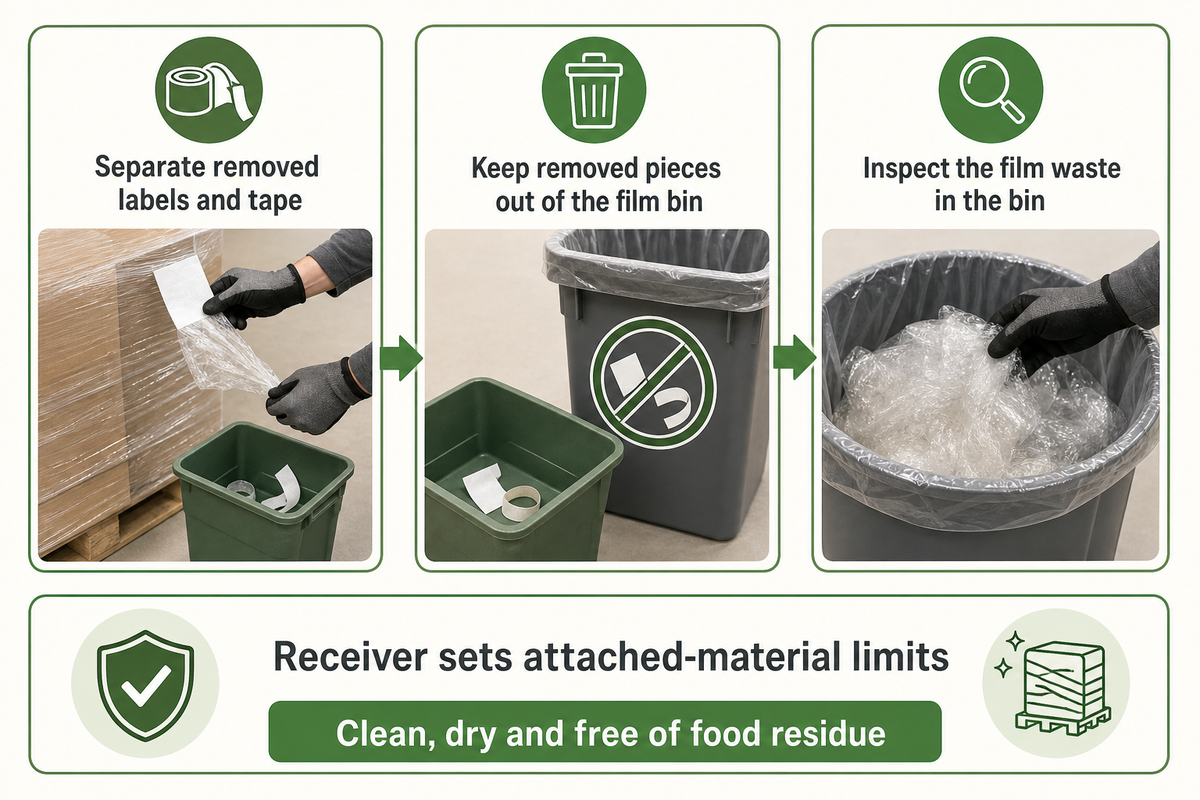
Loose labels, tape and other waste that aren’t film should be avoided in the approved film stream when unwrapping pallets. The receiver will determine how much of the material still attached to the film should be removed. Instead of setting a permissible percentage of contamination, agree on a reasonable inspection standard and use samples that include heavily labeled and covered wrap.
According to NexTrex’s collection guidance, material should be clean, dry and free of food residue. It also requests the removal of tape and labels where possible. Assume this is that program’s guideline. Other recycling companies may buy another grade or apply a stricter limit.
Suppose a worker at a receiving dock puts a shipping label in the film bin after cutting it off the wrap. The film may look cleaner, but the label is still in the shipment. Make recycling plastic film part of the unwrapping task. Give removed labels a different destination and inspect the film waste in the bin, not just the wrap left on the pallet.
Record repeated issues by source (e.g., film dragged across the floor, label adhesives, or food contamination from nearby work areas). This information helps procurement and warehouse management to identify and implement corrective actions. It’s far easier to address contamination at the source than after the collection bags have filled up.
Set Up Collection Bins and Dry Storage
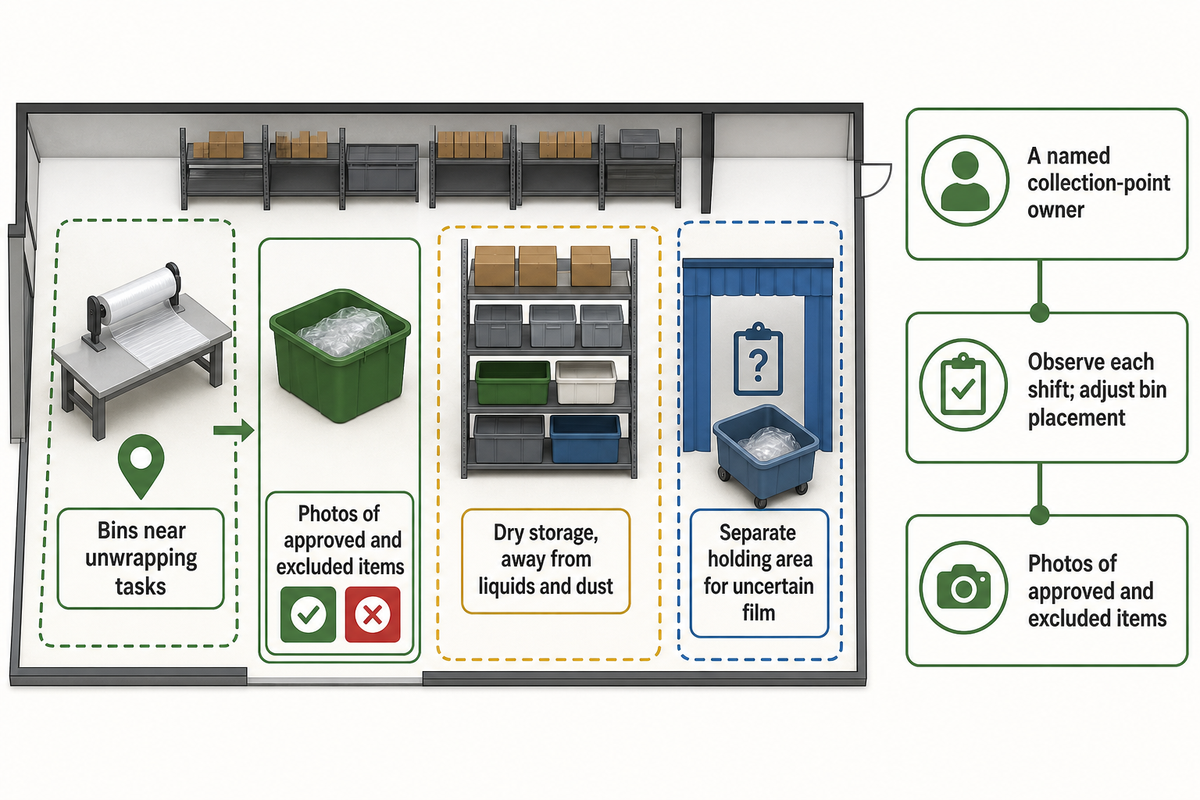
Place clearly labeled film collection bins near the tasks that produce approved material, and ensure the storage area remains dry. Give each collection point an owner and a simple inspection routine. The goal is to preserve the condition the receiver agreed to accept from unwrapping to the collection transfer.
Use photos of approved or excluded items at the collection location and clarify if the bags or liners are collected and how a full container is moved to the storage location. Keep the film away from other trash, liquids and dust-generating materials. Local policies, such as the Montgomery County clean and dry policy, explain the importance of the collection condition.
Begin by observing a trial of each shift and the primary unwrapping areas of the warehouse or distribution center. Note locations of wrap waste, how far staff has to walk to a bin and the contaminants that occur. Adjust bin placement and signage accordingly before expanding the stretch film recycling program. Evaluate these recycling practices every time the accepted stream is modified.
Set up a separate holding area for materials whose status is uncertain. Using a recycling symbol is too broad. When packaging processes change, review the waste streams to determine whether changes have affected the production of waste. Review the film if a new supplier changes the construction of film or labeling.
Choose a Collection Route That Fits Your Warehouse
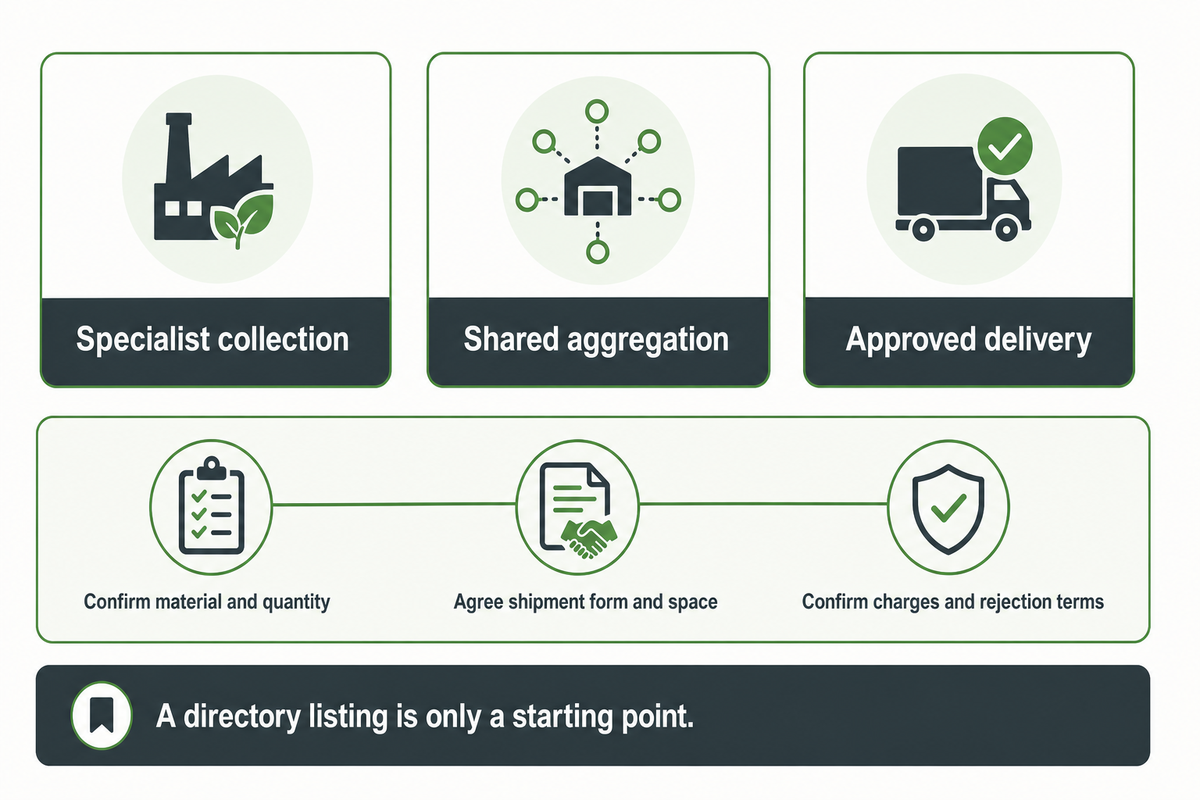
Select a collection route that accommodates the film produced and the available space, as well as the shipping constraints of the recipient. Consider the trade offs between specialist collection, shared aggregation, and approved delivery. Confirm commercial-load acceptance directly before relying on a listing from a directory, a service that allows you to drop off waste at a retail store, or a general recycling service.
Some listings in Zero Waste Sonoma’s business film directory demonstrate why this step is necessary. Some listed options accept baled film, while another accepts loose film with fees. These aren’t nationwide services, and these local listings need direct service confirmation. A general plastic recycling service listing doesn’t confirm acceptance of your material, quantity and delivery arrangement.
When searching a plastic film recycling directory, “near me” is just the first step. Recycling drop-off locations may be limited to households or may have capacity restrictions that would exclude a business or commercial load. Retail stores wouldn’t necessarily be a backhaul opportunity for a distribution center. Contact the receiving facility and request written confirmation that it accepts your material and quantity.
“The biggest industry problem of collecting film is how to aggregate it.”
Aggregation may help a number of companies combine materials, but the arrangement would still require an owner, storage terms and a final destination with a commitment to accept the material. If you were to propose powered compaction, a separate assessment for the equipment and worker safety should be done at the site: The CDC has documented serious baler and compactor hazards. This recycling guide provides no machine operating instructions.
Agree a Written Film Handoff with the Recycler
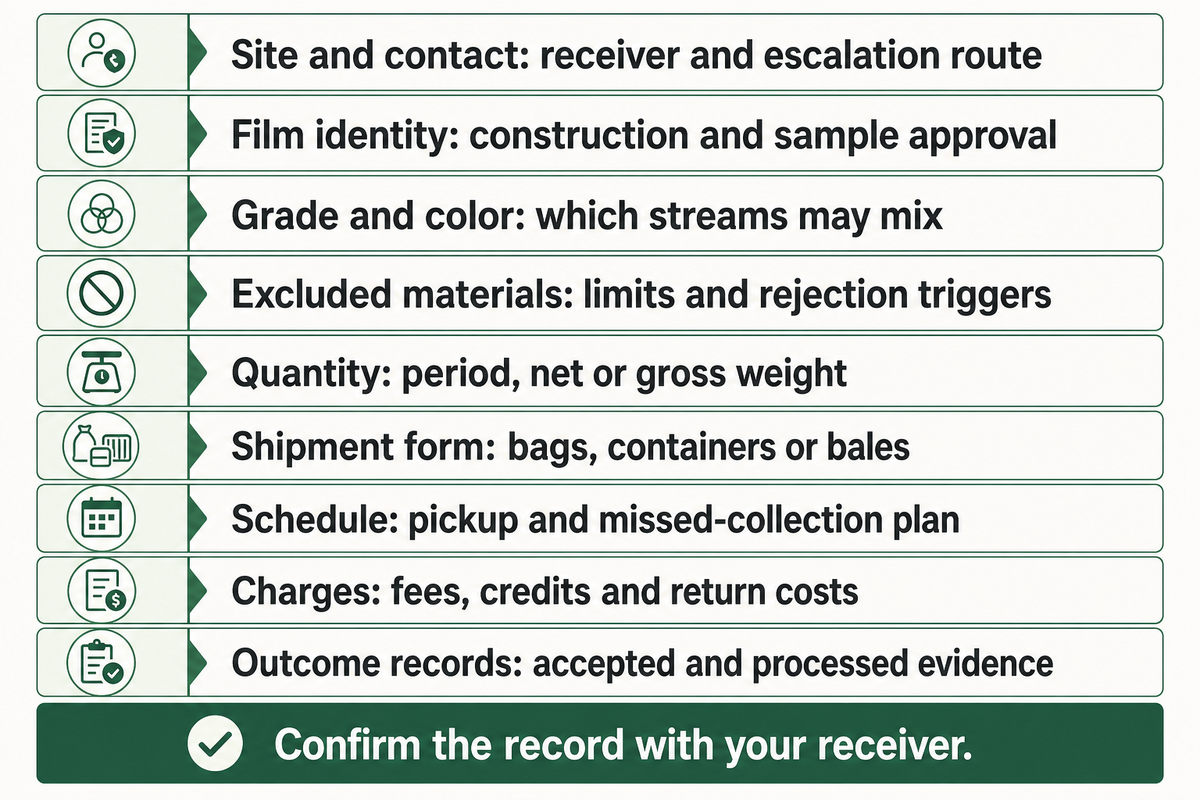
Use a written handoff to set out a collection arrangement that staff can follow. This should also include the material that’s accepted, the preferred shipment method, the collection responsibility, and treatment of rejected loads. Please complete the record below and have the receiver verify the fields that govern your warehouse’s film stream.
Recycler Film Handoff Record. The fields provided are sample records and not an official record. ReMA and APR’s July 2025 specification update preserves the role of individual buyer-seller agreements; a model grade can’t settle every shipment detail.
| Field to complete | What the warehouse should record | What to confirm with the receiver |
|---|---|---|
| Site and contact | Collection address, responsible person and operating hours | Receiving contact and escalation route for questions |
| Film identity | Supplier, product code and available resin statement | Accepted constructions and any sample approval |
| Grade and color | Clear, colored, printed and opaque film streams | Which may mix and which must stay separate |
| Excluded materials | Photos of labels, tape, dirt and other likely contaminants | Written limits and rejection triggers |
| Quantity and weight basis | Measured quantity, time period and whether weight is net or gross | Minimum quantities and acceptable weighing evidence |
| Shipment form | Available space and proposed bags, containers or bales | Required form, dimensions and loading arrangements |
| Collection schedule | Expected accumulation rate and storage capacity | Pickup or delivery responsibility and missed-collection plan |
| Charges and rejection | Collection, transport, storage and disposal cost categories | Fees, credits, inspection, rejected-load ownership and return costs |
| Outcome records | Shipment reference and weight tickets kept by the site | Accepted/rejected quantities and available downstream processing evidence |
When a local outlet, method or film product changes, request a new acceptance sheet. Keep the current agreed version with the bin signs. A possible business objective is cost reduction, not a given outcome. After a trial, measure actual charges and credits against the site’s previous disposal costs.
Check What Was Accepted, Rejected and Actually Recycled
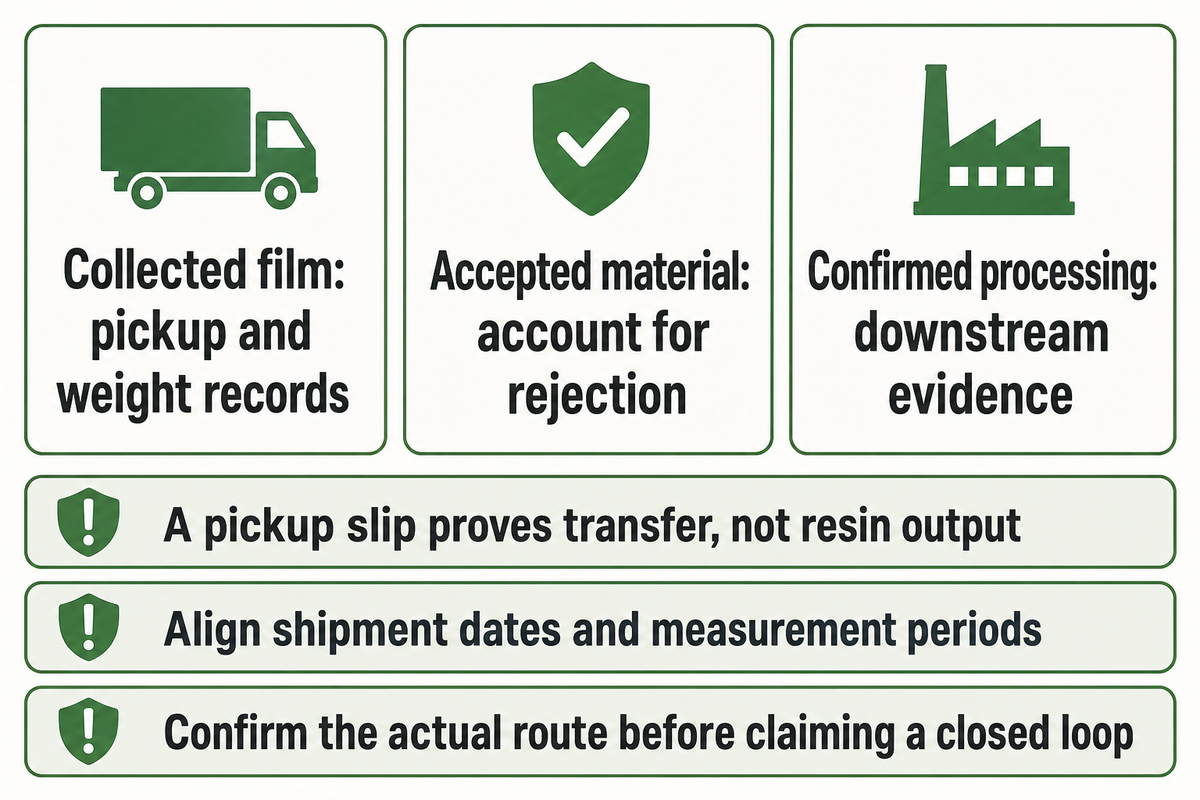
In reports, designate separate totals for collection and recycling. Report at the stage your records support: collected film, accepted material or confirmed processing. A pickup slip signifies a transfer, while rejected material changes the accepted quantity. Evidence that material reached a recycler doesn’t confirm the quantity of resin produced or the product manufactured.
In the EPA’s waste-management hierarchy, recycling includes sorting, processing and remanufacture. For the claims you intend to make, request the required downstream information. Film may become a new film product or a different use such as composite lumber; confirm the actual path before describing it as closing the loop on packaging.
Keep shipment dates and measurement periods aligned. Don’t calculate your site’s recycling yield by dividing a processor’s cumulative resin output by a collection total that isn’t related. The same holds true for moving waste out of landfills or reducing a carbon footprint. It requires more than the weight placed in collection bins.
Compare waste prevention with recycling initiatives. The EPA places source reduction and reuse before recycling. For single-use plastic pallet wrap, assess how to reduce waste and use less while retaining necessary load containment. UD Packaging’s unit-load containment method guide offers useful packaging information and doesn’t ensure a recycling outcome.
Recent Film-Recycling Developments to Check with Your Receiver
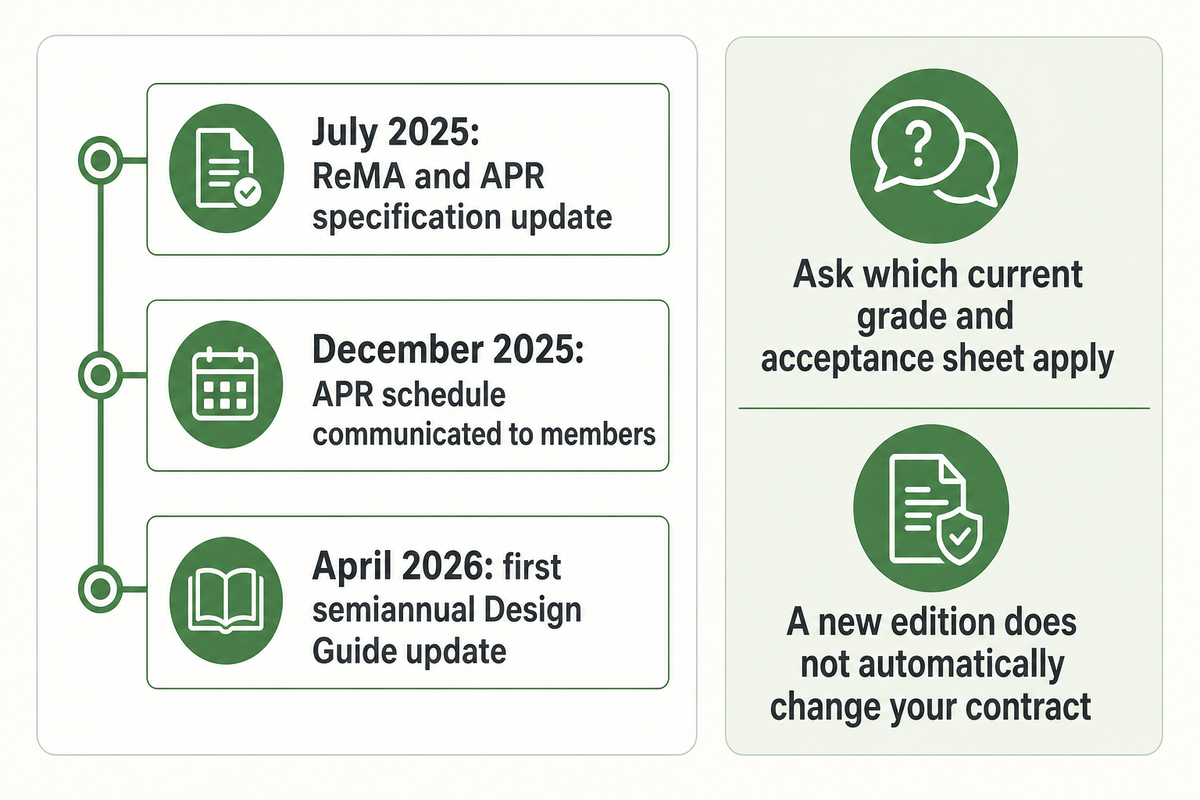
Recent specifications and collection examples are reasons to review the arrangement. These examples don’t prove that all commercial film recycling has changed. When asking the receiver which current grade and acceptance sheet apply, a dated local project can suggest questions about aggregation; it isn’t proof of equivalent recycling facilities for your site.
In July 2025, ReMA and APR announced updated recycled-plastic specifications, including polyethylene film grades. Separately, APR’s April 2026 Design Guide announcement reported the first update under a semiannual publication schedule that APR had communicated to members in December 2025. Design guidance and a collector’s acceptance rules serve different purposes; a new edition doesn’t automatically change your contract.
According to the article by Resource Recycling from April 2026, the regional winery initiative exemplifies both recycling partnership and aggregation. Its participating businesses and providers run the program. The program’s projected shipment targets don’t provide evidence of achieved shipments. There’s also no evidence that UD Packaging provides collection or recycling services.
For the new stretch wrap recycling program, you should start with a confirmed receiver and a measured collection trial. For purchasing, keep recycled content and end-of-life acceptance as separate questions. Ask UD Packaging about the specifications of hand stretch film or machine stretch film and provide the relevant product information to your chosen receiver.
Frequently Asked Questions
Is stretch film the same as Saran wrap?
Is stretch film the same as Saran wrap?
No. Don’t identify a warehouse waste stream by the word wrap alone. Pallet stretch film commonly uses polyethylene, whereas food-contact cling films and other flexible plastic packaging can have different constructions. Check the supplier’s material declaration and the receiver’s acceptance list. Keep unidentified household or catering film out of the approved warehouse collection until both composition and acceptance are confirmed.
Does packaging wrap go in the recycle or garbage?
Does packaging wrap go in the recycle or garbage?
The choice for packaging wrap depends on the particular wrap and the collection route. An approved, clean and dry polyethylene stream may go to a specialist film recycler, while a mixed curbside cart may exclude the same material. Ask the local collector about that exact item and quantity. If no accepting route is available, follow local disposal instructions rather than adding it to another recycling stream.
For a warehouse, make the decision before printing bin labels. Give the collector the product description, photographs of used film and the approximate quantity generated over a stated period. Ask whether their recycling services accept commercial loads, which materials may mix, and what happens to rejected shipments. Then put the confirmed rule beside each collection point. A general sign saying “plastic packaging” leaves staff to make material decisions that the receiver hasn’t approved. The handoff record above provides a place to keep those answers.
Can colored stretch wrap be recycled?
Can colored stretch wrap be recycled?
Some receivers accept colored and printed polyethylene film, while others buy a narrower clear-film grade. NexTrex’s commercial guidance provides a program-specific example of color acceptance. Ask your receiver whether color must be segregated, whether opaque film is accepted, and how mixing grades affects the shipment’s acceptance or commercial terms. Keep clear film separate until you have that answer.
Do I need to remove every label and piece of tape?
Do I need to remove every label and piece of tape?
Follow the receiver’s written limits. Remove large labels, tape and loose materials where practicable at the unwrapping point, and keep the removed pieces out of the film bin. Show representative samples or photographs before setting the warehouse rule, especially when labels cover much of the film. A visual check can’t establish that every remaining adhesive is compatible with the receiving process.
Is recycled-content stretch film automatically recyclable?
Is recycled-content stretch film automatically recyclable?
Recycled content describes material already used to make a film; recyclability concerns what can happen after use. Neither property proves the other. A post-consumer recycled-content claim needs product-specific evidence, while collection depends on the actual construction, contamination and receiver. Keep those questions separate when buying rolls and explaining what happens to used packaging materials. A collection agreement doesn’t validate the purchased film’s recycled-content percentage.
References and Sources
- Montgomery County: Plastic Bags and Film
- FTC: Environmental Claims, Summary of the Green Guides
- APR: Model Bale Specifications
- Zero Waste Sonoma: Business plastic bags and Film
- Resource Recycling: Wineries Help Create Model for film recycling
- CDC: baler and Compactor-Related Deaths in the Workplace
- ReMA and APR: July 2025 Specification Update
- EPA: Non-Hazardous Materials and Waste Management Hierarchy
- APR: First Semiannual Design Guide Update
Related Stretch Film Resources
- Compare stretch-film construction trade-offs
- Interpret stretch-film specifications
- Review film for hand wrapping
- Review film for machine wrapping
Trade association, public authority and other program specific resources are the basis of this guide. The two worksheet-style tables are editorial planning aids. UD Packaging’s role here is stretch-film supply; no collection service, site trial or downstream recycling result is claimed.